BRIMSON ELECTRIC LLC is a locally owned and operated company that values honesty and integrity in all aspects of our business. Our dedicated team of professionals have several years of hands on experience to provide innovative ideas and suggestions tailored to your projects. Our services are customized to your individual needs, paying close attention to the details of each project that we are involved with. Please feel free to contact us today!
At All Service Professionals,\n\nwe understand that homeownership can sometimes throw unexpected curveballs. Whether it's a clogged drain, a dip in temperature, or a flickering light, these inconveniences don't have to last.\n\nAs your trusted home service professionals, we're here to bring peace of mind and restore your home's comfort quickly and efficiently. \n\nDon't hesitate to call!\n\nWe're here to bring peace of mind and restore your home's comfort.
"The quality of the work was awesome. Very qualified and did a very neat job. Would hire them again. The only problem was them getting back to you when you called for service. The installers were very friendly and did a great job!!! Had to call a couple times to remind to come out and start/complete the project. Otherwise, great customer service."
We pride our company on reliability, great communication, integrity, and quality work.\n We are experts in our trade and will do our best to keep you as educated as we can on your particular task or project. \nWe look forward to earning your business! Book with us online or feel free to give us a call today!
Amptek, Inc, is locally owned and operated. We will diagnose and install all of your electrical needs in a prompt and professional manner. We look forward to assisting you with your project.
Nelson-Collie Electric, Inc., is the trusted name for your electrical needs servicing the area for over 50 years! We offer electrical service, wiring and panel upgrades. Whether you have a small project that must get done quickly or a bigger project call us today to see why we come so highly recommended!
As a safety measure, you should always turn off the main breaker while operating your generator’s backup breaker. In addition, you should also switch off all appliance breakers so you don't have a power surge when the main breaker turns back on. And finally, turning off the main breaker prevents back-feeding, which endangers utility workers with the risk of electrocution. Back-feeding could also destroy the electrical circuits of your neighbors if they use the same power network.
In some situations, yes. Never try to put biofuel into any home generator without checking the specifics first. If a generator has the ability to run on diesel, it can also run pure biofuel (the clear kind made from seed oils, for example). But if you are using biofuel made from animal fats or vegetable oils, the generator will need significant modifications before it can handle a sludgier type of biofuel.
In many cases, yes. There are models called dual-fuel generators and fuel switches, but only between certain types of fuel. For example, with the right setup you can convert a generator from natural gas to propane. Some allow switching between diesel and gasoline. There are even tri-fuel generators available in some cases, which adds a large layer of security if you are worried about fuel availability in times of crisis. Always check your generator capabilities and manual instructions before trying to switch fuels. Some generators can use another fuel but may need a fuel conversion kit to prep them first.
In most municipalities, you will need a permit to install a permanent home generator, including emergency backup, partial-home, and whole-home generators. A permit for a generator usually costs between $50 and $250, depending on where you live. Your electrician or certified generator installer will usually pull the permit for you—and might be required to do so by your building department—but you’ll be on the hook for the cost of the permit. You should ask your installer before agreeing to any work if they will pull the necessary permits for your project.
Energy output depends on turbine size, average wind speed at your site, and system efficiency. A 5 kW turbine in a good wind location can generate 8,000 to 12,000 kilowatt-hours per year, which may cover a large portion of an average home’s needs. Accurate output estimates require a professional wind assessment and a review of your household’s energy usage patterns.
The Gilbert, MN homeowners’ guide to generator installs
From average costs to expert advice, get all the answers you need to get your job done.
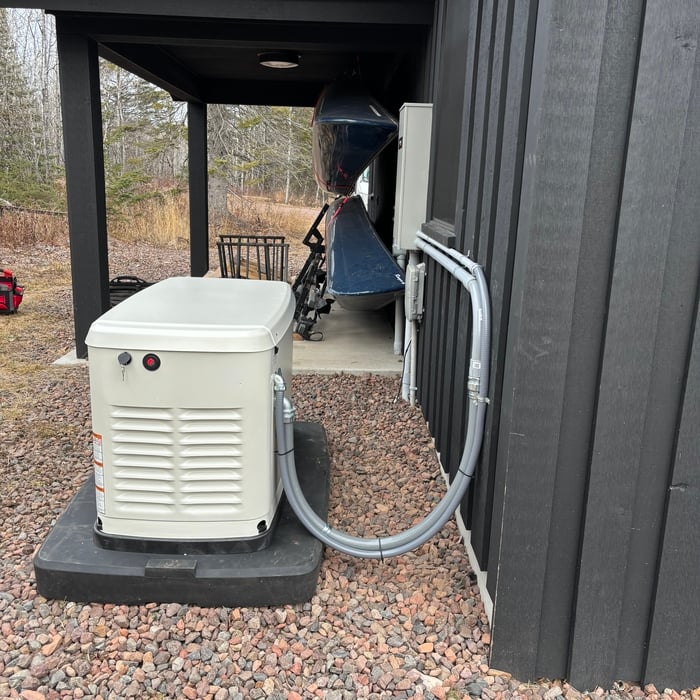
Natural gas generators are whole-home standby generators that are connected to your home’s natural gas line. The average cost for a natural gas generator is $12,000.
Generators should give you peace of mind, but you’ll only get that if your installer knows what they’re doing. Learn how to hire a pro and what red flags to look for.
Thinking about a generator installation? Learn about backup power options, costs to expect, and how to hire the right local pro to keep your home running.