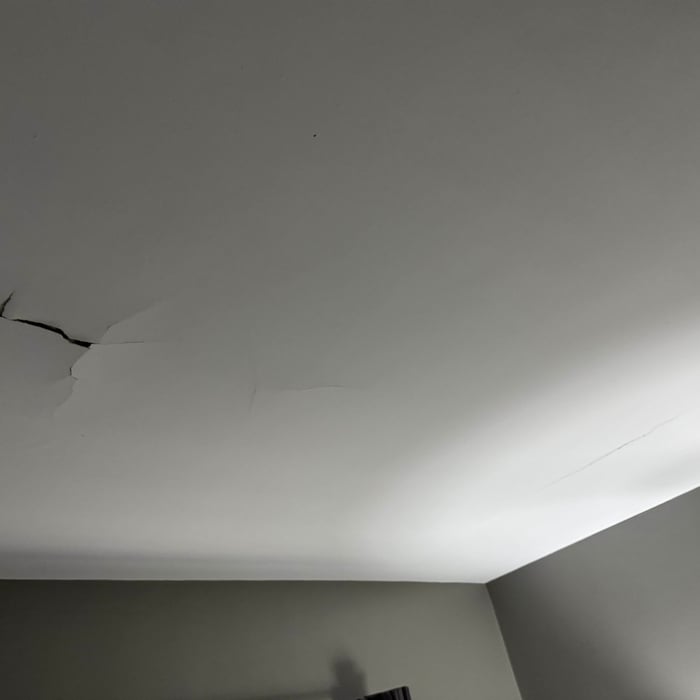




Top-rated drywall pros.

Best drywall pros near Hubbardston, MI

Enter your zip and get matched with up to 5 pros

Need a pro for your drywall service project in Hubbardston, MI?

Select your specific project to find the pro for you.

Top-Rated Drywall pros in Hubbardston - Updated Nov 2026

Avatar for D and L Commercial Roofing, LLC
D and L Commercial Roofing, LLC
4.9(
46
)
Drywall - InstallDrywall - Repair

Serving Hubbardston, MI and surrounding areas

Approved

Super Service Award Winner

In business since 2020

Free estimates

Warranties offered

"Very professional. Wonderful to work with. We hired them to put an addition on our home. They did everything very well : foundation, building the rooms, putting in insulation, drywall, painting, flooring, windows, roofing, plumbing, framing doors and windows, ductwork. They even built raised flower bed structures to go around the outside of the new addition. They are a very talented and skilled company."
Response time1 day
Response rate95%
Recommended by8%of homeowners

Fox Drywall &Paint
New to Angi
Drywall - InstallDrywall - Repair

Serving Hubbardston, MI and surrounding areas

Approved

Hello my name is Kylie, I have been in the drywall and painting fields for over 20 years. I am willing to travel over an hour from the Midland, Bay City, and Saginaw area for jobs. I do new construction and remodeling, full houses, additions, patch and repair. I am proficient in all aspects of drywall hanging and finishing as well as many different textures as well as painting. I am very easy to get along with and really listen to what the needs of the job are so making a plan that will be satisfying to the home owner.

...
Showing 1-10 of 97
Drywall FAQs, answered by experts

If you’re installing new drywall, you may need to skim coat the drywall first for a smooth finish and to allow the primer to adhere to the wall. It’s only necessary if there are imperfections in your drywall due to issues with the studs or improper drywall installation. If you’re refreshing existing walls, you may want to skim coat if there are imperfections across the wall. As an alternative, you can repair your drywall and sand it for a smooth finish before painting.

You should wait at least 24 hours for drywall mud to dry before sanding or applying another coat. However, the exact drying time depends on several factors, including the thickness of the application, room temperature, humidity, and the type of compound used. Thicker layers, or projects in high humidity, may require 48 hours or more. Lightweight compounds tend to dry faster than heavier, all-purpose ones. You'll know the mud is ready when it feels completely dry and firm to the touch and has changed to a consistent light color. Sanding too early can cause smudging or gouges, so patience is essential for a smooth finish.

The two most common drywall thicknesses for ceilings are 1/2-inch and 5/8-inch. For most standard residential applications, 1/2-inch drywall is sufficient and widely used. It provides adequate support and is lighter and easier to handle during installation compared to thicker sheets. However, 5/8-inch drywall is often used for specific cases where additional benefits are needed. It is heavier but provides superior sound dampening and fire resistance. You should consider using 5/8-inch drywall for ceilings in commercial buildings, between a garage and a living space, or above a finished basement to meet building codes or for enhanced soundproofing.

Depending on the place where the cutting error occurred, you may be able to fix it. Learning how to patch a hole in drywall is challenging, but if you can tape and mud drywall, you can do it. Having said that, patching is time consuming. Early in the installation process, you may find that it’s easier and far less time consuming to just start over with a new sheet of drywall, cutting a new hole in the right spot. You may be able to use part of the incorrectly cut piece elsewhere, so it’s not completely wasted.

The easiest way to tell if a wall is load bearing is to check if it’s an exterior wall or if it runs perpendicular to the joists above and below it (or parallel to beams). Exterior walls are almost always load-bearing, and walls that run under beams or parallel to them are also usually load-bearing. There are exceptions to these rules, and walls that don’t fit into these categories can still be load-bearing. If you’re unsure, hire a structural engineer to look at your home to assess whether or not the wall is structural.

The Hubbardston, MI homeowners’ guide to drywall services

From average costs to expert advice, get all the answers you need to get your job done.