





Top-rated excavation pros.

Get matched with top excavation pros in Chesapeake Beach, MD

Enter your zip and get matched with up to 5 pros

Need a pro for your excavation project in Chesapeake Beach, MD?

Select your specific project to find the pro for you.

TRUSTED BY CHESAPEAKE BEACH, MD HOMEOWNERS

  • Average homeowner rating star icon4.2
    Average homeowner rating
  • Verified reviews icon22
    Verified excavation services reviews

Find Excavation pros in Chesapeake Beach

Avatar for H.D. Kidd Enterprises, Inc.
H.D. Kidd Enterprises, Inc.
3.5(
3
)
Building Site - Preparation and Clearing - For BusinessExcavation - Major Grading or Resloping - For Business

Serving Chesapeake Beach, MD and surrounding areas

Approved

In business since 2016

Free estimates

Credit card accepted

H.D. Kidd Enterprises, Inc. specializes in exterior designs, renovations, and maintenance. H.D. Kidd Enterprises, Inc. prides their success on exemplary quality of service and customer satisfaction.\n\nWhether you are interested in a small project to increase your property's curb appeal or a complete exterior overhaul, we work with each client from inception to completion to achieve your specific needs. Please reach out to us today for a free consultation.\n\nLocated in Calvert County, Maryland, H.D. Kidd Enterprises, Inc. has serviced the local community for over 15 years. We take pride in our craftsmanship, timeliness and customer service. As our company continues to grow, we have expanded and now work in Charles, St.Mary's, Anne Arrundel and Prince George's County. Whether you are in need of a complete exterior renovation, water management services, a backyard oasis design or anything in between our company is happy to help.

Response time2 days
Recommended by100%of homeowners
Avatar for Willard Environmental Group Inc
Willard Environmental Group Inc
4.9(
55
)
Building Site - Preparation and ClearingBuilding Site - Preparation and Clearing - For BusinessExcavation - Major Grading or Resloping+2 more

Serving Chesapeake Beach, MD and surrounding areas

In business since 2009

Free estimates

Emergency services offered

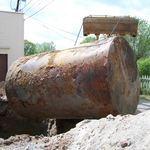
"Willard were great. Very easy and friendly to deal with, knew their stuff. They dealt with getting the permit, showed up on time, drained the old tank, made it go away, and certified that it got recycled. As a homeowner, it's a bit disconcerting to have this sort of environmental hazard around, but they took care of it in a stress-free way."
UST Removal
Recommended by100%of homeowners
...
Showing 1-10 of 74
Excavating questions, answered by experts

Most residential basements are 8 to 10 feet deep. You can dig deeper depending on building codes, but it does become more difficult. You’ll likely need to install stronger foundation walls and additional supports to handle the increased load. Depending on the water table, you may also need a water management system. Clay soil can support a deeper foundation than sandy soil. A structural engineer will be able to tell you the maximum, feasible depth.

There is no standard depth for burying a septic tank; they are typically buried anywhere from 4 inches to 4 feet underground. The final depth depends on several factors, including the depth of your main sewer line, the height of the bedrock, soil type, local regulations, and the property's landscape. If you plan to grow grass or plants over the tank, a depth of at least 4 to 6 inches is recommended. Deeper tanks can be more difficult to locate, but a septic professional can help find it for you.

Skunk digging looks like a series of small, cone-shaped holes on a lawn or around the perimeter of a home, porch, deck, or shed. The holes that skunks dig when searching for grubs tend to be no more than four inches in diameter and may be up to four inches deep.

The easier way to find buried sprinkler lines is to use the plan from the professionals who installed the system. If you don’t have professional plans, listen for running water on your lawn when you turn on the system. You may also spot wet areas, giving you an idea of where the heads are. Once you find the sprinkler heads, you’ll likely be able to connect the dots between them, revealing the system below.

Digging a bush up by the roots is the most natural DIY method for removing a bush stump. Start by identifying the shrub type and revealing its roots. Cut the shrub to its base and loosen the soil, ensuring no utility lines are nearby. Optionally, treat the base with herbicide, then dig around the roots and cut a circle around the shrub using various tools. Dig a trench, cut the base of the root ball, and finally fill the hole to prevent regrowth. This thorough process ensures complete removal without damaging surrounding areas.

The Chesapeake Beach, MD homeowners’ guide to excavation services

From average costs to expert advice, get all the answers you need to get your job done.