

Top-rated electricians.

Get matched with top electricians in Vidalia, LA

Enter your zip and get matched with up to 5 pros

Need a pro for your electrical service project in Vidalia, LA?

Select your specific project to find the pro for you.

TRUSTED BY VIDALIA, LA HOMEOWNERS

  • Average homeowner rating star icon4.6
    Average homeowner rating
  • Verified reviews icon17
    Verified electrical services reviews

Find Electricians in Vidalia

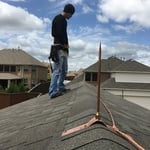
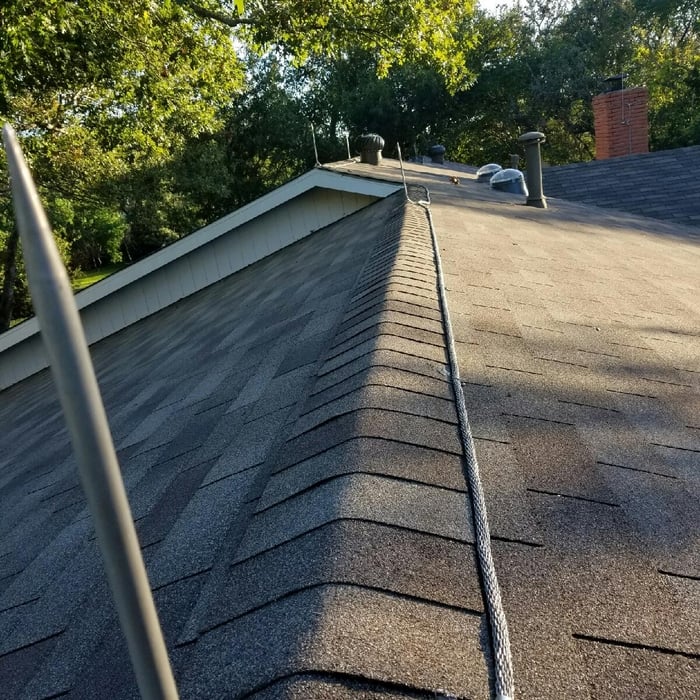
United Lightning Rods
4.9(
63
)

Serving Vidalia, LA and surrounding areas

Approved

Super Service Award Winner

In business since 1941

Free estimates

Warranties offered

"Ed Riley is extremely knowledgeable about what causes lighting and how to protect from it. He explained to me which and how structures develop static electricity that lead to lighting discharges in a way that the physics made sense to me. They were also reasonably priced and kept their word. Definitely recommend them."
Response time2 days
Response rate85%
52 neighbors recently requested a quote
Avatar for Donohue's Lightning Rods
Donohue's Lightning Rods
4.3(
70
)

Serving Vidalia, LA and surrounding areas

Approved

In business since 1971

Free estimates

Emergency services offered

"Sent engineering drawings for review prior to starting work worked over the weekend to beat the insulation schedule on a new build."
Jobs from the last 3 year
Lightning protection

+10

Response time1 day
73 neighbors recently requested a quote
Recommended by96%of homeowners
...
Showing 1-10 of 64
Electrical questions, answered by experts

Window AC units use a fair amount of electricity, but significantly less than central AC systems. Because they are more energy-efficient for cooling individual rooms or small spaces, their usage is comparatively low. On average, a window AC unit consumes between 500 and 1,400 watts, while a central AC system uses over 3,500 watts—meaning a window unit uses about one-third of the energy. This typically translates to a monthly running cost of $15 to $40, although this can vary depending on external factors.

Yes, pool pumps use a significant amount of electricity, making them one of the biggest energy consumers in a home. A pool pump can use up to three times as much electricity as a refrigerator. Typically, a residential pool pump consumes about 1 kilowatt-hour (kWh) for every hour it runs. Because pumps often need to run for about eight hours a day to properly filter the water, this can add up to an annual consumption of 3,000 to 5,000 kWh, which can cost between $480 and $800 per year based on average electricity rates.

The amount of electricity your pump uses depends on its size, energy efficiency, and daily run time. To lower your energy consumption, you can choose an energy-efficient or variable-speed pump, ensure it is correctly sized for your pool, and run it only for the minimum time required to keep the water clean.

The American Wire Gauge system calculates wire size diameters using the complicated formula D(AWG)=.005·92((36-AWG)/39) inch. A simpler rule of thumb is that every six-gauge decrease doubles the wire diameter, and every three-gauge decrease doubles the wire’s cross-sectional area. On the other hand, wavenumbers are typically measured in reciprocal meters (1/m or m−1) or reciprocal centimeters (1/cm or cm−1).

If you find the power cables for your appliances are too short, there are ways to extend them for the cost of just the extra wiring you need. Simply cut and strip your wires, solder them together, and cover them using heat shrink tubing. Not everyone has a soldering tool on hand, so if you’re looking to extend in a pinch, an extension cord, power bar, or surge protector can do the job just fine.

Upgrading your electrical panel is often worth the cost for safety, improved electrical performance, and potential long-term savings. A primary benefit is preventing electrical fires and other hazards from a malfunctioning panel, ensuring your household's safety. An upgraded panel also provides a steady flow of electricity, eliminating issues like flickering lights and frequently tripped breakers. It allows you to connect additional appliances without overloading the system, which is especially beneficial for older homes with 100-amp service that are prone to overheating. If you run large appliances like central air conditioning, heating systems, hot tubs, or saunas, you might consider upgrading to a 300- or 400-amp service to meet the higher electrical demand. Furthermore, an upgrade can lead to long-term savings on energy bills and potentially lower insurance costs.

The Vidalia, LA homeowners’ guide to electrical services

From average costs to expert advice, get all the answers you need to get your job done.

What do you need done? We’ll find top pros.
  • 🌱 "Mow a small front yard"
  • 🛠 "Fix a leaking pipe under the sink"
  • 🏠 "Repair shingles on an asphalt roof"