




Top-rated paving pros.

Get matched with top paving pros in Goodfield, IL

Enter your zip and get matched with up to 5 pros

Need a pro for your paving service project in Goodfield, IL?

Select your specific project to find the pro for you.

Find Paving pros in Goodfield

Avatar for Local Pavement
Local Pavement
New to Angi

Serving Goodfield, IL and surrounding areas

Approved

In business since 2020

Free estimates

Credit card accepted

We offer a wide range of services including Sealcoating, Crack Sealing, & Pothole Repair for residential & commercial properties in Illinois & Wisconsin. Our commitment to excellence is evident in the meticulous upkeep of our trucks and facilities, ensuring top-quality workmanship for every project we undertake.\n\nAs a leading asphalt repair provider that is centrally located between Peoria and Bloomington, Illinois, we proudly serve clients across the entire state. With state-of-the-art equipment, a team of experienced professionals, and a dedication to customer satisfaction, we are well-equipped to handle both residential and commercial projects. Whether it's a small driveway repair or a large commercial resurfacing project, our goal is to deliver unparalleled service and quality, making us the go-to asphalt repair specialist throughout the midwest.
Response time1 day
8 neighbors recently requested a quote
Showing 1-10 of 31
Paving Services questions, answered by experts

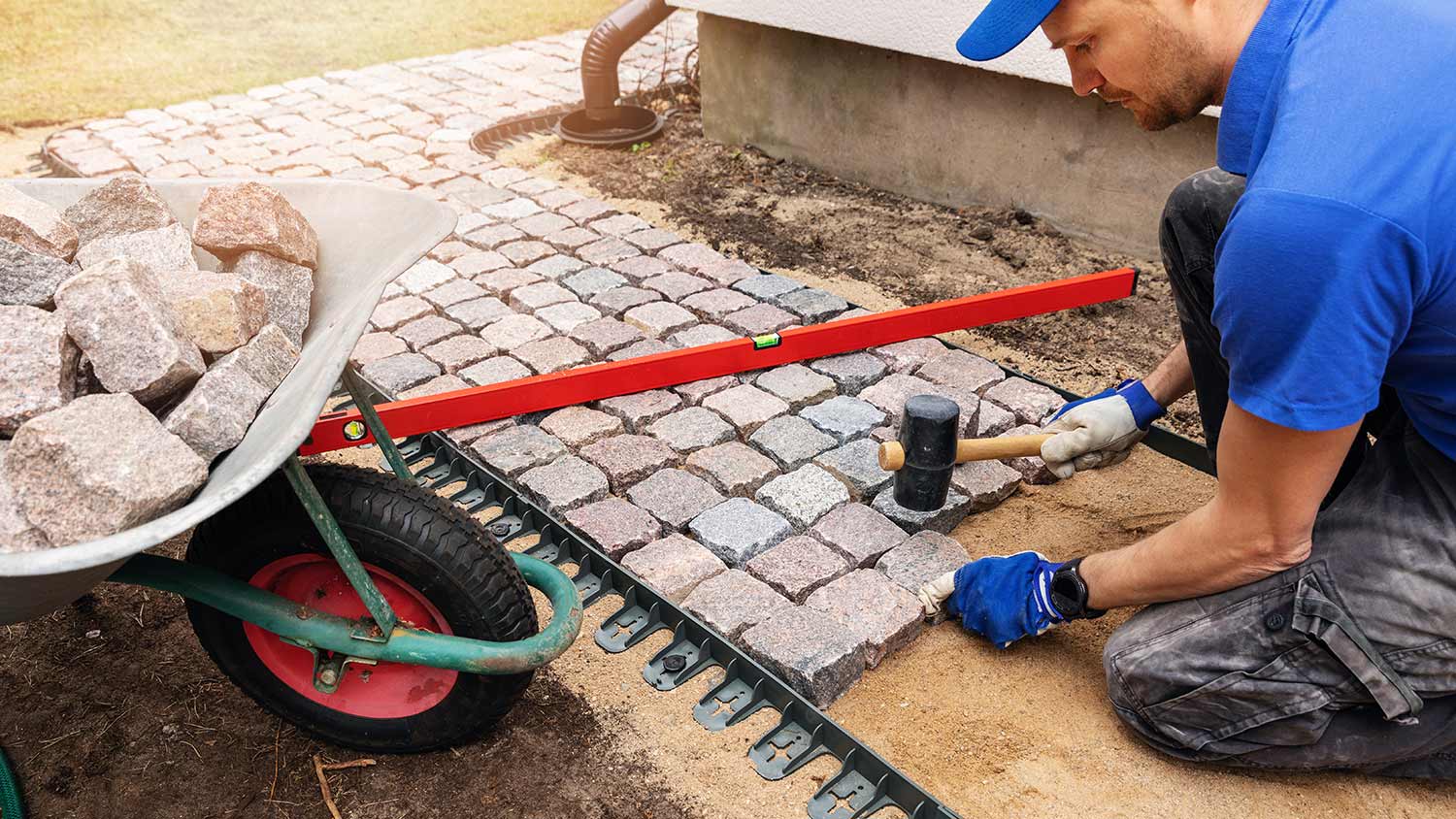
The best way to stop your pavers from sinking is to ensure you've properly compacted the base layers. Use your paver compactor and work over the base layer several times to create the hardest possible base. If the soil and sand of your base are compact, you’ll experience less shifting and sinking.

A pallet of pavers will cost about $300 to $700 per pallet. Each pallet covers about 56 square feet. The specific price you pay per pallet of pavers will depend on a few factors, including the type of paver you’re buying, the size and shape of the pavers, and how many pavers you need. In some cases, you’ll spend less per pallet if you’re buying in bulk for very large paver patios.

Wet cutting is usually the preferred method. It controls dust, which helps protect your lungs and makes for a cleaner working environment. Plus, the water cools the blade, preventing overheating and prolonging its life while providing smoother, more precise cuts. The downside is the mess—water and asphalt sludge can be messy to clean. Dry cutting, though convenient if water isn’t available, creates a lot of dust, which can be harmful. This also increases the risk of blade damage due to overheating. So, if you have the option, wet cutting is the better method for most asphalt jobs.

Many asphalt companies have experience with tar and chip paving, but not all. The process is unique enough—and not incredibly common enough—that you may have to look around for a tar and chip specialist. However, speaking with a driveway company is a great place to start, especially if they have experience with multiple materials.

After removing existing moss, consider using paver blocking sand to fill the joints. This specialty material hardens once placed and serves as an effective barrier against moss and weeds. From there on, regularly clean your pavers and try to keep them dry. You can also seal your paver as a semi-permanent solution — just make sure you reseal every 3 to 5 years.

The Goodfield, IL homeowners’ guide to paving services

From average costs to expert advice, get all the answers you need to get your job done.