



Top-rated tree service pros.

Get matched with top tree service pros in Fairmont, IL

Enter your zip and get matched with up to 5 pros

Need a pro for your tree service project in Fairmont, IL?

Select your specific project to find the pro for you.

Find Tree service pros in Fairmont

McCormick Outdoor Services, LLC
4.3(
13
)

Serving Fairmont, IL and surrounding areas

Approved

In business since 1996

Free estimates

Credit card accepted

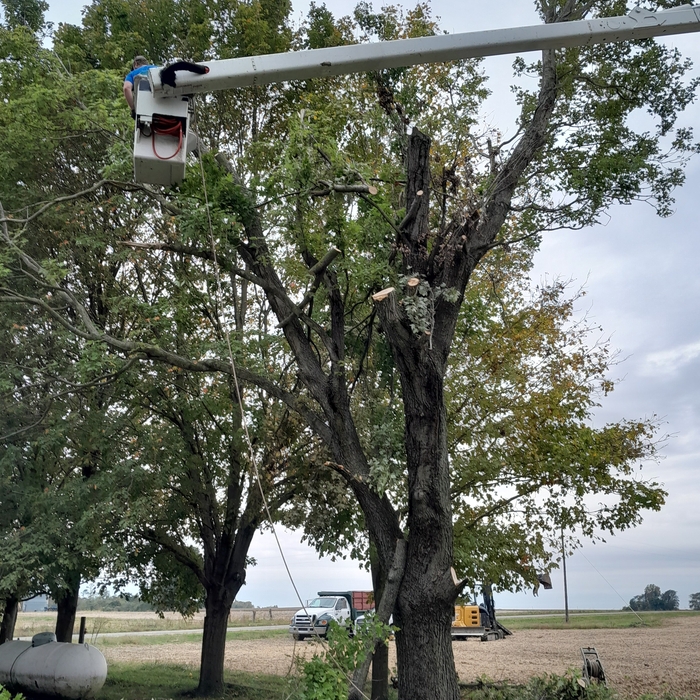
"I had 6 trees removed and some other damaged trees cleaned up from a huge storm by McCormick Outdoor Services. One tree was very large and hanging over the garage. They did excellent work, the price was good, and were very communicative though the process. I will definitely use them again if needed."
Response time2 days
Response rate95%
16 neighbors recently requested a quote

Avatar for Adam Lerma
Adam Lerma
New to Angi

Serving Fairmont, IL and surrounding areas

Approved

Free estimates

Emergency services offered

Warranties offered

I recently moved from the state of Florida to Indiana in 2024, I've been doing masonry work for a little over 6 years now and the previous work I did before that I was a carpenter for 8 years a roofer for 6 years you can say I am a jack of all trades I love the work that I do and I'm hoping I will have the opportunity to work with some you lovely people of Indiana. I live in the Lafayette area and will to serve its surrounding cities.

2 neighbors recently requested a quote
Showing 1-10 of 36
Tree Service questions, answered by experts

You should avoid cutting off the top of mature cherry trees. This process is called tree topping, and it’s not recommended for cherry trees—or any trees, for that matter. Tree topping removes between one-third to half of the length of the tree trunk, resulting in structurally unsound, fruitless suckers. The only exception is for saplings. Young pie, sour, and tart cherry trees that are over 30 inches tall in the fall or winter before the tree blooms can benefit from heading cuts.

Dying trees and even dead trees can spread diseases to other living trees. There are many different types of tree diseases, so it’s essential to address the issue as soon as possible to prevent the disease from spreading to other healthy trees. If the tree cannot be saved and is infected, you need to have it removed to protect the other trees on your property.

Before you cut down a dead palm tree, try to revive it using the methods listed above. However, there are instances when it makes sense to remove a dead palm tree, including:

  • The heavily infected tree will infect nearby trees, bushes, and plants.

  • The palm’s roots are overtaking your yard, foundation, and sidewalk and causing structural damage.

  • The tree is unstable and a hazard to your property, your neighbor’s property, and pedestrians.

Completely topping a plum tree is a risky business. Cut too much, and you’ll kill your tree. That said, you do need to trim the top of your tree to encourage bushy growth, maintain your tree’s vase shape, and limit size. 

A plum tree's central leader (or trunk) should never extend more than 3 feet above the highest branch. When you first plant your tree, cut the central leader so it’s 2 to 3 feet tall. As it grows, cut it back 12 to 20 inches until it reaches its desired height. Never prune more than one-third of the new growth.

While there is a lot of debate about whether boiling water is strong enough to kill tree roots, it is not best to remove the roots from large, old trees. You may be able to weaken young roots enough to remove them manually, but boiling water will likely not do the trick for large root systems.

The Fairmont, IL homeowners’ guide to tree services

From average costs to expert advice, get all the answers you need to get your job done.