


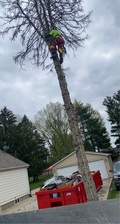





Top-rated tree service pros.

Get matched with top tree service pros in Catlin, IL

Enter your zip and get matched with up to 5 pros

Need a pro for your tree service project in Catlin, IL?

Select your specific project to find the pro for you.

TRUSTED BY CATLIN, IL HOMEOWNERS

  • Average homeowner rating star icon4.4
    Average homeowner rating
  • Verified reviews icon31
    Verified tree services reviews

Find Tree service pros in Catlin

McCormick Outdoor Services, LLC
4.3(
13
)
Tree RemovalTree Removal - For Business

Serving Catlin, IL and surrounding areas

Approved

In business since 1996

Free estimates

Credit card accepted

"I had 6 trees removed and some other damaged trees cleaned up from a huge storm by McCormick Outdoor Services. One tree was very large and hanging over the garage. They did excellent work, the price was good, and were very communicative though the process. I will definitely use them again if needed."
Response time2 days
Response rate94%
14 neighbors recently requested a quote

Avatar for Block Arborcare
Block Arborcare
5.0(
3
)
Tree RemovalTree Removal - For BusinessTree Stump - Remove+5 more

Serving Catlin, IL and surrounding areas

In business since 2024

Free estimates

"Connor went above and beyond. I had a very large tree limb fall and and go through a fence. He came out to give a quote and mentioned he could repair the fence as well. Work was completed in a timely manner and price was very fair. Will definitely recommend to anyone I know looking for tree work!"
Recommended by100%of homeowners
Showing 1-10 of 33
Tree Service questions, answered by experts

Yes, it’s okay to trim low branches on a tree, also known as limbing up or raising the crown. Essentially, you’ll trim the lower third of the tree (trunk) and leave the upper two-thirds of the tree (crown). Arborists recommend trimming 20% of a tree’s leaves per season for two to three seasons. Trimming low branches allows light to flow through the tree, increasing circulation and making the tree stronger and healthier.

In general, trees should be planted no closer than 15 to 20 feet from your foundation. For larger trees with far-reaching roots like maples, oaks, or poplars, a good guide is to plant as many feet from your home as the tree’s height is expected to reach at maturity. Some trees, like elms and willows, should only be planted far from where their roots may encounter sewer or water lines.

The ideal time to prune a tree depends on the type of tree. Typically, late winter or early spring is a good time to prune but isn't always the case for "towering trees." It's best to trim when trees are dormant and before blooms appear but can vary depending on the tree type. It's always best to research the type of tree or ask a professional tree trimmer to determine when is the perfect time to prune your tree.

Generally, no, tree topping isn’t a good technique, and you should avoid using it in most cases. Tree topping may be the only good option to save a tree following severe damage after a storm, but in most other cases, it’s not the right choice. Tree topping can leave trees vulnerable to disease and further damage, and most pros will suggest against it.

The fastest ways to remove a tree stump are by grinding it or burning it.

Stump grinding is often the quickest method, with professionals able to chip away a stump and its roots within a single session. You have the option to hire a professional stump removal service or rent a stump grinder to do it yourself. However, it's important to note that these machines can be large, difficult to transport, and dangerous to operate without prior experience. For safety reasons, hiring a local arborist or landscape specialist is often recommended.

Burning is another fast option. Before you begin, check your local burn laws. The process involves drilling holes into the stump, filling them with vegetable oil, and waiting 24 to 48 hours. Afterward, you can add charcoal bricks to the surface and light the fire, which must be attended at all times.

For a more affordable but much slower alternative, you can use potassium nitrate pellets to accelerate the natural decomposition process. This method typically takes four to six months.

The Catlin, IL homeowners’ guide to tree services

From average costs to expert advice, get all the answers you need to get your job done.