







Top-rated excavation pros.

Get matched with top excavation pros in Lone Pine, CA

Enter your zip and get matched with up to 5 pros

Need a pro for your excavation project in Lone Pine, CA?

Select your specific project to find the pro for you.

Find Excavation pros in Lone Pine

Avatar for Krow Construction
Krow Construction
New to Angi

Serving Lone Pine, CA and surrounding areas

In business since 2020

Free estimates

Warranties offered

We take great pride in our experience, expertise, quality, and customer service that we provide to meet the consumer's needs. It is our mission to provide excellent workmanship and complete customer satisfaction from start to completion of a project. In order to understand the needs and expectations of our customers, we take great care to work and communicate with every customer in a professional manner. Our reputation is based on service, safety, and quality, regardless of how large or small the job.\n\n

Response time1 day
Avatar for Rock-N-Dirt, Inc.
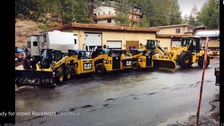
Rock-N-Dirt, Inc.
1.3(
3
)

Serving Lone Pine, CA and surrounding areas

In business since 2004

Free estimates

Credit card accepted

We pride our company on reliability, great communication, integrity, and quality work. We strongly believe in giving our absolute best in all the work we perform. We are experts and will always keep you educated about the work process. We look forward to earning your business.

Recommended by100%of homeowners
REGIER CONSTRUCTION COMPANY
New to Angi

Serving Lone Pine, CA and surrounding areas

In business since 2023

Free estimates

Offers commercial services

REGIER CONSTRUCTION COMPANY is committed to excellence in every aspect of our business. We uphold a standard of integrity bound by fairness, honesty, and personal responsibility. Our distinction is the quality of service we bring to our customers. Accurate knowledge of our trade combined with ability is what makes us true professionals. Above all, we are watchful of our customers' interests, and make their concerns the basis of our business.

Excavating questions, answered by experts

The best way to protect tree roots is to avoid the roots entirely by excavating outside the root radius of the tree. For nearby projects, it’s a good idea to construct a temporary retaining wall. But that’s not always possible, depending on the project and the root system. In these cases, consider using alternative equipment like an auger to tunnel under the ground.

Remember, tree roots can damage nearby cement foundations as they grow. If a tree is close enough to interfere with large excavations, it may be better to remove the tree than risk future problems.

Professional installers often include a deep layer of crushed gravel under permeable pavers to allow more runoff to soak through into the soil below. Many installations will include multiple layers of gravel, with coarser aggregate at the base and finer aggregate that sits on top of that bottom layer. Above the gravel, you’ll often find coarse sand that helps reduce paver shifting over time. Some permeable paver designs include a water collection system set into the gravel layer to route runoff to a safe area for disposal.

The best method for digging a trench depends on the scope of the project. For a short, shallow trench (less than 2 feet deep) in light, soft soil, digging by hand may be sufficient. However, digging by hand is labor-intensive, so consider the effort required. A machine trencher is the better option for longer trenches (over 100 feet), deeper ones, or when dealing with difficult soil conditions, such as rocky or hard ground, or obstructions like tree roots. A machine can save significant time and energy in these situations.

Excavations take a few days or up to a few weeks. The time it takes to excavate an area depends on the size of the area, the type of soil, the type of excavator, and even the time of year, since winter can make digging up the ground more difficult.

No, you typically cannot use metal detectors to find your sewer line. Most sewer lines are made of non-metallic materials such as PVC, clay, or cast iron, which are not detectable by standard metal detectors. Metal detectors are designed to locate metallic objects, so they won't be effective for identifying the path of a non-metallic sewer line. To locate your sewer line accurately, it's best to use other methods.

The Lone Pine, CA homeowners’ guide to excavation services

From average costs to expert advice, get all the answers you need to get your job done.




