



Top-rated retaining wall installation pros.

Get matched with top retaining wall installation pros in Newark, AR

Enter your zip and get matched with up to 5 pros

Need a pro for your retaining wall installation project in Newark, AR?

Select your specific project to find the pro for you.

Find Retaining wall installation pros in Newark

Diamond State Gutters - Inicio Facebook
New to Angi
Retaining Wall - Install

Serving Newark, AR and surrounding areas

In business since 1992

With over 20 years experience, Steveans Construction is proud to provide the White county and surrounding areas with a turnkey package. You will find that our commitment to superior customer satisfaction is guaranteed to give you peace of mind.\n\nWe are the quality professionals you need for your job. From framing to wood stairs to siding and drywall, we do it all. If it must be done right the very first time, what are you waiting for? Call Steveans today!\n

The Upton Group
New to Angi
Retaining Wall - Install

Serving Newark, AR and surrounding areas

In business since 2010

Free estimates

The Upton Group, is a locally owned and operated company that values honesty and integrity and treats your home as if it were our own. We provide a variety of quality building, remodeling, and home improvements. You will find that we pay close attention to the details of each and every project. We look forward to building long lasting relationships and guarantee your satisfaction!

Showing 1-10 of 11
Retaining Wall Installers questions, answered by experts

While vinyl is the least costly material for building a retaining wall, the most cost-effective method is to use wood or concrete blocks for a DIY retaining wall under 2 feet tall. Wood is inexpensive but lasts 20 years or more with care. Concrete can cost a little more but is stronger and will last longer with less maintenance.

Generally speaking, a retaining wall should be between 3 and 4 feet high, depending on variables such as the wall-building material, the purpose of the retaining wall, and more. If you want your retaining wall to be taller than 4 feet, check with your local building ordinance office for the maximum allotment. You may also need a special permit for retaining walls over 4 feet tall.

Sand and gravel are two suitable options for filling behind a retaining wall. If you’re building your own retaining wall, you’ll complete this part of the process—known as backfilling—after you finish laying the blocks. Make sure not to skip it—otherwise, you could wind up with drainage issues, which can cause your retaining wall to collapse.

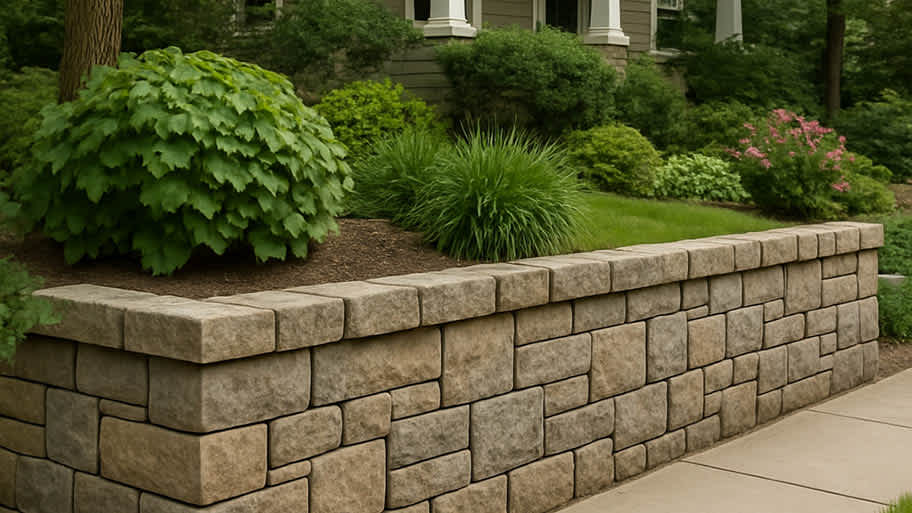
Options include concrete, stone, brick, and wood, tailored for specific design needs.

The lifespan of a retaining wall varies based on its material, installation quality, maintenance, and local climate, with an average range of 20 to 100 years. Retaining walls made from durable materials like concrete, stone, and brick generally last a minimum of 50 years. Concrete walls typically last between 50 and 100 years, while brick can last for over a century in ideal conditions. Timber retaining walls can last from 20 to 40 years, depending on the wood quality, and pressure-treated wood walls average around 30 years. It is important to note that a retaining wall can fail prematurely if it was poorly constructed, for example, with inefficient footings or without necessary rebar reinforcements.

The Newark, AR homeowners’ guide to retaining wall installation services

From average costs to expert advice, get all the answers you need to get your job done.