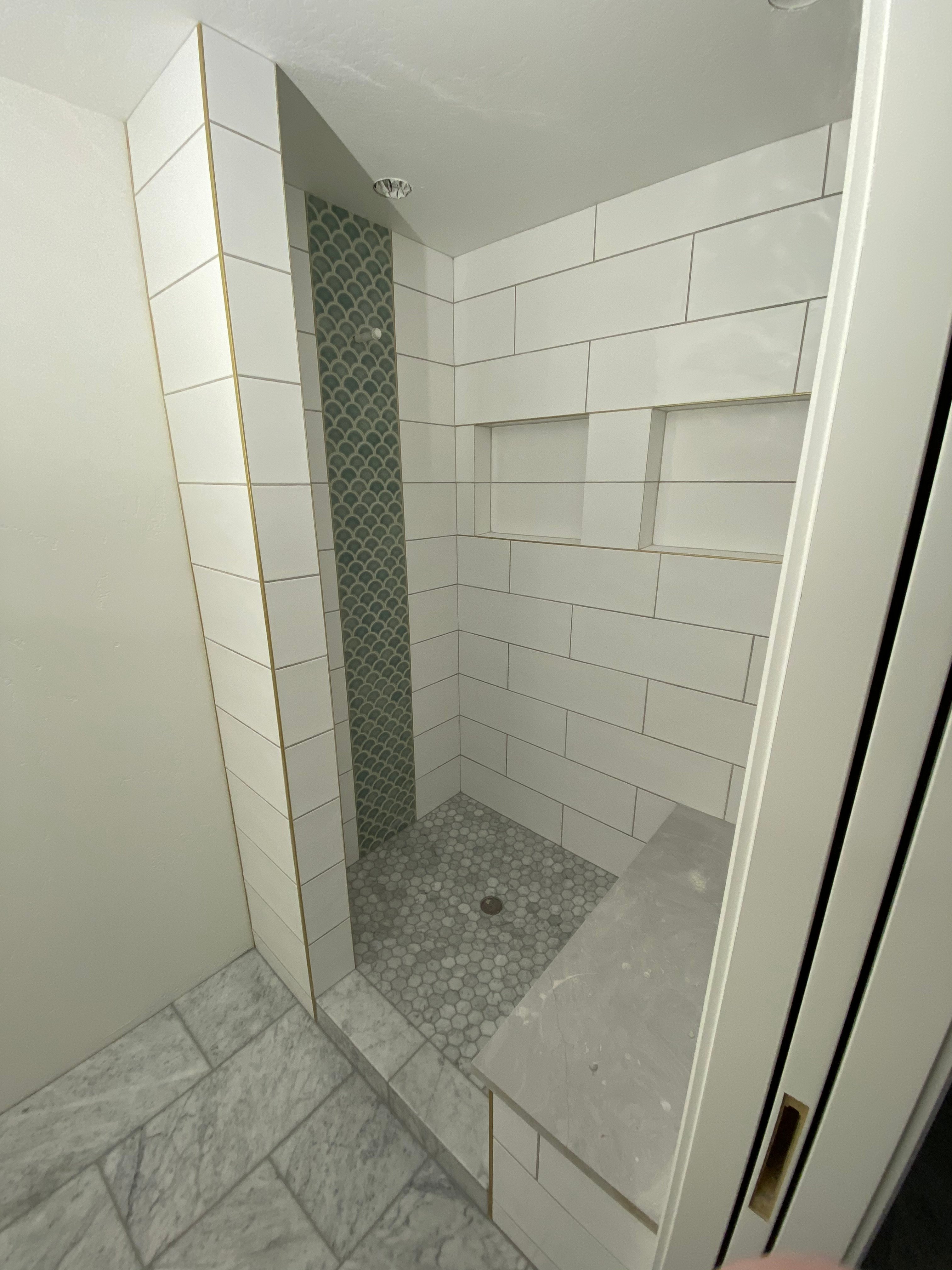



Top-rated ceramic tile pros.

Get matched with top ceramic tile pros in Lincoln, AR

Enter your zip and get matched with up to 5 pros

Need a pro for your ceramic tile service project in Lincoln, AR?

Select your specific project to find the pro for you.

Find Ceramic tile pros in Lincoln

Dominguez Flooring
4.6(
59
)
Tile: Ceramic and Porcelain - RepairTile: Ceramic and Porcelain - Repair- For Business

Serving Lincoln, AR and surrounding areas

Approved

Super Service Award Winner

In business since 2002

Free estimates

Warranties offered

"We got a walk-in tub and needed to retile the wall around it. Another company we called wouldn't touch the job because there was and existing soap shelf which was tricky to cover up. Manuel and Victoria not only solved that problem but suggested a tile that turned out much better than the one I had in mind. The work was beautiful. Victoria and Manuel were super professional throughout. They wore masks the whole time and exchanged material they had already bought because they didn't think it looked quite right. We are very happy with their work and recommend them 100%!"
Response time12 hrs
Response rate88%
49 neighbors recently requested a quote
...
Showing 1-10 of 82
Ceramic Tile questions, answered by experts

On average, tiling a bathroom involves about 12 hours of labor, usually spread over two to three days to accommodate prep work and curing times. A professional tiler can often complete the installation in 6 to 8 hours, whereas a DIYer might take 10 to 16 hours. The total project time is influenced by factors like the bathroom layout, tile type, and necessary prep work, such as removing old tile. The process includes specific timelines for different areas; for example, tiling a floor takes about six hours, while a shower area can take six to ten hours. It is essential to allow for adequate curing time—typically 24 hours each—for the mortar, grout, and caulk, which is why the project extends over several days.

Natural stone floors, especially pebble-style tiling, are one of the least slippery options for a shower floor. Natural stone has a texture to reduce slickness, and pebble-shaped tiles add more visual and textural contrast while reducing slippage. Vinyl tiles are also designed with anti-slip texture for added safety. If you have a slippery tile, be sure to add a grippy shower mat to reduce the risk of falls.

The rule tells you how to cut tile to install it in a corner. The 3/4/5 rule recommends that you should have 3 feet across on one straight line, four feet on the other perpendicular line, and 5 feet of length from the end of one of the lines to the other. You’re making a right triangle with the tile, and the hypotenuse (the line across from where the 3-foot lie and 4-foot line meet) should be 5 feet long.

Yes, you can tile over existing tiles in a bathroom, but it is not always recommended. For this method to be successful, the original tile surface must be clean, flat, and free of damage such as cracks, unevenness, mold, or mildew. While tiling over existing tiles can save time and money, there are potential drawbacks. The new adhesive may not bond properly, and the process adds extra weight to the wall or floor. Additionally, the increased height of the surface could interfere with door clearances. For the best and most durable results, removing the old tiles before installing new ones is generally the better option.

Porcelain is a relatively affordable, mid-range countertop material. It typically costs between $50 to $70 per square foot.

Compared to quartz, porcelain is slightly more affordable, as quartz generally ranges from $50 to $200 per square foot. However, lower-quality, builder's grade quartz can be similar in price to porcelain.

Compared to granite, the price can be similar, depending on the quality of the stone. While granite slabs can range from $50 to $200 per square foot, you can find lower-end granite in the same price range as porcelain. High-end granites will cost significantly more.

Porcelain is generally more expensive than laminate, acrylic, and ceramic, but less expensive than high-end slate, concrete, and marble. A key benefit is that porcelain does not require sealing, which reduces long-term maintenance costs.

The Lincoln, AR homeowners’ guide to ceramic tile services

From average costs to expert advice, get all the answers you need to get your job done.