
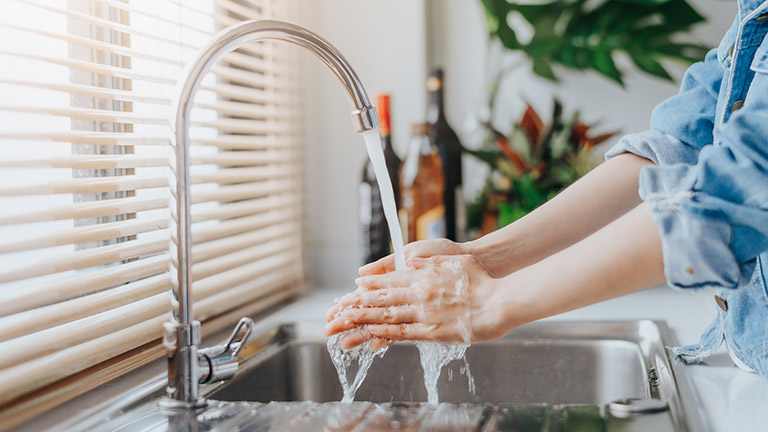
Water softeners remove minerals from hard water in your home and make your water more pleasant to use. Learn more about how they work here.
Making a hard choice easier

The difference between a water conditioner and a water softener matters because both treat your water, but softeners permanently remove hardness minerals while conditioners temporarily alter chemistry.
Water softener installation costs average $1,500, ranging from $200 to $6,000, while water conditioners average $1,500, ranging from $900 to $5,000, depending on your home's size and system type.
The better choice for your home depends on whether you have hard water or well water needing full softening versus taste and smell concerns that conditioning addresses.
Hiring a local water softener installation professional provides reliable guidance on analyzing your water quality and selecting the right system for your home's specific needs.
If you have hard water, water softeners and conditioners can both be solid options. However, they are two distinct systems that provide different results. Water softeners permanently change the structure of the water, and conditioners temporarily change the water’s chemistry. Both can prevent limescale buildup and damage to your appliances and plumbing, but water softeners offer even more great benefits for you and your home. Read on to learn more about water softeners versus water conditioners and when to choose each.

The main difference between water softeners and water conditioners is what they remove. Water softeners remove hardness minerals such as magnesium, calcium, and iron, but water conditioners temporarily alter the water’s chemistry to remove contaminants.
Water softeners exchange ions with water on a molecular level. Water runs over resin beads coated in sodium ions to displace the minerals. The ion exchange gives the water a balanced charge and softer molecular composition. Water softeners provide permanent change to the water, which not only protects your plumbing and appliances but also your hair and skin.
Water conditioners remove chemicals like chlorine and contaminants like lead and organic gases, but they have limited water-softening abilities. Instead, they alter your water’s taste and smell. They can reduce hard water scaling on plumbing and fixtures, but they don’t actually soften the water. Instead, they temporarily alter the chemistry.
| Type of Difference | Water Softener | Water Conditioner |
|---|---|---|
| What it removes | Hardness minerals | Contaminants |
| Results | Soft water | Better taste, smell |
| Cost | $1,500 on average | $1,500 on average |
| Installation | Moderate | Easy |
| Life span | 10–25 years | 10–25 years |
| Approved areas | Most municipalities | All municipalities |
Water softeners and water conditioners differ in their process, purpose, and more. Learn the key differences between these systems to ensure you choose the right fit for your home.
Water softeners remove hardness minerals, while water conditioners temporarily alter the chemistry to remove contaminants, such as lead. If you have hard water or well water, choose a water softener. If you just want to remove contaminants, opt for a conditioner or a water filter.
Because there is no government oversight of private wells, people relying on them are responsible for managing their own water quality to ensure it is safe (and enjoyable) to drink.
Water softeners turn hard water into standard soft water that does not leave limescale buildup on pipes and appliances. They also prevent mineral deposits that can cause itchy skin, flat hair, spots on your dishes, and faded clothing.
A water conditioner temporarily changes the chemistry of the water to improve the taste and smell and prevent some limescale buildup. A conditioner does not soften the water or offer benefits to your hair, skin, and clothing.
The cost of a water softener is $1,500 on average, but can range from $200 to $6,000 depending on your home's size and the system. A pro should handle water softener installation.
The cost of a water conditioner ranges from $900 to $5,000, with $1,500 being the average. You can install a point-of-use conditioner yourself, but a whole-house system requires a pro.
A water softener is a point-of-entry system, meaning it treats the water for your entire home. A local water softener installation company installs it where the water line comes into your house. A water softener requires electricity, a drainage line, and salt or brine to operate.
A water conditioner can be point-of-entry or point-of-use (like under-sink conditioners), so it doesn’t always require a drain line. A conditioner can be installed for a single faucet or individual appliance, such as a water heater, to prevent limescale buildup.
Both water softeners and water conditioners last 10 to 25 years, depending on the system and how well it is maintained and repaired.
Water conditioners are legal everywhere since they don’t release salt into the wastewater.
However, some states and municipalities have banned salt-based water softeners because they discharge salt into the wastewater, which can be difficult for treatment plants to remove and can even reach lakes and rivers. Check with your local municipality to verify what types of water softeners are permitted.
Water softeners and conditioners are both great appliances to invest in if you experience hard water or water that doesn’t taste all that good. If you're concerned primarily with scale buildup or use well water, focus on water softeners. If you really just want to improve your water’s taste and smell, a conditioner might be the better choice.
Still unsure how to choose a water softener or conditioner? Contact a local water softener company to analyze your water. You can also test your water with a home kit or work with a professional lab to determine your water quality, which can give you some helpful data to base your decision on.
If you’re good people wanting to do business with good people, hire Matt. He is a consummate professional and utterly competent. He installed a water heater in my home at a price that beat competitors by hundreds of dollars with a promise to support the unit for its life (even after its 6 yr...
 Greene's Plumbing Services
As usual with ECO, tech Jordan was outstanding, very professional, very knowledgeable, and very thorough with repairs made to tankless water heaters. Very highly recommend ECO!!!
 Eco Plumbers, Electricians, and HVAC Technicians
Did a great job replacing the ice maker and water regulator on my refrigerator. He was quick and thorough, very friendly and professional. If I needed a heart transplant I'd want him to do it!!!
We had a gutter blockage that was causing water to sheet down the side of the house and ultimately it started to come in at a window (need mortar people next). Called around 7:30am, and he responded by 8am. He was able to come out the same morning and do a look over and clean out. He also...
Scott checked our large crawl space for mold and water infiltration and recommended a viable solution. The crew was efficient and they cleaned up well after the job. The job was expensive but I am confident that I won't have to deal with the problem again. Highly recommend.
 AdvantaClean of Dublin
They were the most through inspecting the water system in my house. Even going the extra mile to get the water professionally tested for contamination.
 Hague Water Conditioning, Inc.
It went very well. The drain is absorbing all the access water. I had other estimates a year earlier and Hughes was right on. I will use them, again.
 Hughes Construction Co
Very well. Have already used them again to fix hot water heater
 Service Olympians
The Paul Davis team was very professional and went the extra mile to take care of my water damage. The work was very high quality and done in a timely manner. I would highly recommend their services.
 Paul Davis Restoration
Honesty is hard to find in business today. GBR met me today at a 3 story building regarding my being told that I needed to tuckpoint the brick because of water leaks. The owners took the time to evaluate the situation and advised me that I did not need their service at all. They pointed me...
 GBR Masonry Inc
From average costs to expert advice, get all the answers you need to get your job done.
Water softeners remove minerals from hard water in your home and make your water more pleasant to use. Learn more about how they work here.
There are many pros and cons of salt-free water softeners that could impact your decision to buy one. Stay tuned to learn more about salt-free water softeners.

Descalers and softeners both prevent scale buildup—but in different ways. Not sure which one you need? Here’s a rundown of descalers versus water softeners.

There are many water softener benefits, including better water flow, lower energy and maintenance costs, cleaner dishes, and healthier skin and hair.
Water softeners and filters might sound similar, but they serve different purposes. Here’s what to know when comparing a water softener versus a water filter.

Trying to decide between the different types of water softeners? Our guide will help you choose the right salt-based or salt-free option for your home.