
Discover the average tree maintenance cost, key price factors, and tips to save. Get expert insights to plan your tree care budget with confidence.
Get a professional arborist to prune those big, unruly trees to keep them healthy, safe, and attractive

Tree crown reduction uses precise drop crotch pruning cuts to control your tree's size and shape while preserving its natural structure and health.
Expect to pay $270 to $1,800 for professional tree trimming, which keeps your trees safe and attractive without the risks of topping.
Crown reduction removes no more than 25% of your tree's canopy at once, while topping indiscriminately removes over 50% and weakens trees.
Hiring a local arborist professional provides expert guidance on selective pruning and crown reduction, keeping your large trees healthy and properly maintained.
Tree topping and crown reduction are often confused, and many people think they're the same practice. But there are significant differences. Topping is a banned practice in many areas and is generally frowned upon by professional arborists because it involves indiscriminately removing all the top growth of a tree and can easily weaken or kill it.
That said, there are times when topping is the only way to save a tree. And then there's deadwooding, which involves only removing dead or dying portions of a tree.
| Type of Difference | Tree Topping | Crown Reduction |
|---|---|---|
| Technique | Indiscriminate Cuts | Precise Cuts |
| Amount Removed | No Limit | No More Than 25% |
| Best Used For | Storm Damage Repair | Shape/Size Control |
In tree topping, the tree receives indiscriminate heading cuts that ruin the crown structure in a misguided attempt to control tree size. This practice is sometimes called hat racking because once the arborist removes the tree's canopy and reduces the majority of upper branches to stubs, the remnants of the tree resemble a hat rack. Tree topping creates all kinds of problems and can easily kill a tree or make it susceptible to diseases and insect infestation.
Crown reduction, on the other hand, uses drop crotch pruning cuts. Essentially, the arborist selects parent branches that have a lateral or side branch of at least one-third of the diameter of the parent branch. Once the arborist identifies a suitable parent and side branch, they’ll cut the parent branch just above the crotch, or the point from which the lateral branch grows.

Tree topping removes a substantial portion of the tree's crown, often cutting back 50 percent or more of the tree’s height. This method can involve drastic cuts to the upper branches that lead to large, exposed stubs and can cause stress on the tree.
Crown reduction is much more conservative when it comes to removal—most arborists will remove around 20 to 30% of the crown in order to maintain the tree’s natural shape and structure. Since crown reduction is a more intentional, careful process, it helps promote the health of the tree and ensure its growth patterns are in good shape for a long, lasting life.

Overall, tree topping should rarely be used and, in many areas, it's a banned practice for city-owned trees. When an arborist removes the parent branches without consideration of the size of the lateral branches, and where lateral branches are too small, the lateral branches cannot take on the terminal responsibility of the parent branch. This can ruin the tree's natural growth habit and lead to lots of weak, leafy growth sprouts from the cut on the parent branch. This growth creates a dense canopy that's prone to fungal pathogens because there's not enough airflow.
However, there is one time when tree topping may be the only option to save a tree. If a tree has suffered severe damage from a storm or a natural disaster and much of the canopy and crown is significantly damaged, then tree topping might be the only choice.
On the contrary, crown reduction should be the primary method you opt for to control the height and shape of your trees. It's important not to over-prune, but with large, mature trees, periodic crown reduction helps to keep them safe, healthy, and manageable. To avoid shocking your tree, never remove more than 25% of its canopy at any one time.
Never opt for topping when crown reduction is an option. Hire an arborist to prune your trees. While most arborists generally consider winter the optimum time; they can perform crown reduction any time apart from spring when the tree is just starting to produce leaves.
Crown reduction is a carefully selective pruning process that aims to control the size of the tree and improve health, shape, and appearance with precise cuts. Crown reduction is the key method professional arborists use to control the shape and size of a tree. It reduces the size of the crown while leaving the structure of the crown unharmed. An arborist selectively removes live branches to decrease the height and spread of the crown and to open up the crown to increase airflow through the canopy.
When trimming trees, it's essential to prioritize safety by maintaining a safe distance from power lines, avoiding the potential fall path, and wearing protective gear. We strongly recommend hiring a professional tree service to trim large trees, given the significant safety risks.


Deadwooding is another tree maintenance service often confused with tree topping or crown reduction. Deadwooding involves seeking out and removing diseased, dying, or dead limbs. Consult with a local arborist to see if your tree needs deadwooding.
This practice helps to limit the spread of disease, makes the tree safer, and reduces the risk of falling or broken limbs.
If your tree shows signs of disease, you've got a split branch, or a dead limb, then you need a deadwooding service. The tree surgeon will get up near the tree's crown and identify which limbs need removing.
Remember, from the ground, you may not be able to see the full extent of the problem. So, when your chosen pro gets up there, they may find that multiple branches are affected or that, while you thought you had a single limb with storm damage, you've actually got a significant infestation of borers or a disease that's spreading from limb to limb.
While you may be tempted to save a few dollars and prune your overgrown tree yourself, it’s a job that is better left to a local tree pruning professional due to its safety risks. Whether you have the right size ladder or not, pruning large trees requires skill, technique, and tools that are obtained over years by licensed arborists or tree trimmers. The cost of tree trimming ranges from $270 to $1,800, depending on the size of the tree and how much trimming needs to be done.
This service was great. My air conditioner went out during the heat spell that we had. My husband has health issues and they came out that night and at 9:30pm the air conditioner was fixed and running. We are sooo very thankful, this is the company I will be using from now on and would...
 Mr. Mechanical Ohio
One of my old tall evergreen trees was suddenly leaning toward the busy street in front of my house. I submitted a request for an emergency tree inspection, and Alejandro, owner of Cajete Tree Service, contacted me immediately and arrived to look at it just 20 minutes later. We agreed the...
 Cajete Tree Service LLC
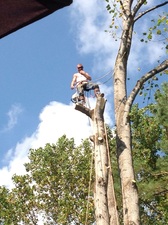
1 tree was cut down and 5 others including a large willow tree were trimmed. The Grant Tree Service men were professional and cleaned up afterwards. The cost of the 6 trees were affordable. I am very happy with the results. I would hire them again.
 Grants Tree Service
D1 Roofing delivers outstanding service from beginning to end, backed by a strong warranty and expert teams. I highly recommend them for their excellence in meeting and surpassing expectations with unmatched communication. Choosing D1 Roofing was flawless decision
 Division 1 Roofing LLC
Promptly arrived for quoting! Demonstrated superb customer service, affordable pricing, and completed service swiftly! Looking forward to the spring for our service!
 All Star Paving and Sealing
Seth was very professional, prompt in responding to queries about the work required , gave sincere advice as to what would be best for tree trimming and did the job timely.
Ace Fireplace Services' chimney sweep service is truly exceptional. They used advanced technology to ensure a thorough cleaning process, and my chimney has never looked better. I highly recommend their services.
 Ace Fireplace Services
I definitely recommend Ramonaâ s cleaning service! I have booked services with her many times and she arrives on time, ready to work and provides a great service.
 Your Cleaning Solutions LLC
Webb â s was priced well, flexible on scheduling, great with communication, and detailed in their work. Iâ ll definitely use their services again.
 Webbs Pressure and Paint LLC
Great tree company, very professional and honest. Glad we found them, they had the best pricing
From average costs to expert advice, get all the answers you need to get your job done.
Discover the average tree maintenance cost, key price factors, and tips to save. Get expert insights to plan your tree care budget with confidence.
The cost to remove palm trees depends on several factors, including their size, location, and more. Our guide shows the average palm tree removal costs.

Discover what the current average tree removal cost is based on different factors to know how much it will cost to take care of a dead or troublesome tree on your property.
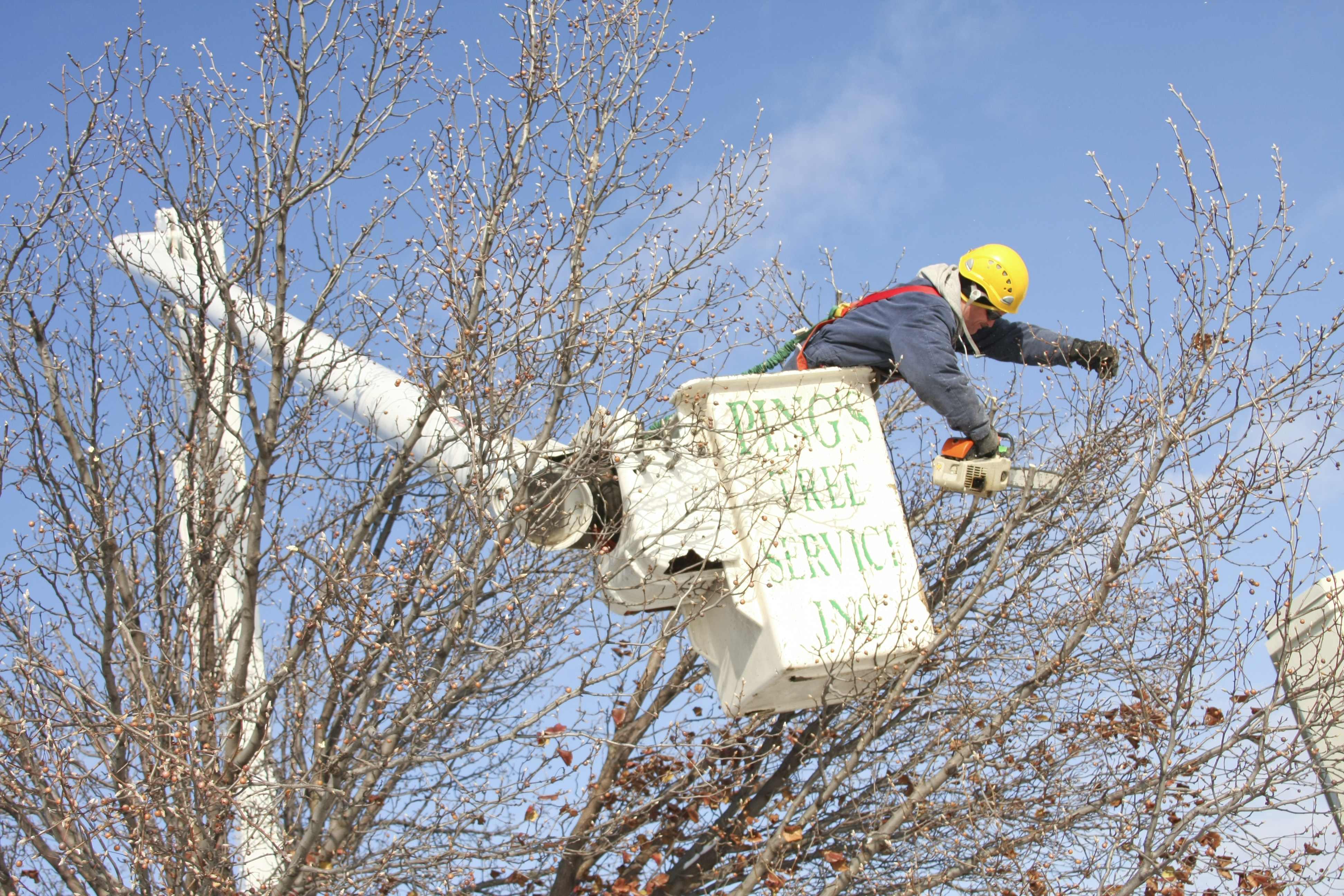
Learn the benefits of pruning your trees and caring for them every spring, and why this process differs from harmful tree topping.
Tree care often involves regular pruning, but homeowners should be aware that tree topping techniques can harm your tree. Learn everything you need to know about this technique and the reasons why it can be harmful.
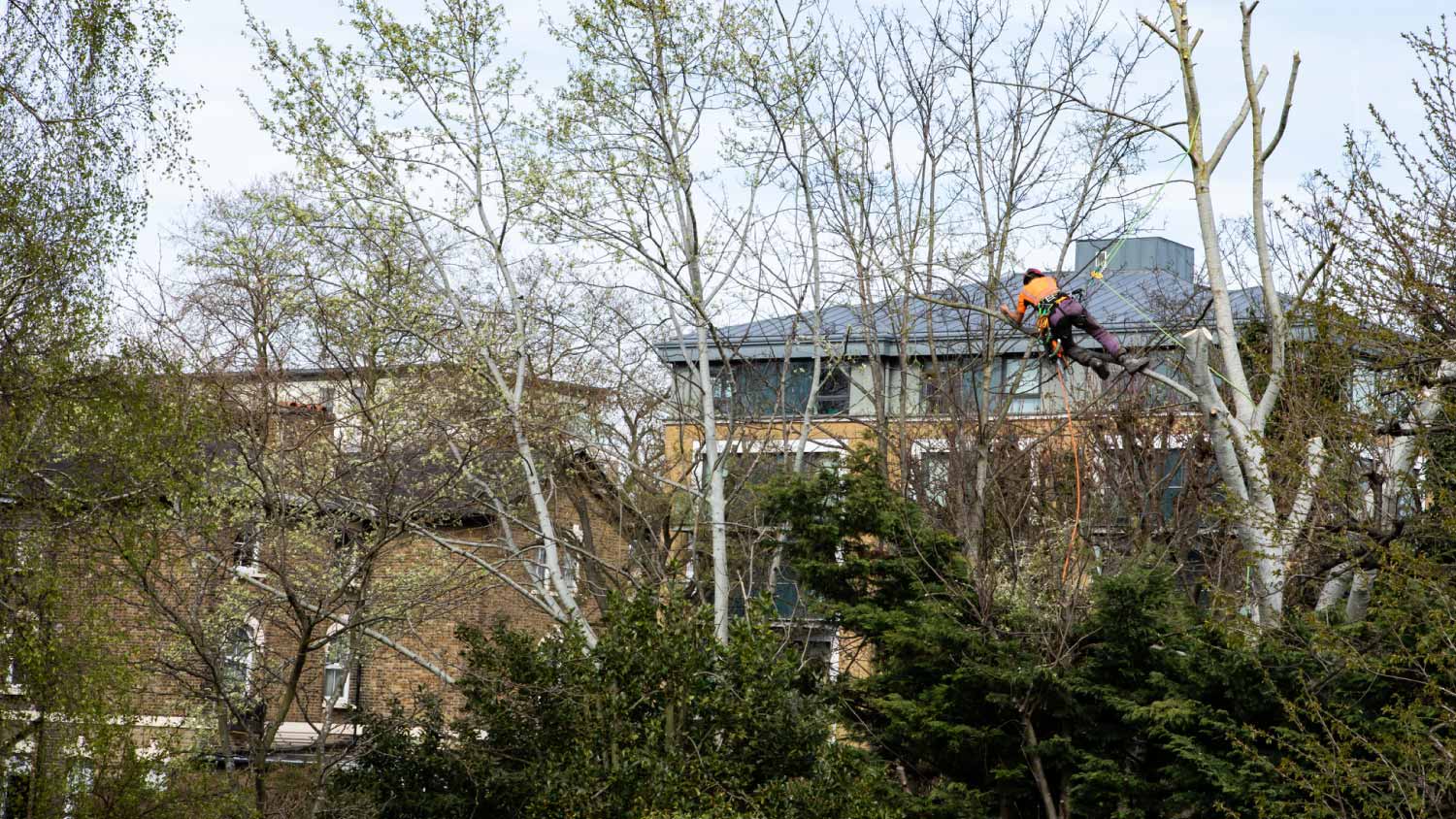
Will a topped tree grow back? It’s possible, although this aggressive pruning can sometimes kill a tree. Here’s what you need to know about tree topping.