
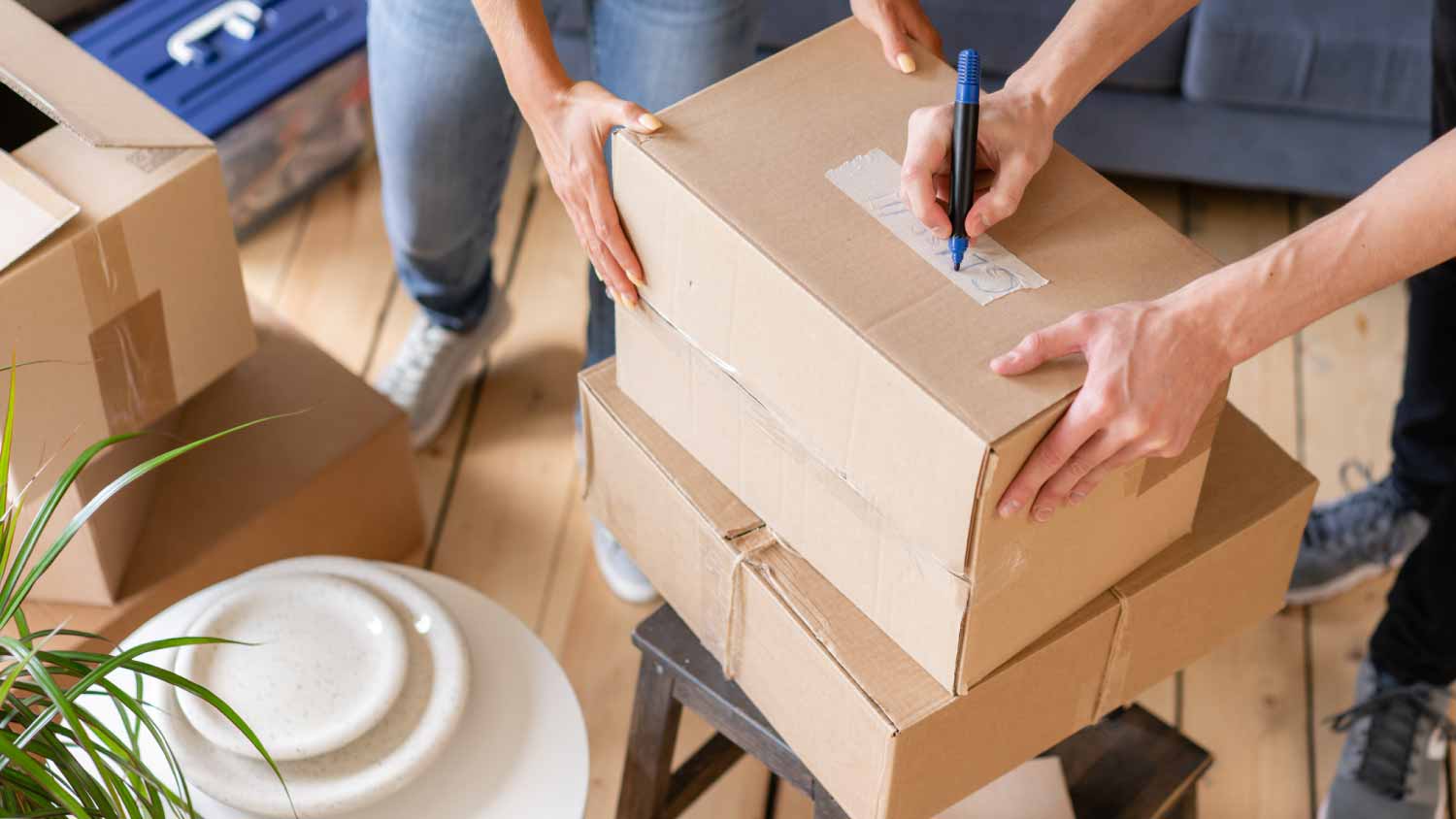
Proper labeling is the hidden hero of moving to a new home. These tips on how to label boxes for moving will help your belongings stay safe.
You don’t want to be surprised each time you open a box on moving day
 - Derek Rose.png?impolicy=thumbnail)
Labeling moving boxes with a clear system helps you find what you need fast, keeps your belongings organized, and makes unpacking in your new home much easier.
Expect to pay $880 to $2,570 for local movers, with average costs around $1,715, while long-distance moves range from $2,700 to $10,000.
You should mark fragile items on all sides of each box, write your last name on every box, and label each room at your new place with corresponding codes.
Hiring a local moving company provides reliable help with heavy lifting and reduces the risk of damage to your belongings, offering insurance coverage for peace of mind.
Moving is stressful, but it can turn into a downright nightmare if you’re not organized. Here’s the good news: You don’t have to be a natural-born organizer to pull off a move without a hitch. All you need is a plan—or rather, a list. Here’s how to create a successful moving box inventory list.
It’s easy to procrastinate with packing, so when you finally get down to it, you’ll want all of your supplies within easy reach.
Ensure you have enough moving boxes, packing tape, labels, markers, and materials like bubble wrap or towels to stuff the boxes. That way, you don’t have to hunt for a specific tool in the middle of packing up your kitchen.
It’s nothing top secret, but you’ll need to create a coding system for your boxes. Simple is best: Assign a letter to each room, then write that letter plus a number on every box that’s headed for that room. For example, your living room might be A, so label your living room boxes A1, A2, and A3.
Some people might prefer to use colors instead of letters for inventory. If so, purchase colored labels to put on the boxes. Be sure to choose bright, distinct colors, so there’s no confusion the day of the move along the lines of, “Does this go in the purple room or the lavender room?” Consult your packing partners about the coding system, ensuring that everyone is on board.
It’s all well and good to label your boxes, but you have to keep track of those labels with an inventory list for it to work. You can record it by hand on a piece of paper or digitally on your smartphone or tablet.
To be safe, record your coding system both ways—it pays to have a backup copy somewhere. Plus, you can share digital copies of your coding system and inventory with your packing partners or professional moving team.
Aside from the kitchen and bathroom, it might be hard for your movers to determine what each room in your new house is meant to hold.
Leave the guesswork out of the equation by labeling each room with its corresponding letter on your inventory, and the problem is solved. Each moving box should clearly indicate its final destination.
Depending on how many boxes you have, it’s unlikely you’ll unpack every single one on the day of your move. That’s why it’s helpful to number the boxes in the order that you (or your movers) should unpack them.
Number your boxes so that the lower numbers are the ones to unpack first, and the higher numbers represent boxes that can remain unpacked until it’s more convenient. Be sure to mark which boxes you should unpack as soon as possible. For example, there might be ten boxes in your living room, but per your inventory list, you know that you only have to open the first four right away.

Whether your boxes feature every letter of the alphabet or every color of the rainbow, there are a few other things you’ll want to do to have an organized moving day.
Your belongings might be sharing space on the moving truck and get mixed up with other customers’ boxes. Or you might accidentally leave one behind in the rental van and need to reclaim it. Either way, it will be much easier to locate an errant box later if it has your name on it.
While professional movers are careful not to toss boxes around, you'll want to make it clear which ones they should be moving with kid gloves. Get the widest tip marker you can find and mark “fragile” on all boxes that contain breakables or antiques. Don’t only write it on one side of the box—mark it on all sides so it’s clear that it needs to be handled gently.
In case a box gets turned during transit, marking “this side up” will help you unpack at your new place.
A huge pile of empty cardboard boxes in the corner isn’t a good look for your new space. Whether you flatten them out and bundle them together for the recycling pile or pass them along to someone else who’s moving, have a plan in place to get them out quickly—and not to the landfill.
The cost to hire movers depends on how far you’re moving and how many items you need to move. If you’re moving less than 100 miles away, the average cost for professional movers is $1,715, but it could range from $880 to $2,570. Long-distance moves over 100 miles cost an average of $3,500, ranging between $2,700 and $10,000.
If you want to save money during the moving process, it’s worth looking into DIY options. Renting a moving truck is the cheapest option, with an average cost of $1,000, unless you already have access to a sufficient moving vehicle. Another budget-friendly idea is to rent and ship a moving container, which costs $2,000 to $5,000. These DIY options eliminate the cost of labor but require you to load and unload your belongings yourself.
In contrast, hiring a team of local movers saves you from hours of heavy lifting, which can cause injury without proper training. Hiring a pro also reduces the risk of damage to your belongings. Should any damage occur, their insurance should cover reimbursement. We recommend hiring movers for safety, efficiency, and peace of mind as long as it’s within your budget.
I recently moved to another state and chose United Trust Van Lines after comparing several companies. Their team was punctual, professional, and extremely careful with my belongings. I was especially impressed with how they handled my home office setup and fragile items. Everything arrived on...
 United Trust Van Lines, LLC
Showed up on time and cleaned carpets well, but didn?t move furniture.
 Voda Cleaning & Restoration of Columbus
A reliable team for moves across state. My switch to a new place needed careful lifting through tight hallways. The movers checked the doorway first, then carried heavier pieces with slow, controlled movements. Their patience helped prevent damage, and I?d choose them again.
**Would rate a 0 if i could** NEVER USE THIS COMPANY!!!!! They shattered my tv console and dresser, lost a mirror, and never finished the move. The broken furniture cost me over $600 to replace. They left me with 6+ hours of personal labor moving my 1BR apartment, when I was quoted a FULL...
 All My Sons Moving & Storage
I could not have moved without the help of Jen Stover! I was in my house for nearly 20 years, so the thought of clearing it out while working full time was overwhelming. Jen takes great joy in sorting and organizing while asking the hard questions with patience and compassion. Jen is...
 Go and Stow Home Organizing
Couldn't have been a worse experience. 3 of my belongings were lost and 5 belongings were damaged. My furniture was clearly dragged across the ground. The movers couldn't move the furniture I paid extra heavy weight fees for so I had to help them move my own furniture. The manager gave me...
 US Interstate and Rail
Excellent experience for me! They helped me a lot with my move. very reasonable price. Good communication with the office manager is excellent.
 Goodview Moving and Storage
I was concerned about my possessions safety throughout the move but Bridge View Van Lines took all necessary security measures to make sure everything arrived in mint shape I am really appreciative of their effort and commitment They made my long distance move seem simple
 Bridgeview Van Lines
This moving company is the best in Columbus, Ohio! They rescued me when my movers didnâ t show up. Do not ever use Plane Movers! They never showed up for my move, claiming that I never signed the contract. They didnâ t call me to follow up, communication was awful. The people that work for...
 All My Sons Moving & Storage
Ozie and Tyquese were great and worked fast. It was a good move
 All My Sons Moving & Storage
From average costs to expert advice, get all the answers you need to get your job done.
Proper labeling is the hidden hero of moving to a new home. These tips on how to label boxes for moving will help your belongings stay safe.

Preparing for a big move? Our tips on how to pack boxes for moving will keep belongings snug and secure.

After the stress of finding a new house or a job, it seems like filling boxes should be the easiest part of your move. It can be if you know what to look for. Don’t wing it; plan ahead with these tips for finding and using the right-sized boxes.
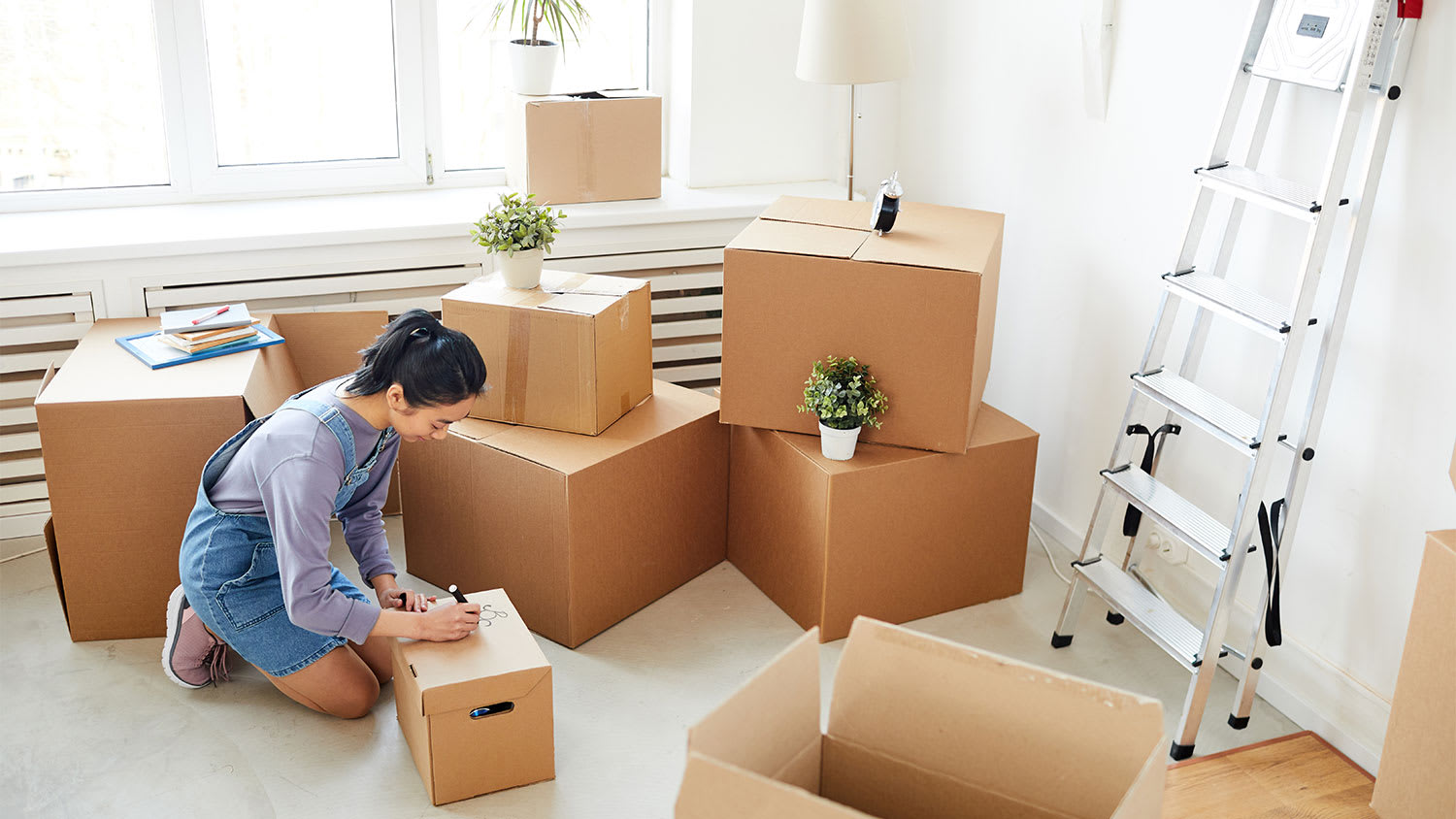
Real talk—most people aren't keen on packing or moving. But you can make the experience more manageable by opting for brand new boxes instead of used ones.

Are you packing your belongings but unsure how to get boxes for moving? Read on to learn eight ways to track down boxes of all sizes to help you move.

Moving soon? Use this comprehensive checklist to stay organized.