

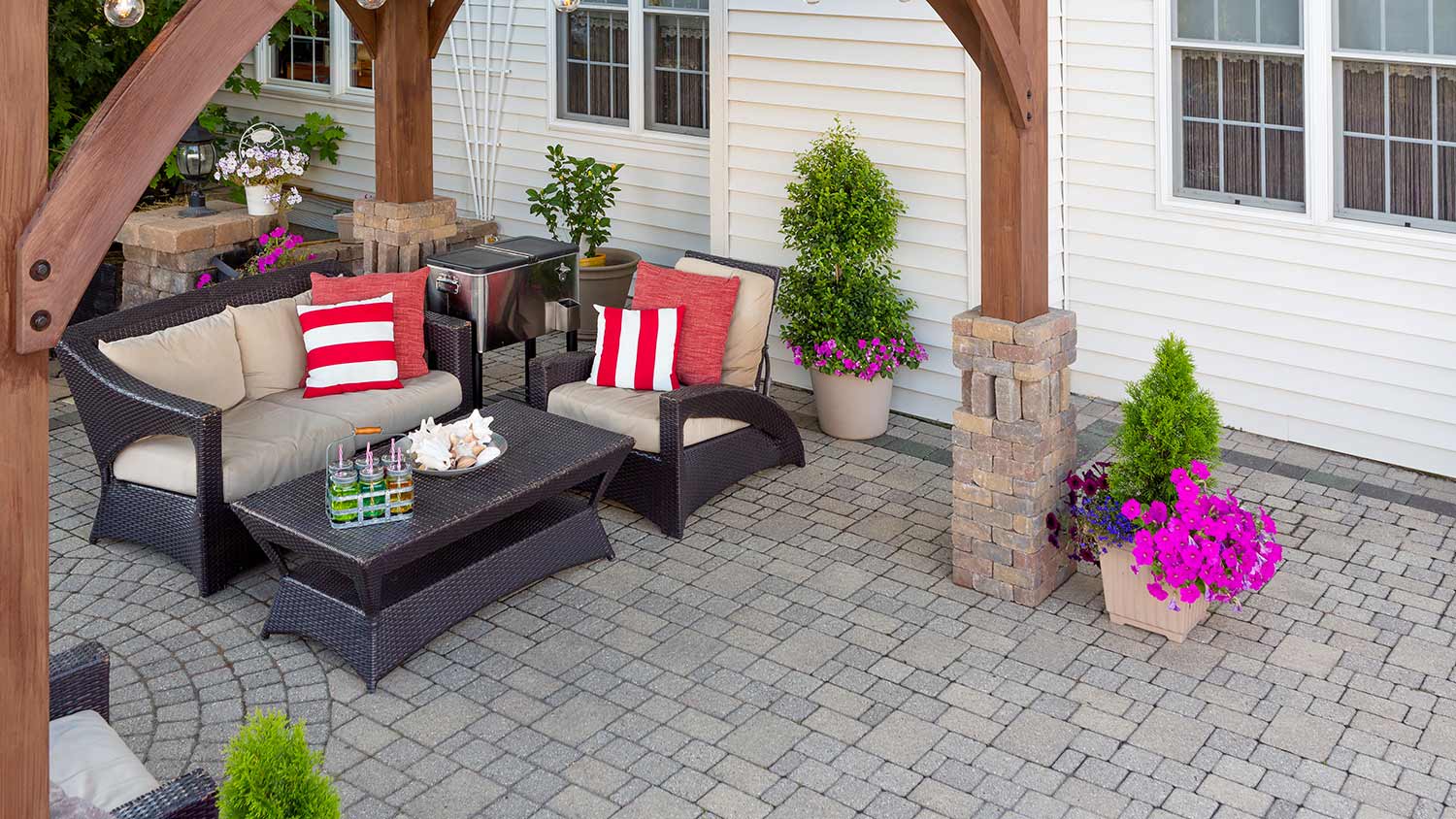
Discover travertine pavers costs to learn about installation, materials, and labor prices, plus tips to save on your travertine paver project.
Ceramic tile service costs depend on your project and location. Check with a local pro for your specific job.

Travertine tile installation costs between $5 and $47 per square foot for your project depending on tile quality and finish.
Your tile pattern complexity and color rarity affect labor costs, with intricate designs and rare blues or blacks increasing your total.
Budget for existing flooring removal at $1 to $7 per square foot and subfloor repairs at $2 to $10 per square foot.
Hiring a local tile professional prevents cracks from heavy travertine and ensures your patterns match for beautiful results.
If you want something that’s earthy and chic, you can’t beat travertine. This natural stone is found near mineral springs and will effortlessly upgrade your home. The uses for travertine in your home are pretty much endless, and with the wide range of colors and finishes, you’re likely to find the perfect tile for your project. The cost to install travertine tiles ranges from $600 to $3,200 for a 100-square-foot project.
Here are the major tile installation cost factors you should think about when planning your travertine project.
To get the best idea of how much your travertine project will cost, consider the square footage of the space you want to tile. You can expect the cost to range between $5 and $47 per square foot, depending on the tile quality you choose.
There is a wide range of tile quality available. What you choose will depend on your budget and your vision for the project.
| Travertine Tile Quality | Average Cost (per Square Foot) | Characteristics |
|---|---|---|
| Premium | $5–$30 | Highest quality, consistent color and thickness |
| Standard | $5–$15 | Consistent thickness, larger holes, may have striations and swirls |
| Commercial | $2–$4 | More discoloration and cracks, less uniform in cut and thickness |

| Finish | Finish Cost (per Square Foot) | Definition |
|---|---|---|
| Tumbled | $5–$15 | Textured and porous with good traction |
| Honed | $5–$15 | Sanded with a matte finish |
| Polished | $8–$30 | Smooth and shiny but slick |
| Brushed | $8–$30 | Textured and dimensional |
| Filled | $10–$20 | Smooth and sleek |
The pattern and color of your travertine also impact the cost of installing travertine tile. The French pattern uses four different tile sizes and is the most popular travertine pattern. Complex patterns can increase labor costs. Additionally, some travertine colors are more costly than others. For example, black travertine (more like a deep gray) and blue travertine are rarer colors that are more costly.
| Pattern/Color | Cost (per Square Foot) |
|---|---|
| Beige | $5–$15 |
| Earth tones | $5–$15 |
| Rustic pattern | $5–$15 |
| French pattern | $5–$20 |
| Reds | $8–$30 |
| Uniform pattern | $8–$30 |
| Blues | $10–$30 |
| Black | $10–$30 |
| Intricate pattern | $10–$30 |
Travertine is a very versatile material. You can install it indoors, outdoors, on floors, and walls. You can even use travertine in high-moisture areas. Here are typical costs based on the location of your project.
| Installation Location of Travertine Tile | Average Cost |
|---|---|
| Foyers | $100–$3,600 |
| Kitchen countertops | $1,500–$4,000 |
| Kitchen flooring | $1,900–$10,800 |
| Bathrooms | $160–$4,500 |
| Pool decks | $5,400–$15,300 |
| Patios | $450–$2,900 |
Labor costs range between $3 to $17 per square foot for travertine tile installation. It’s a laborious job because the tiles are very heavy. Plus, if you make mistakes, it can be very costly to replace the damaged tiles. For most people, the best option is to hire a pro and get it done right the first time.
If you already have a tiled floor but are ready for something new, you may need to hire someone to get rid of the old flooring. Removing existing tile flooring costs $2 to $7 per square foot. It’s a labor-intensive job that typically requires sledgehammers, pry bars, and floor scrapers.
Some installers will include existing floor removal in their initial quote, so check and see whether it’s included before signing a contract.
It costs $1 to $1.50 per square foot to remove carpet and $1.50 to $3.50 per square foot to remove other types of flooring like laminate and vinyl.
After your contractor removes the existing flooring, they might discover damage to your subfloor. This happens when moisture seeps through the top flooring material and underlayment into the subfloor. It might be due to damaged grout and tiles or repeated heavy spills that weren’t properly cleaned.
Flooring repairs cost $2 to $10 per square foot.
You should always fix any damage to your walls before installing tile. Small holes and dents can be fixed for $60 to $200. Anything larger than five inches costs $50 to $75 per square foot.
Here’s what you should know when putting together a budget to hire a local tile installer.
Check out several reasons why tiling pros are essential for travertine installations:
Travertine styles favor larger tiles that can be tough for DIYers to move and position, increasing the risks of cracks and breaks.
The pros use saws that quickly trim stone like travertine to fit in your space—a task that’s very difficult for DIYers.
Professional flooring installers have the knowledge and experience to install travertine against wood flooring and flooring with different height requirements.
Installers can match the patterns of travertine tile for the best-looking results.
Keep these tips in mind if you’re attempting to DIY the travertine installation:
Measure twice and cut once. Lay out your tiles beforehand to gauge the look, and use a chalk line and level for precise measurements.
Rent a wet saw with a stone cutting blade for the best result.
Use a light-colored grout or thinset to complement the creamy look of the travertine stone.
Use a rubber mallet or similar tool to tap your tiles into place as you work.
Seal the stone when your installation is complete.
Installing travertine tile is an investment that can add value to your home, but budget-conscious homeowners can still save money with this project. From choosing the tiles to wisely using up your resources, here are five ways to reduce the cost of installing travertine tile.
Measure twice, cut once: Measure the area to install travertine tile at least twice, and jot down your measurements. Order around 10% more than your measurement. This can help you save on ordering too much tile for the project.
Weigh long-term costs: While unfilled travertine may cost less upfront, it’s harder to maintain and keep clean. You may spend less on maintenance by investing in filled.
Use excess for borders: When cutting travertine to fit into a specific pattern, you’ll end up with offcuts. Use these to finish the edges of a room or add decorative elements to the tile pattern.
Choose simpler patterns: Opt for more common designs, like the French pattern, unless your dream kitchen requires intricately laid travertine.
Consider less rare colors: Travertine is commonly available in earth tones, like beige, tan, or ivory. You’ll save big by choosing these colors over rarer tones, like black or blue.
Decide the size of your travertine tile before making a budget — size has a major effect on material cost.
Arrange for several in-person estimates so that tile installers can inspect your space and plans.
Consult your tiling pro about the disposal and removal of any current flooring materials
Arrange for the delivery of the tile and make sure you have enough room to store it until installation day.
Before the installation, make sure the space is entirely cleared to ensure easy access.
Home is the most important place on earth, which is why Angi has helped more than 150 million homeowners transform their houses into homes they adore. To help homeowners with their next project, Angi provides readers with the most accurate cost data and upholds strict editorial standards. We extensively research project costs to develop the pricing data you see, so you can make the best decisions for you and your home. We rely on reputable sources, including the U.S. Bureau of Labor Statistics, academic journals, market studies, and interviews with industry experts—all to ensure our prices reflect real-world projects.
Want to help us improve our cost data? Send us a recent project quote to [email protected]. Quotes and personal information will not be shared publicly.
Terrible experience. Walls/trim/floors/cabinets/doors all have drip marks, overspray, etc. Tiling at the fireplace had to be redone by another vendor due to incorrect and shoddy install by Profect. Contractor had his children in our house while he was on site without prior authorization or...
 Profect painting & exteriors
It was wonderful working with Yordy and his team. They were very professional and are experts in what they do. They have completed the work on time, with better quality and with in fairly reasonable price. We just started with backsplash work , but liking his work, we went on to provide...
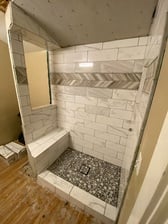 Flooring Solutions
We were having 2”x 2” tile installed . There was a small installation error and the new additional replacement tile was from a different lot and the colors didn’t match. Joe assured us that he would rectify everything , which he did without hesitation. We decided to go with the 18” x 36” tile...
 CarifaTile
For several months I was looking for somebody to tile a wall in my master bath and move lighting fixtures, and could not find anybody who was responsive. I contacted Rowe through Home Advisor and within days they came by to assess the job and provide an estimate. The cost was very...
 Rowe House Development
It went very well! The end product was amazing and we keep getting a lot of compliments from friends! M&E were very professional and they made sure we were happy with the product before leaving. They met with us in our home and at the tile shop to make sure we were okay with our tile and...
 M&E Remodeling
Involved an extensive bathroom remodel, including removing tub & installing walk in shower, new drywall, custome tile work to ceiling, plumbing, etc. Overall, job was done on time and on budget. Nick & his team were very professional and had high attention to detail. Quality was great. Highly...
 Stamos Flooring and Remodeling LLC
Very pleased with the service and level of professionalism. Courteous and very unobtrusive in performing service. Unlike several other companies, Bradford Xteriors was willing to perform work on a three story home with a clay tile roof. <br />
 Bradford Xteriors
This company did a very good job on the brick wall and it looks just amazing. The staff was always professional and was practically OCD on how the bricks were stacked and how they were laid. Although it took longer than expected, I am willing to sacrifice time over perfection anyday. The...
 My Handy Mate LLC Improvement & Remodeling
He did the tile work and he was good at it. He used other subcontractors for the rest of the work (like putting in the cabinetry) and they were okay but not great. He was a great guy! He was easy to work with and had a good eye for the detail of his work. There were a couple of things that I...
 Brian Miller Custom Remodeling
I was very impressed with Miller Cantrell! I live in an old home in which the sewage line that runs from my home to the sewage system is a line of clay tile. These eventually collapse and need to be replaced - an expensive problem and sure to happen at the worst time. I told them that my...
From average costs to expert advice, get all the answers you need to get your job done.
Discover travertine pavers costs to learn about installation, materials, and labor prices, plus tips to save on your travertine paver project.

Tile varies dramatically in price, but there’s something for every budget. This guide will help you plan for tile installation costs, no matter the project.
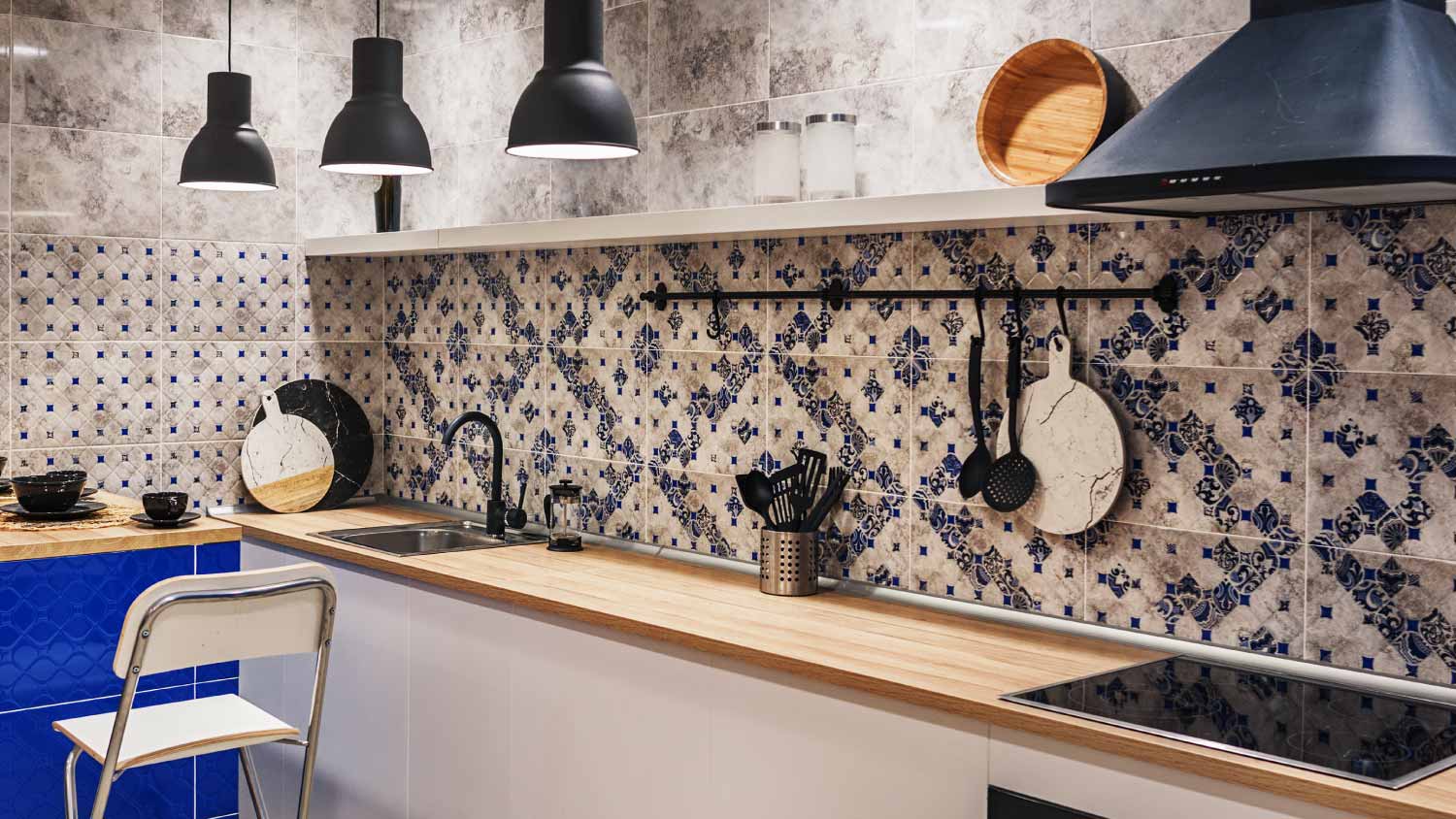
Whether it’s on your floor, walls, or shower, ceramic tile can add style to your space. So, how much does ceramic tile installation cost? Let’s break it down.
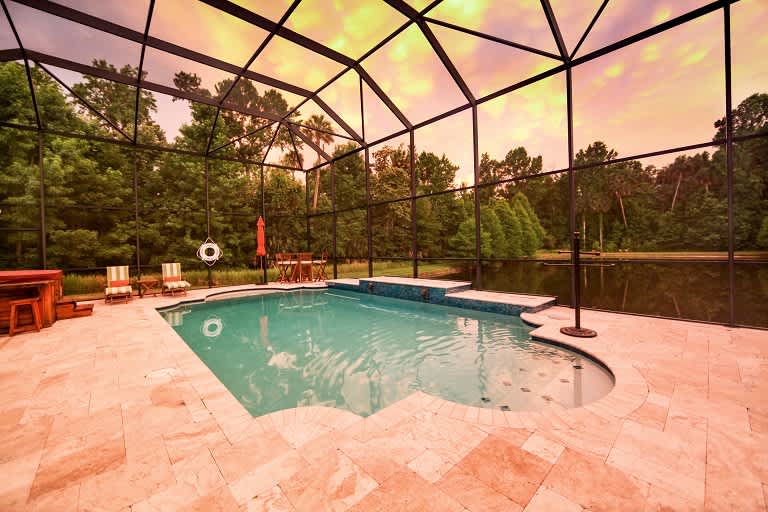
Travertine tile is made from natural stone and can be used to update your flooring, countertops, pool decks, and more. Use this guide to learn all about travertine tile’s various styles, benefits, and drawbacks.
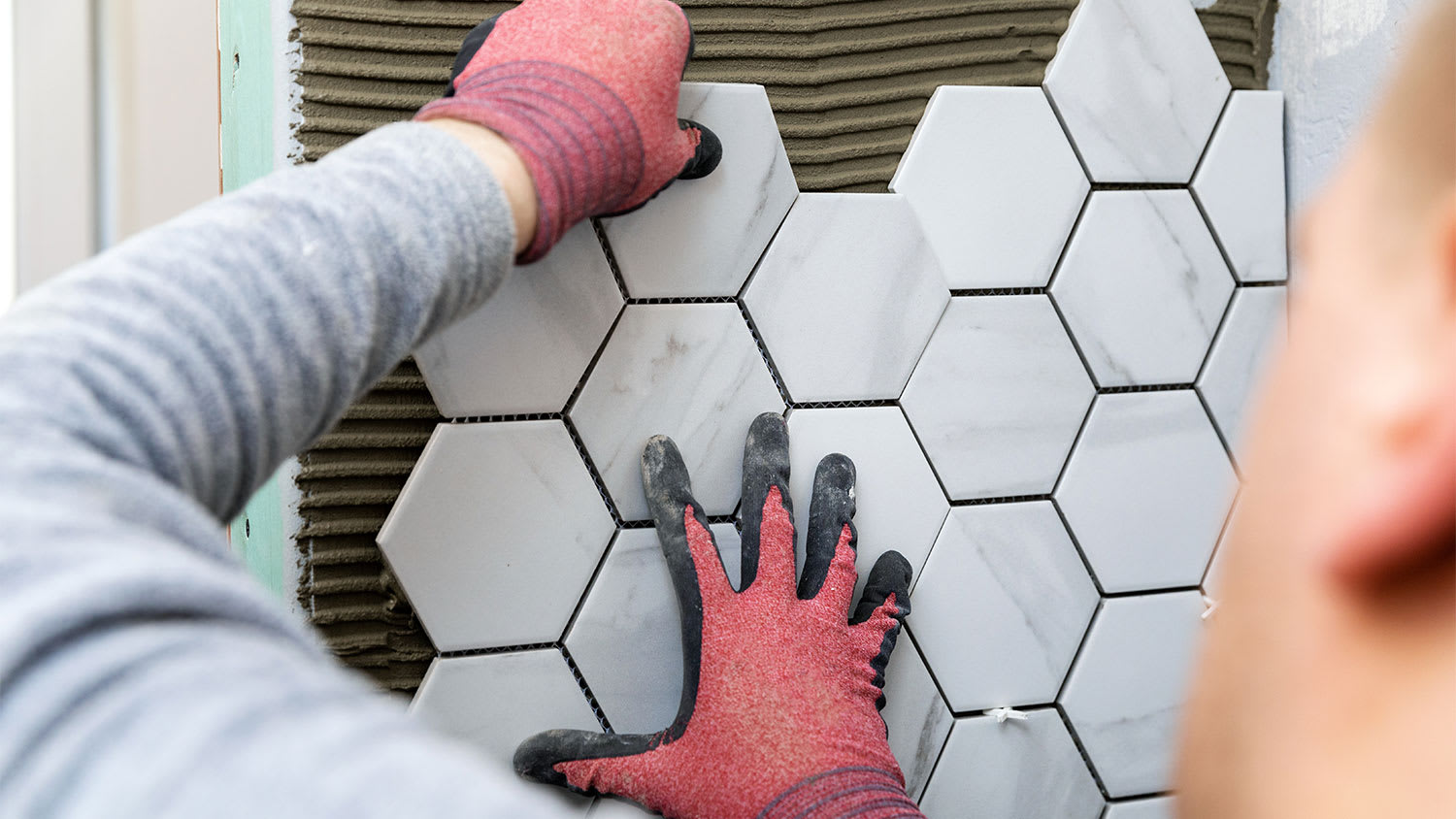
Learn how to hire a qualified tile installer with confidence. Find tips on vetting pros, questions to ask, and what to expect from your tile project.
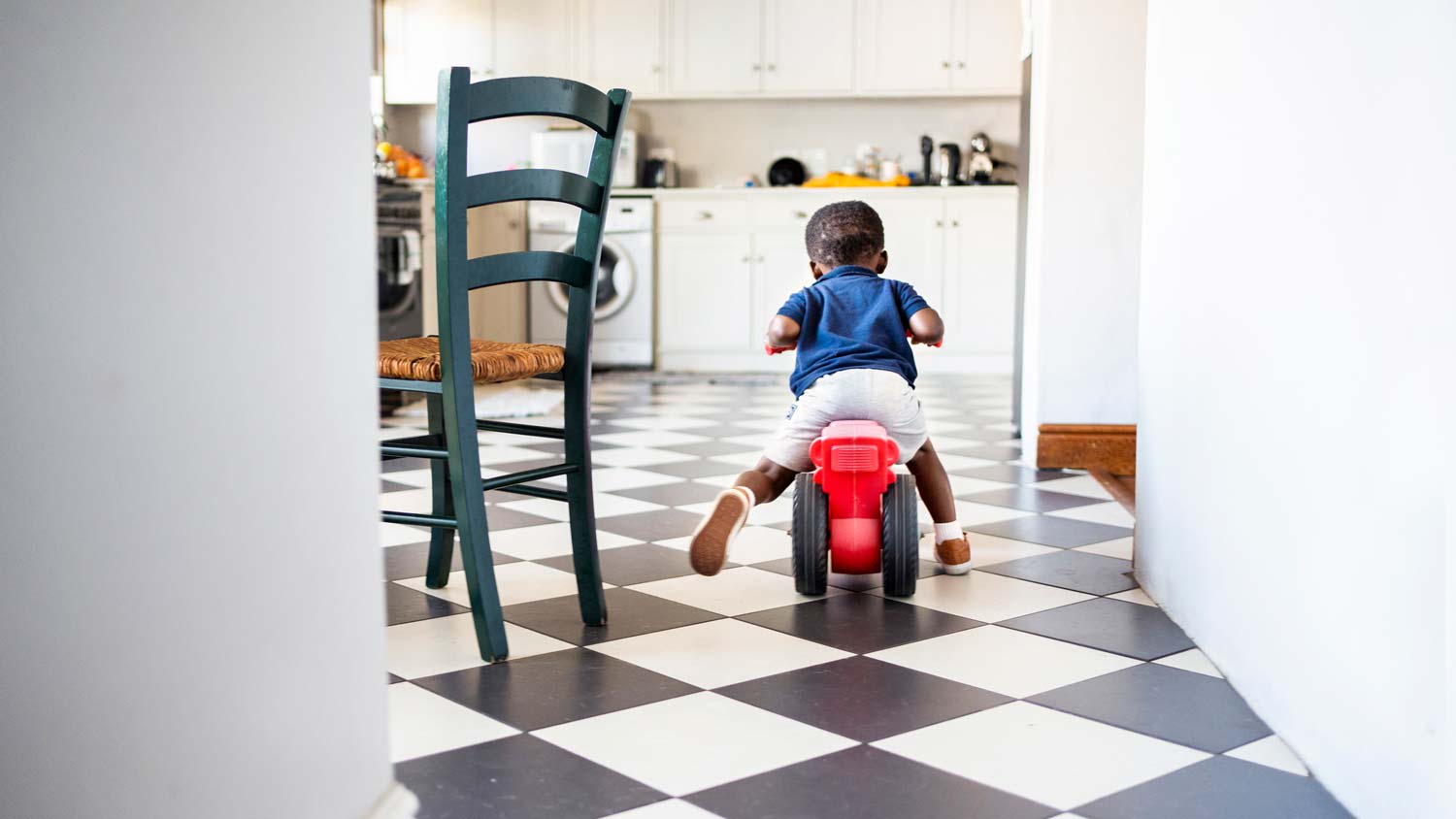
Not sure which types of tile would be best for your renovation project? We'll show you nine popular types of tile along with their benefits and downsides.