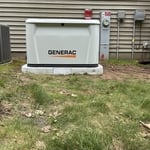
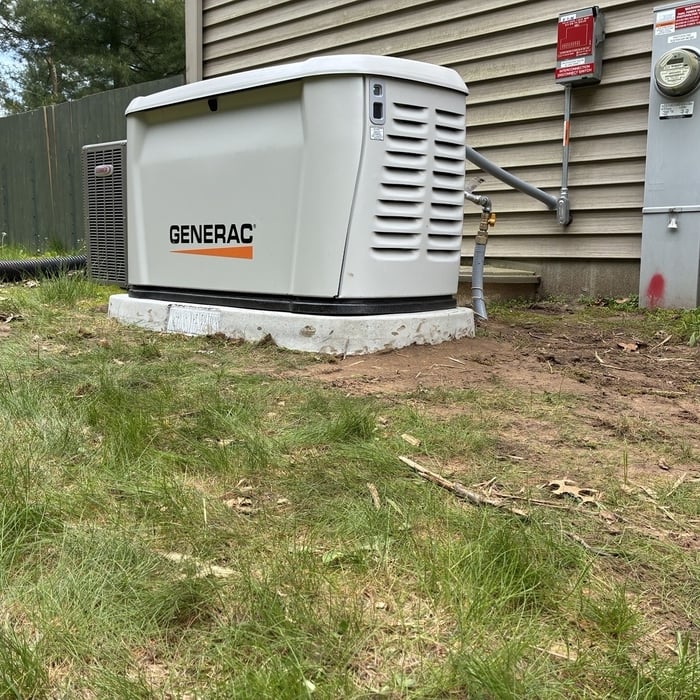
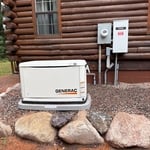
"Very prompt and professional, installation was in a timely manner. Very helpful with any questions and explanations. After job was complete. Highly recommended."
We take great pride in our experience, expertise, quality, and customer service that we provide to meet the consumer's needs. It is our mission to provide excellent workmanship and complete customer satisfaction from start to completion of a project. In order to understand the needs and expectations of our customers, we take great care to work and communicate with every customer in a professional manner. Our reputation is\nbased on service, safety, and quality, regardless of how large or small the job.\n\nFianacing Available
"First, they were recommended to us for the whole house generator by home depot. We were so happy with the generator that we had him do a bathroom fan at my house and a bathroom fan at my son's house. I did some checking and that was a reasonable price. With the work he did, it was more than reasonable. The job was a little more involved than he thought it would be and he didn't have any problem with any of it. Without anything to judge the pricing from, other than online and a couple of guys I had come over who weren't on the same page as me, I'd say excellent. The quality was top of the line. As soon as he got the generator, he got over here to put it in. As a matter of fact, I am thinking about calling him again for something."
At J.B. Power, LLC, we are your premiere choice for all your generator needs. Whether it�s commercial or residential, install or repair we have you covered. Give us a call today!\n
We are a locally owned and operated company that values honesty and integrity and treats your home as if it were our own. Our services are customized to the individual project, paying close attention to the details of each project that we're involved with. We pride ourselves on the quality of our work as well as our commitment to outstanding results. We look forward to building lasting relationships and guaranteeing your satisfaction!
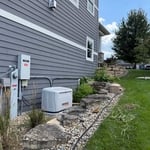
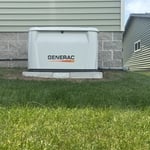
Whole-house generators need to be installed on level ground several feet away from walls and other objects. Because they tap into the electrical system directly, they usually need to be close to your home electrical panel for a transfer switch installation. It also helps with installation if they are near to a gas line or propane tank installation.
Setting up utilities on a vacant property usually takes at least a few months, or between 6 weeks to 16 weeks. This process requires working with the local planning and zoning department, hiring a building contractor or engineer to design the utility layout, securing permits, laying the lines, and connecting the utilities.
As a safety measure, you should always turn off the main breaker while operating your generator’s backup breaker. In addition, you should also switch off all appliance breakers so you don't have a power surge when the main breaker turns back on. And finally, turning off the main breaker prevents back-feeding, which endangers utility workers with the risk of electrocution. Back-feeding could also destroy the electrical circuits of your neighbors if they use the same power network.
Natural gas generators are designed to run for extended periods of time, such as power outages during a natural disaster. Since there’s no limit to the supply of natural gas, they don’t need to stop for refills. However, generators do need maintenance, including pauses to check and add oil. Constantly running them will also cause a lot more wear and tear, leading to a shorter lifespan.
It’s usually better to repair your generator if it isn’t working properly, as it will typically be much more affordable and should yield similar results. Generator repairs cost around $300 on average, while installing a new whole-house generator costs around $5,000 on average. The only exception is if you know your generator is reaching the end of its useful life, usually between 30 and 40 years. If you have an older generator, you could face multiple repairs in the coming years, which might mean that a full replacement will be more cost-effective over time.
The Phelps, WI homeowners’ guide to generator installs
From average costs to expert advice, get all the answers you need to get your job done.
Natural gas generators are whole-home standby generators that are connected to your home’s natural gas line. The average cost for a natural gas generator is $12,000.
Generators should give you peace of mind, but you’ll only get that if your installer knows what they’re doing. Learn how to hire a pro and what red flags to look for.
Thinking about a generator installation? Learn about backup power options, costs to expect, and how to hire the right local pro to keep your home running.