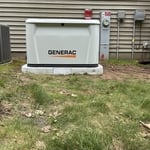
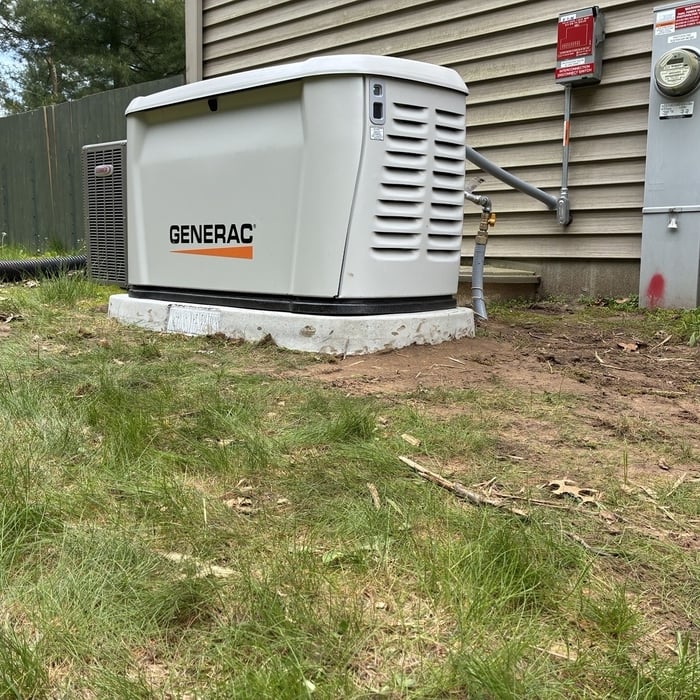
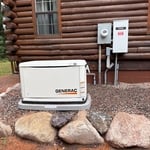
"Very prompt and professional, installation was in a timely manner. Very helpful with any questions and explanations. After job was complete. Highly recommended."
We take great pride in our experience, expertise, quality, and customer service that we provide to meet the consumer's needs. It is our mission to provide excellent workmanship and complete customer satisfaction from start to completion of a project. In order to understand the needs and expectations of our customers, we take great care to work and communicate with every customer in a professional manner. Our reputation is\nbased on service, safety, and quality, regardless of how large or small the job.\n\nFianacing Available
"First, they were recommended to us for the whole house generator by home depot. We were so happy with the generator that we had him do a bathroom fan at my house and a bathroom fan at my son's house. I did some checking and that was a reasonable price. With the work he did, it was more than reasonable. The job was a little more involved than he thought it would be and he didn't have any problem with any of it. Without anything to judge the pricing from, other than online and a couple of guys I had come over who weren't on the same page as me, I'd say excellent. The quality was top of the line. As soon as he got the generator, he got over here to put it in. As a matter of fact, I am thinking about calling him again for something."
At J.B. Power, LLC, we are your premiere choice for all your generator needs. Whether it�s commercial or residential, install or repair we have you covered. Give us a call today!\n
Proudly serving Oneida County and surrounding areas, locally owned and operated, Harris Electric is your one stop shop for all of your electrical services needs. Specializing mainly in residential and light commercial projects, no job is too big or small for us. Give us a call today!
We are a locally owned and operated company that values honesty and integrity and treats your home as if it were our own. Our services are customized to the individual project, paying close attention to the details of each project that we're involved with. We pride ourselves on the quality of our work as well as our commitment to outstanding results. We look forward to building lasting relationships and guaranteeing your satisfaction!
The cost to install a whole-house generator averages $5,200, with a typical price range of $1,500 to $8,900. However, total costs can vary from $400 for a small portable unit to over $18,000 for a large-capacity system. The most significant cost factor is the generator's size and capacity, but other variables include the brand, fuel type, and labor for assembly and installation.
Generator costs can be broken down by type:
Portable or Emergency Backup Generators (1kW–7.5kW): $500 to $2,000
Partial-Home Generators (9kW–20kW): $2,000 to $6,500
Whole-House Generators (22kW–48kW): $5,000 to $18,000
To avoid paying for more power than you need, consider hiring an electrician to calculate the electrical load for your essential appliances. It is also recommended to get at least three quotes to find the best deal for your specific needs and budget.
Generators are safe to use as long as they are installed and operated correctly according to the manufacturer's recommendations. The most critical safety tips are to never use a portable or fuel-powered generator inside an enclosed space due to the risk of lethal carbon monoxide poisoning; always operate it outdoors where fumes can dissipate away from your home. Additionally, never attempt to connect a generator to your home’s electrical panel yourself—hire a professional to ensure the setup meets safety standards. Finally, avoid overloading the generator by not connecting more appliances than it is rated for, as this can damage your equipment or cause a fire.
If you’re deciding between a solar battery versus a generator for the best backup power solution, you can take a few factors into consideration. Solar batteries are quiet while generators can be quite loud. Generators have a lower up-front cost, but they require fuel and ongoing maintenance while solar batteries are more expensive but don’t have many ongoing costs.
An undersized whole-house generator has the potential to overheat and shut down when you try to run a central AC system. This scenario can not only damage the whole-house generator, but can also trip your home’s breakers or cause electrical damage. To avoid this situation, hire a local generator installer to correctly size your whole-house generator.
While standby generators provide essential backup power, they can fail when you need them most due to lack of maintenance, fuel supply issues, dead batteries, electrical problems, or improper installation. To avoid costly failures, professional installation and regular maintenance are crucial. Licensed technicians ensure safety, uphold warranty requirements, comply with regulations, and provide expert servicing.
The Conover, WI homeowners’ guide to generator installs
From average costs to expert advice, get all the answers you need to get your job done.
Natural gas generators are whole-home standby generators that are connected to your home’s natural gas line. The average cost for a natural gas generator is $12,000.
Generators should give you peace of mind, but you’ll only get that if your installer knows what they’re doing. Learn how to hire a pro and what red flags to look for.
Thinking about a generator installation? Learn about backup power options, costs to expect, and how to hire the right local pro to keep your home running.