






Top-rated asphalt driveway pros.

Get matched with top asphalt driveway pros in Fairchild, WI

Enter your zip and get matched with up to 5 pros

Need a pro for your asphalt driveway service project in Fairchild, WI?

Select your specific project to find the pro for you.

Find Asphalt driveway pros in Fairchild

RR Total Landscaping, LLC
5.0(
3
)

Serving Fairchild, WI and surrounding areas

In business since 2012

Credit card accepted

Offers commercial services

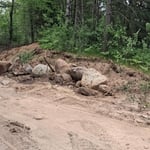
"Reynel needed to use my property to access his job on my neighbors home. He was creating a massive retaining wall of boulders to repair a collapsing railroad tie wall. My yard became a Basecamp for his project. In the end, he did as promised and leveled my yard to its original slope, cleaned all debris, branches etc, and seeded the yard. He is kind and a man of his word. The wall is beautiful."
Response time1 day
Recommended by100%of homeowners
A Snow Removal Facebook
5.0(
1
)

Serving Fairchild, WI and surrounding areas

In business since 2007

Free estimates

We are dedicated to providing our clients with the very best in concrete installation and repair for driveways, sidewalks, patios, steps, and a variety of other projects. With over 10 years of industry experience, we take an enormous amount of pride in the attention to detail put into each of the projects we are involved with. We are known for our quality work and the integrity of our business. We look forward to building long-term relationships with our clients and guarantee your satisfaction.

Recommended by100%of homeowners
Showing 1-10 of 49
Asphalt Driveways questions, answered by experts

The choice between asphalt and concrete depends on your priorities, budget, and climate.

Concrete is generally more durable, lasting up to 50 years with minimal upkeep, and offers more customization options like staining and stamping, which can add more to a home's value. However, it is more expensive upfront and can be prone to cracking in cold climates where water can freeze and expand.

Asphalt is typically cheaper and quicker to install and is easier to repair. It performs better in colder climates. However, it requires more maintenance, including regular resealing, has a shorter lifespan, and can get hot and sticky in intense sunlight.

Ultimately, if durability and long-term value are key, concrete is often the better choice. If upfront cost and performance in cold weather are more important, asphalt may be preferable.

Instead of a set number of types, asphalt comes in variations designed for different needs. Some are categorized by temperature—hot mix, warm mix, and cold mix. Others are sorted by composition, like dense-graded, gap-graded (such as Stone Matrix Asphalt), porous, and mastic asphalt. There are also modified versions with added compounds like polymers, rubber, or emulsions. Instead of focusing on a number, it may be more useful to understand how contractors customize asphalt for durability, climate, and traffic conditions.

At a depth of two inches, a ton of asphalt covers around 80 to 100 square feet. However, the thicker the asphalt, the less surface area it will cover. That’s why measuring correctly is essential when estimating asphalt needs and costs to ensure you get enough material to cover your entire driveway, patio, or other asphalt surface.

New asphalt goes through two stages: drying and curing. Drying typically takes 24 to 72 hours, after which the surface is solid enough for light use like walking or careful driving. While you may be able to park on it after 72 hours, the surface is still soft and should be treated gently. Full curing is a much longer process, taking anywhere from 30 days to a full year for the asphalt to reach maximum strength. During this extended curing period, the asphalt is susceptible to damage from heavy vehicles, sharp objects, and high temperatures. Factors like weather, the specific asphalt mix, and application thickness all influence drying and curing times. For the most accurate timeline and to ensure the longevity of your new asphalt, it is always best to consult with your installation contractor for their specific recommendations.

Three inches is a great thickness for a residential asphalt driveway that sees minimal to moderate traffic from cars, SUVs, and pickup trucks. However, a thicker driveway can better withstand the weight of a heavier vehicle, such as a trailer or a recreational vehicle. If you drive a heavy vehicle on a thin driveway, you risk cracking and damaging it.

The Fairchild, WI homeowners’ guide to asphalt driveway services

From average costs to expert advice, get all the answers you need to get your job done.