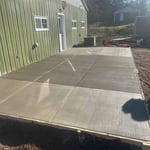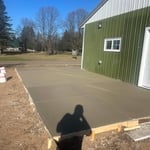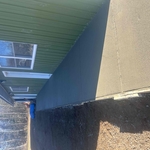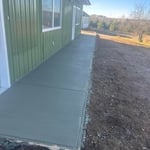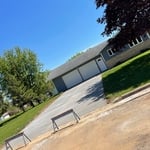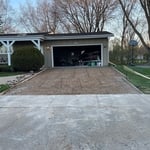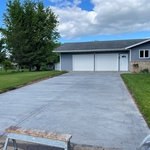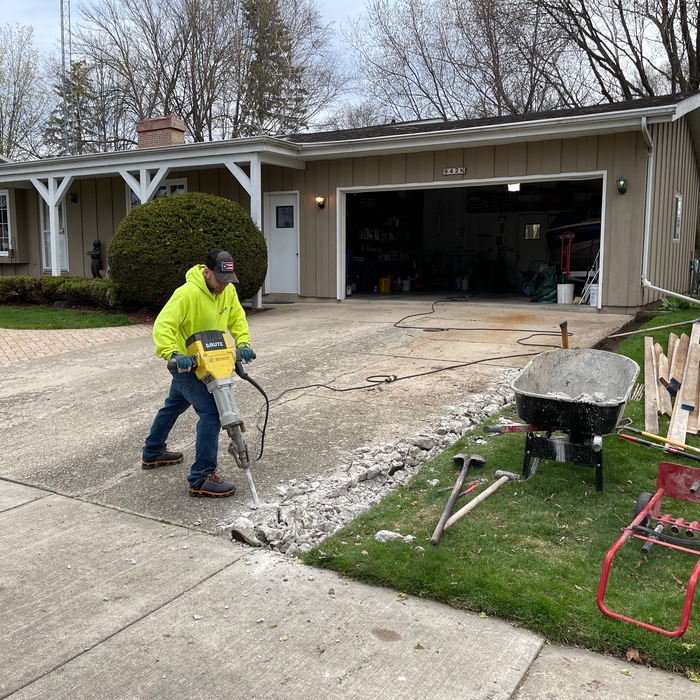






Top-rated asphalt driveway pros.

Get matched with top asphalt driveway pros in Augusta, WI

Enter your zip and get matched with up to 5 pros

Need a pro for your asphalt driveway service project in Augusta, WI?

Select your specific project to find the pro for you.

Find Asphalt driveway pros in Augusta

Jensen and Son Asphalt
New to Angi

Serving Augusta, WI and surrounding areas

Free estimates

Credit card accepted

Offers commercial services

Jensen and Son Asphalt Restoration LLC is committed to excellence in every aspect of our business. We uphold a standard of integrity bound by fairness, honesty, and personal responsibility. Our distinction is the quality of service we bring to our customers. Accurate knowledge of our trade combined with ability is what makes us true professionals. Above all, we are watchful of our customers' interests and make their concerns the basis of our business.

Asphalt Driveways questions, answered by experts

Asphalt edging secures the sides of your driveway to prevent crumbling and cracking over time. Most driveways have edges with a 45-degree grading. This helps transfer some of the stress from the asphalt to the ground underneath. If your driveway doesn’t have proper edging, the pressure from your car may break down the edges over time.

An asphalt driveway should be at least 3 inches thick over a compacted gravel base. Areas with poor drainage should have a thicker stone base. To install a new asphalt driveway over an existing driveway, the new asphalt should be at least 2 inches thick and the existing driveway should be in relatively good condition.

Asphalt is not a type of concrete. While both are a common type of pavement, asphalt is composed of aggregates (like sand and gravel) and bitumen; concrete is a mixture of cement, aggregates, and water. Here are some of the key differences between asphalt and concrete driveways.

The dimensions of a driveway apron vary based on local building codes, the width of your driveway, and the distance between the driveway and the road. On average, aprons range from 12 to 24 feet wide and 8 to 18 feet long. Typically, the end of the apron connected to the driveway matches its width—such as 10 to 12 feet for a single-car driveway—while the end at the street flares out to allow cars to turn in and out more easily. In some areas, you may not be responsible for the portion of the apron that extends beyond the sidewalk, but this depends on local laws.

While blacktop is a type of asphalt, the terms should not be used interchangeably, as not all asphalt qualifies as blacktop. The primary differences are in their composition, production process, and ideal applications. Blacktop contains more stone than other types of asphalt and is heated to a higher temperature during production—300°F or more—while hot-mix asphalt is heated to between 275°F and 300°F. The ratio of bitumen (a tar-like crude oil) is a key differentiator, though sources vary: some state blacktop has less bitumen, making it less durable, while others claim it has a higher ratio. Due to these differences, asphalt is generally more durable and better for high-traffic areas like highways and streets, while blacktop is more suitable for playgrounds and residential driveways. For a driveway project, it is best to consult a professional to determine the most appropriate material.

The Augusta, WI homeowners’ guide to asphalt driveway services

From average costs to expert advice, get all the answers you need to get your job done.

What do you need done? We’ll find top pros.
  • 🌱 "Mow a small front yard"
  • 🛠 "Fix a leaking pipe under the sink"
  • 🏠 "Repair shingles on an asphalt roof"