





Top-rated electricians.

Get matched with top electricians in Salisbury, VT

Enter your zip and get matched with up to 5 pros

Need a pro for your electrical service project in Salisbury, VT?

Select your specific project to find the pro for you.

TRUSTED BY SALISBURY, VT HOMEOWNERS

  • Average homeowner rating star icon4.8
    Average homeowner rating
  • Verified reviews icon20
    Verified electrical services reviews

Find Electricians in Salisbury

McCormick Electrical, LLC
5.0(
4
)
Electric Vehicle Charging Station Installation - For Business - Materials Not ProvidedElectric Vehicle Charging Station Installation - For Business - Materials Provided by ConsumerElectric Vehicle Charging Station Installation - Materials Not Provided+13 more

Serving Salisbury, VT and surrounding areas

Approved

In business since 2023

Free estimates

Offers commercial services

"Colin helped us out with running electricity to our detached garage, and installing a level 2 charger for our cars. His work was excellent and efficient. He was communicative before, during, and after the project, and he was on time each day. His initial bid was very competitive, and we're super glad that we chose Colin to work with. We're looking forward to our next project with him."
Response time1 hour
Recommended by100%of homeowners
Levi Electric
New to Angi
Portable Generator - Repair

Serving Salisbury, VT and surrounding areas

Approved

Free estimates

Emergency services offered

Warranties offered

Levi is a Master Electrician with over 10 years of experience in the electrical trade. He has primarily worked in high-end residential and custom homes, bringing strong expertise in electrical layout, lighting design, and coordination with insulation and building systems. Levi is highly knowledgeable in all aspects of residential electrical work, from rough-in to finish, and is committed to safe, code-compliant, and high-quality installations.

Showing 1-10 of 30
Electrical questions, answered by experts

No. Do not use a 14-gauge wire on a 20-amp outlet. A certified licensed electrician would know that the National Electrical Code (as per Section 240.4(D) subsection 3) requires 14-gauge wires to be used with a maximum amplitude of 15. Therefore, you should only use 12-gauge wires on 20-amp outlets.

You can bury underground electrical wire six inches deep—but only if you use a rigid metal electrical conduit. For rigid, non-metallic conduits, bury the wire at least 12 inches deep. If using an underground feeder cable rated for direct burial, you'll need to place it at least 18 inches deep, as it has no conduit for extra protection.

When installing an outdoor outlet, it's important to proceed with caution. Unless you have the necessary training and licensure, it's not recommended to attempt this DIY. First, choose a suitable location. Make sure that the area can accommodate the outlet without overloading the circuit. You'll also need to ensure that your project complies with building codes. Next, turn off the power to the circuit, then install and wire the outlet according to the manufacturer's instructions. Once the outlet is in place, test it. Lastly, be sure to use a cover that will protect it from moisture and other weather-related damage.

It’s important to ask an electrician a few questions before you commit to hiring them so you can make an informed decision as a consumer. If you’re getting estimates or considering hiring an electrician, ask them these questions:

  • Are you a full-time electrician?

  • Are you bonded, licensed, and insured?

  • What level of experience do you have as an electrician?

  • Can you please share three references?

  • Do you do residential or commercial electrical work?

  • What kinds of electrical work are you most familiar with?

  • Will any subcontractors be performing the work?

  • Are permits and inspections required?

  • Who is responsible for obtaining permits and inspections?

  • What is your schedule?

  • Do you offer a guarantee or warranty on your work?

  • Will you sign a do-not-exceed clause to keep the job within the budget?

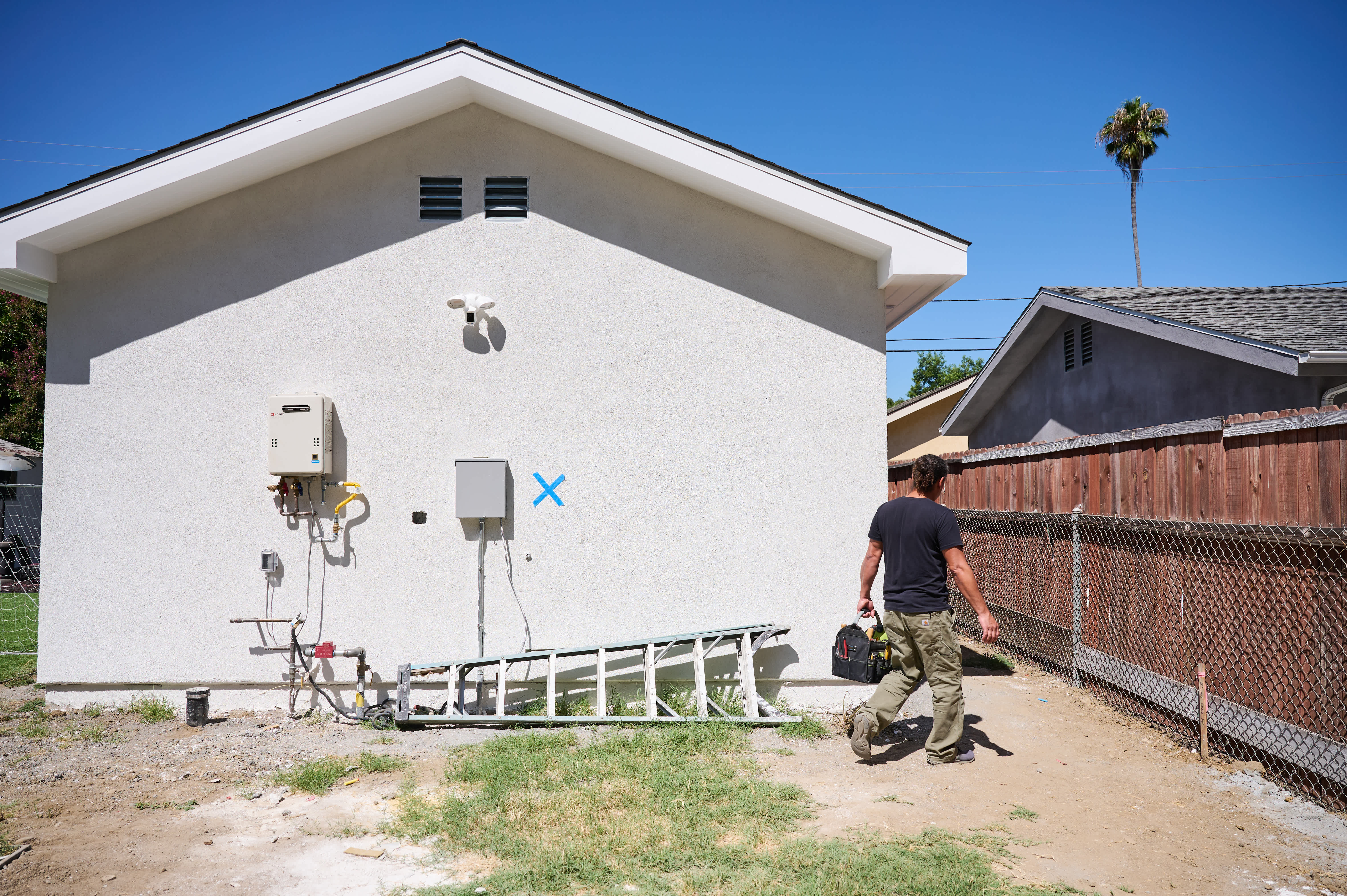
Running conduits through an exterior wall is an effective method for powering outdoor spaces. From gardens to sheds to garages and more, it can be important to have electricity outdoors. Using conduit, which safely covers wires outdoors, is an easy way to get power where homeowners need it.

The Salisbury, VT homeowners’ guide to electrical services

From average costs to expert advice, get all the answers you need to get your job done.