"Nicholas Ryan and James Monell did a great job mitigating the foundation work for my front steps that were sinking into the ground! Thank you so much for the great experience!"
"We are very satisfied with Shamrock. When we requested an estimate for our projects, they quickly provided a clear, reasonable quote, and all our questions were answered. After we accepted the proposal, they showed up next week and completed the work. Everything we needed was done very well. Highly recommended."
"John the project manager was VERY helpful and knowledgeable in getting things lined up for my basement batt insulation project, the guys did an excellent job and it was complete in less that 2 days."
"This was a very involved plaster repair and remediation job, in a very old house. Grady is the only person (or company) who was willing to take on the job and drive all the way from Pennsylvania to our home in Northern Virginia. There are very few people who do this kind of work anymore (we really searched) and he is an expert in his field. We needed to work around his schedule, because he is in demand in the tri-state area, so it took awhile to schedule the work to begin... but it was worth it."
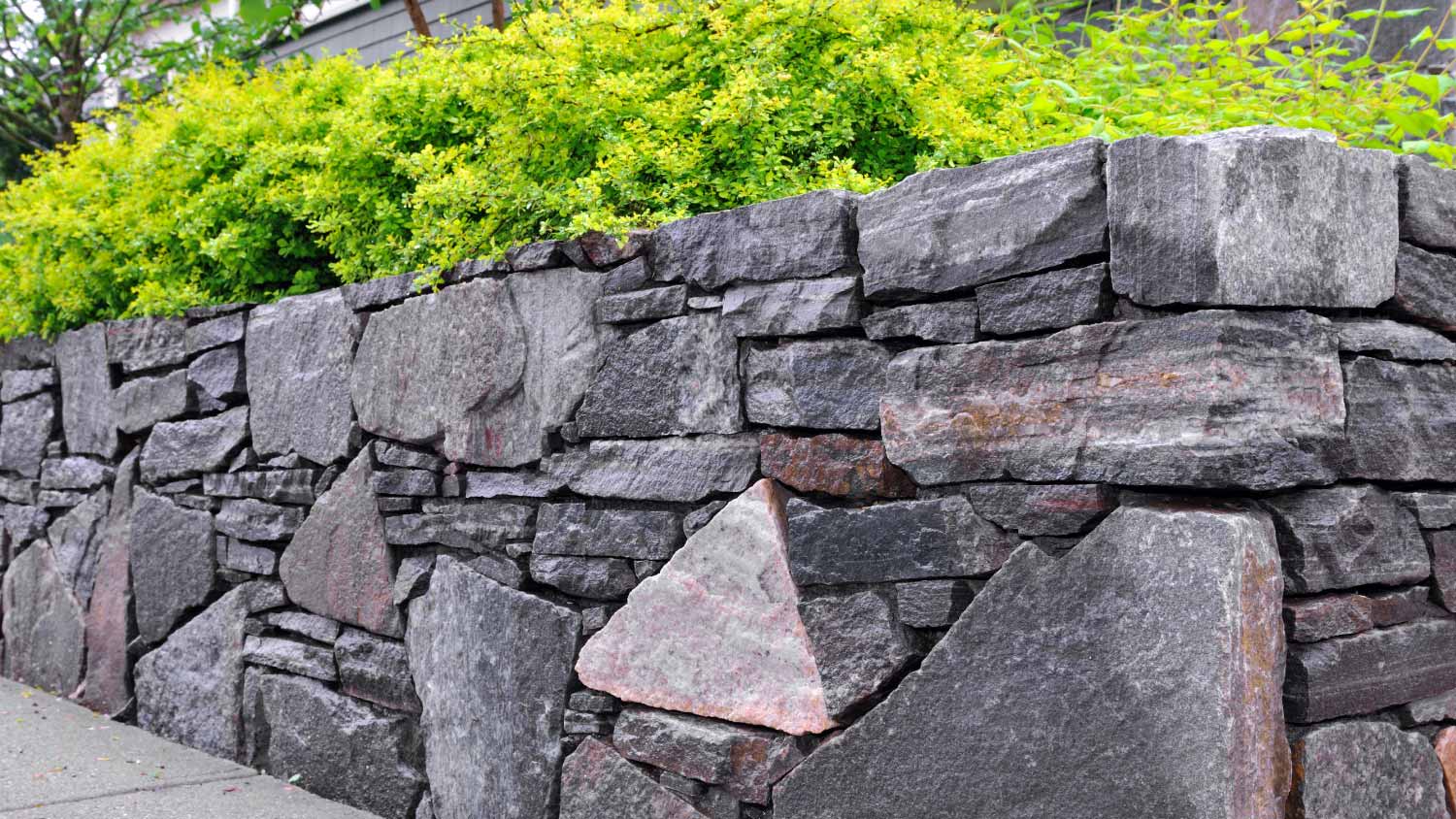
"Fernando was on time, professional, careful, and clean. Before starting the masonry repair, he and his assistant taped heavy paper to the floor to minimize, dust, dirt and damage to any surrounding areas. Fernando worked straight through the job until it was completed in one day. The job was done well and at a price well below other bids I received. Fernando brought his son, who is fluent in English, to help answer any questions I had about the job while it was going on. After the job was complete, I checked the work and the new wall section was straight and matched up with the old existing section of the retaining wall. I spent about 1/3 of the price of my highest bid I received. His bid was comparable with my lowest bid from another contractor."
"Fantastic experience from beginning to end. I'm very happy I went with Joe's company. They are absolute professionals and I could see everyday watching their progress, that they are concerned with quality. Joe had great communication with me throughout the whole process, and they were able to finish on time despite all the rain we were getting. I will definitely hire him again in the future for any masonry."
"Provider was suppose to return and finish laying sand on the patio. Since job was very close to complete, I paid him rather than wait. I never heard from him again. The sand has since washed out in spots and another provider is correcting the situation with polymeric sand. Other than the sand issue, the patio looks good in the way it is laid out. Provider was punctual, and the project went very fast considering it was in the middle of the winter. "
"The gentlemen were kind, courteous and respectful. As I mention above, my slab was 8ft by 16 ft. Along one 16ft edge, the slab had dropped by about 4 inches. I don't know when it was installed, but I would guess it was part of the original construction (1954), and was enclosed probably in the 70s. The gentlemen arrived with 1 2ft bubble level and 2 digital levels which were perhaps 1ft in length. From there, they proceeded to place their 2 ft level so that its end touched the 16ft edge, the opposite end parallel to the 8ft dimension. They raised the level so the buble was centered and marked the adjacent brick wall about 1 inch up from its base. Did I mention the slab is 8 ft wide in the parallel dimension to their level? Did I mention the slab had dropped about 4 inches along that 16ft edge? I suggested they use my 4 ft level instead, which they really didn't, relying in their 2dt and 1ft levels instead. They raised the dropped edge about 2 inched, and the whole slab about one inch, resulting in the edge which was down 4 inches, being down only 3 inches now. At this point, cracks began to precipitate in the slab, so they suggested we stop, which I agreed. Then they suggested my 4ft level was inaccurate, and that their 2ft level was more accurate, reporting the slab only slightly out of level. At that point, I stacked their level on top of mine, and demonstrated that their level centered the bubble before mine did, but when my bubble was centered, so was theirs; their level was inaccurate with respect to mine! In the end I was told that, once the foam was fully cured, I could get a subsequent leveling. Unfortunately, they had no more open appointments until March. Meanwhile, that slab was under my laundry room, which I removed, temporarily supporting the roof with beams on the surrounding ground, and engineered joists. Since I'd rather wash my clothes at home than wait til March, I decided to level the build a floor over the slab instead, as the foundation for the new laundry room structure (enclosing the plumbing for the laundry room might also prove useful when the outside temperature falls below freezing soon). To be fair, when the job was quoted, I asked about the ability to lift the entire structure, and was assured that wouldn't be a problem, so the guy who quoted the job did not know I would tear the structure down. However, he surely knew there was a chance the slab would crack, and that if it did, they would not be able to address the remainder of the leveling until March. My general review is this: * Admit to the problems which could occur up front so that the consumer can make a wise choice, rather than selling the job with promises of making the slab level. I have no doubt that, give the time, they could make it level. But starting the job in October, and finishing it in March is not acceptable. * Have proper equipment and train your people to use it. Showing up with a 2ft bubble level and 1 ft digital levels, then not understanding that the lift indicated by a 2ft level, when brought to level, is only 1/4th the lift needed for an 8ft span is rank naivete on levels and similar triangles. Not knowing that the pinch of the vile, (or likely the curve, in the vile is offset to one edge, as their 2fter was) determines the accuracy of the level was just the final blow for my assessment of their competence. The fact that I wound up doing exactly what I was trying to avoid; build a wooden platform which was level on top of the sloped slab, makes it seem like a complete waste of $1700 to have them come to my house. I only hope that the result of the foam pumping is that any voids under the slab were filled, and that it now has a foundation under it which will not erode further. I am certain they do fine work, and the price I paid was in line with what i was expecting. The workmanship and apparent level of competence, however, was disappointing."
"Paul and his team are true professionals. They went above and beyond and installed, repaired and left me with fantastic looking garage. Not only do these gentlemen know drywall, they can fix drywall problems and they do great work! They did a site survey, provided me an estimate and firm start date. They were true to the price (which I consider very competitive) and began and finished on the day they said they would. I would hire them again in a second! Plus, they are simply nice guys, easy and fun to be around. They truly enjoy their work. If you choose to go with them you’ll have friends for life. Nothing but good. Finally, in the crazy world we live in today they are role models for good citizenship and manners. GREAT!!!!"
Two types of masonry are veneer masonry and solid masonry. Veneer masonry is thin brick or stone material attached to the face of a building. With veneer masonry, the walls support the weight of the masonry products rather than the masonry being built on a concrete footing. Solid masonry is a wall or other brick or stone structure built on a concrete footing, and the masonry supports itself.
Stone houses used to be much more practical, but with the advent of stronger and cheaper materials like concrete, they aren’t seen as much anymore. There are some parts of the world where it makes sense to build with stone, and they are usually next to a stone quarry. Stone is, however, very weather-resistant, which is why many homes near the sea and on mountains are still built with local stone.
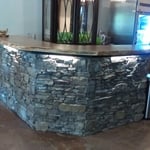
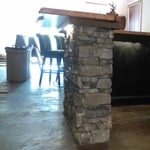
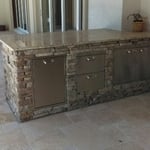
Stone veneer siding is approximately four times less expensive than stone because it's made of concrete and aggregates instead of natural stone. But veneer looks like real stone, is easier to install, and acts as a great, durable siding option.
Yes, it is essential to prime or seal a brick fireplace before painting. Brick is a porous and highly absorbent material, so without a primer, paint can seep into the surface, resulting in uneven coverage and allowing the natural brick color to show through. To avoid this, apply one or two coats of a masonry primer. The primer will seal the brick and provide a smooth, uniform layer for the paint to adhere to. Ensure the primer is completely dry before applying the topcoat of paint.
The cost of masonry work varies widely depending on the type of masonry along with common cost factors like size, complexity, location, and season. Most exterior masonry work done in freezing temperatures tends to cost more because of the preparation and protection involved to keep the masonry from freezing before the mortar cures properly. The average price ranges per project or square foot for different types of masonry include:
Brick wall (fence, garden wall, etc.): $10–$45 per square foot
Natural stone wall: $40–$110 per square foot
Manufactured stone veneer: $20–$40 per square foot
Find out the average brick or stone fireplace installation cost in Washington, D.C. Learn what you can expect to pay for local masonry and venting services.
Security cameras give you peace of mind that there’s always a watchful eye on your home. Learn the costs of installing security cameras in Washington, DC.
When it comes to masonry versus concrete, it can be easy to confuse the two. Use this guide to learn about the differences in appearance, strength, and more.
Discover the wide variety of masonry materials for your next home upgrade project. Our guide covers the different types of materials to choose from and more.