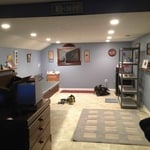
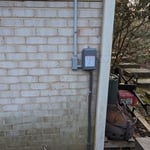
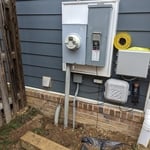
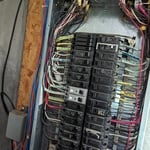
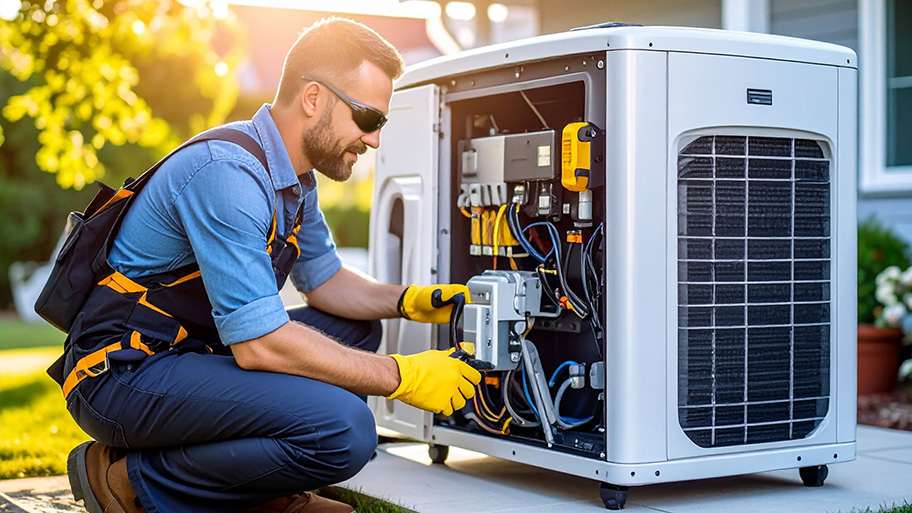
"I have been hiring Cody Malone since we purchased our house in July 2012. They have switched out outlets, installed indoor ceiling fans, installed outdoor ceiling fans, ran electrical to my outdoor water feature and switched out my light fixtures. I plan to hire them again when I add electric to my detached garage. They always do a great job and arrive when they say they will. I have never had a single issue and they have been to my house for no less than six different projects!"
"You cannot find a better contractor than Raufi Services. We hired Raufi Services to install 240V/50A wiring for a hot tub. They were extremely efficient, polite, and timely. The quality of their work was outstanding--I couldn't even tell they ran the wiring in the house after they were done. They were also very competitive in their cost estimate."
"I was very impressed with this company from beginning to end. When they gave me an estimate, they spent 90 minutes with me to make sure I selected the right furnace and AC. The crew came two days later and installed the furnace and AC in one day. Great job! Very happy with the whole experience. I highly recommend this company to others."
"Prompt service! Andy is an awesome and patient technician! Root Electric saved my sanity and saved me money. I will definitely be using Root Electric for any future electrical needs!"
Benfield Electric Company is an area leader in the Electrical Service field, serving customers throughout Northern Virginia, Maryland, and D.C. We work with residential and commercial clients and pride ourselves on our capability to meet all types of electrical wiring demands and deadlines. Established in 1968, we are a licensed, bonded and insured class A Electrical contractor. We are focused on providing a wide array of services to meet all our customer's needs
"They are sewer and drain specialists and they do it really well. Reasonable prices, responsive service. We had family visiting and they moved schedules to and to us. We're grateful that they did so."
Stinnett Electrical Services, is committed to excellence in every aspect of our business. We uphold a standard of integrity bound by fairness, honesty, and personal responsibility. Our distinction is the quality of service we bring to our customers. Accurate knowledge of our trade combined with ability is what makes us true professionals. Above all, we are watchful of your interests and make your concerns the basis of our business.
A 10,000-watt generator can run a small to mid-sized central AC unit (typically up to 3 tons or 36,000 BTU) along with a few other appliances. However, larger AC units or additional loads will require a bigger generator. Consult a local generator installer to ensure you add the correct size generator to your home.
If you’re wondering whether gas generators produce carbon monoxide, know that natural gas generators do not produce carbon monoxide if they are functioning properly, as natural gas burns cleanly. However, if the generator malfunctions and the gas does not burn completely, there is potential for carbon dioxide to be produced. To prevent malfunctions, it's crucial to perform regular maintenance, including running the generator weekly and scheduling professional inspections every 6 to 12 months. Also, be sure to test your carbon monoxide detectors regularly to ensure they function in the rare case of the generator producing carbon monoxide.
The average cost to install a home generator is $5,200, but total costs can range from $500 to $18,000 or more. The final price depends on several factors, including the generator's size, type, brand, fuel source, and the cost of labor and assembly. The generator's size is the most significant cost factor, as units that can power larger homes with higher energy demands cost more.
Cost breakdowns by generator type are typically as follows:
Portable or Emergency Backup Generators (1kW–7.5kW): $500–$2,000
To ensure you get the right size unit for your needs without overpaying, consider hiring an electrician to calculate the electrical load of your essential appliances. It is also recommended to get at least three quotes from qualified installers to find the best fit for your budget.
In most cases, there are no tax credits available for home generators. However, that’s a general statement that applies to federal tax credits, so you might have access to state or local tax incentives. You can check the Database of State Incentives for Renewables & Efficiency (DSIRE) for more information about your area. If you hire a reliable home generator installer, they should also know if there are any state or local perks you can use to reduce your installation costs, including tax breaks and rebates.
Most homeowners won't be able to claim a home generator as a tax write-off. However, a whole-house generator may be tax-deductible in certain situations depending on its purpose. For instance, if it's needed to power essential medical equipment, it may qualify as a medical expense deduction. Also, in some cases, businesses can deduct a generator as a business expense if it supports operations. Always consult a tax professional to determine eligibility based on your specific circumstances and the applicable IRS regulations.
The Mason Neck, VA homeowners’ guide to generator installs
From average costs to expert advice, get all the answers you need to get your job done.
The cost to install a whole-house generator in Washington, DC varies based on factors like generator size, fuel type, and installation complexity. Learn the typical price range and what influences your total cost.
Generators should give you peace of mind, but you’ll only get that if your installer knows what they’re doing. Learn how to hire a pro and what red flags to look for.
Thinking about a generator installation? Learn about backup power options, costs to expect, and how to hire the right local pro to keep your home running.