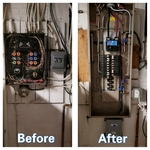
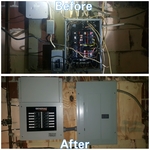
"Anthony and his team do expert electrical work of all kinds. We are a 145 year old non-profit organization with buildings and grounds, and have contracted with Technician Engineers Group (TEG) on two large projects (and several small ones) over the last 15 years. One project rewired a large 125 year old building listed on the National Register of Historic Places, and one installed an extensive outdoor lighting system. In these two unusual situations TEG worked closely with us to find innovative solutions to our unique needs. We are very pleased with the results, enjoyed their can-do approach, and highly recommend this company for any electrical challenge. We found TEG reliable, honest, on time, and all the work was completed ahead of schedule."
Calvert Generator is committed to excellence in every aspect of our business. We uphold a standard of integrity bound by fairness, honesty, and personal responsibility. Our distinction is the quality of service we bring to our customers. Accurate knowledge of our trade combined with ability is what makes us true professionals. Above all, we are watchful of our customers' interests, and make their concerns the basis of our business.
\n
"Ron Ethridge has been our Electrician of chose for the past three years. I started out using Ron to service my generator after the warranty lapsed. Heâ  s provided that big company expertise with that small organization connection. Since that time Ron and his team have provided electrical services for our entire home. I feel comfortable leaving Ron in our home while weâ  re away which is a huge feat for me particularly. Iâ  m grateful for the service that Ron and his team continues to provide to our family."
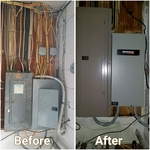
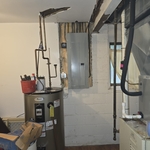
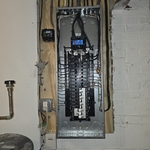
"Awesome! I wanted to do a heavy-up at my new home. I shopped around and got quotes from several companies incl Tim. I chose Paradise because of the price, responsiveness, and professionalism that Tim conducted himself. The job called for significantly more work than expected because of my desire to eventually add a backup generator, Tim made sure that I would not need to reinvent the wheel later and installed the right equipment to meet my future needs. During the course of his work I decided to add several additional outlets and discovered a mis-wired light. He took care of all of the work in short order. Tim is officially my go-to electrician."
"Very professional service. The sale person came to verify the scope of work and provided us with a detailed quote. We scheduled the installation soon after. We had only a minor issue, becuase when the technical crew came in they realized that more work was needed (but no change in the quote). We rescheduled the installation a week after and everything went very well. The sale person remained our point of contact before, during and after the installation and he performed a follow up visit to make sure everything was fine. The technical crew was also very professional. I would reccomend them for sure. "
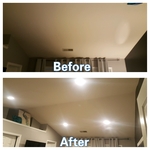
"Everything was fantastic, I was very satisfied with the work - I am really in love with the lights that they installed. I would highly recommend this company to friends and family or anybody that wants to hire an electrician."
"It went very well. Tony is very responsive, courteous, and goes out of his way to make things convenient for the customer. Not only is he very competent and thorough in his work, but he also did a lot of the leg work, picking things up at the electric supply store, returned a couple things that I had incorrectly purchased there in my own trips prior to hiring him, and even went there on my behalf for a bed lamp that needed a new contact. He disconnected it, brought it to the store, took a trip back to the store a week later to pick it up, and reinstalled it for me. Tony could have applied a trip charge for each of the many visits he made to my place but didn't. He also took the time to explain options, solutions, and even gave me a bit of free schooling in electrical work. I highly recommend him and his business.
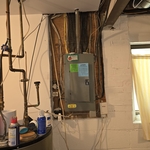
"He was fabulous and did a great job. It was a 20kw generator. He was very professional and came in uniform. He was thorough in discussing my options. He was able to install this in my basement instead of hanging it outside. The main reason why I'd recommend him so highly is that the unit I have is a big generator. I have it setup to run on propane. It turned out that the gas company did not lay the line within the county codes. Jim caught that and notified that. They argued with him, but the county came out and determined that it was potentially dangerous. The gas company had to redo the installation for free. He could of just finished the installation, and I would not have known the distance."
In most municipalities, you will need a permit to install a permanent home generator, including emergency backup, partial-home, and whole-home generators. A permit for a generator usually costs between $50 and $250, depending on where you live. Your electrician or certified generator installer will usually pull the permit for you—and might be required to do so by your building department—but you’ll be on the hook for the cost of the permit. You should ask your installer before agreeing to any work if they will pull the necessary permits for your project.
Natural gas and electricity rates vary significantly based on location, and pricing can change over time, too. It’s possible that in locations where natural gas is particularly inexpensive, it will cost less than grid-based electricity will. However, you should also factor in the generator’s initial costs and maintenance needs, as well as its noise level and if it can comfortably power all your home appliances.
In some situations, yes. Never try to put biofuel into any home generator without checking the specifics first. If a generator has the ability to run on diesel, it can also run pure biofuel (the clear kind made from seed oils, for example). But if you are using biofuel made from animal fats or vegetable oils, the generator will need significant modifications before it can handle a sludgier type of biofuel.
If you’re wondering if you can use your electric vehicle as a backup battery, it depends on whether your EV is compatible with bidirectional charging. This technology allows energy to flow both ways, enabling vehicle-to-home (V2H) backup power, vehicle-to-load (V2L) for appliances and camping, and vehicle-to-grid (V2G) to support the power grid. Compatible EVs convert stored DC energy into usable AC power, helping reduce energy costs and enhance grid stability while providing emergency backup power.
The cost to install a whole-house generator averages $5,200, with a typical price range of $1,500 to $8,900. However, total costs can vary from $400 for a small portable unit to over $18,000 for a large-capacity system. The most significant cost factor is the generator's size and capacity, but other variables include the brand, fuel type, and labor for assembly and installation.
Generator costs can be broken down by type:
Portable or Emergency Backup Generators (1kW–7.5kW): $500 to $2,000
Partial-Home Generators (9kW–20kW): $2,000 to $6,500
Whole-House Generators (22kW–48kW): $5,000 to $18,000
To avoid paying for more power than you need, consider hiring an electrician to calculate the electrical load for your essential appliances. It is also recommended to get at least three quotes to find the best deal for your specific needs and budget.
The Indian Head, MD homeowners’ guide to generator installs
From average costs to expert advice, get all the answers you need to get your job done.
The cost to install a whole-house generator in Washington, DC varies based on factors like generator size, fuel type, and installation complexity. Learn the typical price range and what influences your total cost.
Generators should give you peace of mind, but you’ll only get that if your installer knows what they’re doing. Learn how to hire a pro and what red flags to look for.
Thinking about a generator installation? Learn about backup power options, costs to expect, and how to hire the right local pro to keep your home running.