



Top-rated deck staining pros.

Get matched with top deck staining pros in Sullivan City, TX

Enter your zip and get matched with up to 5 pros

Need a pro for your deck staining project in Sullivan City, TX?

Select your specific project to find the pro for you.

TRUSTED BY SULLIVAN CITY, TX HOMEOWNERS

  • Average homeowner rating star icon4.8
    Average homeowner rating
  • Verified reviews icon32
    Verified deck staining services reviews

Find Deck staining pros in Sullivan City

Avatar for Roofing Solutions Co. RGV
Roofing Solutions Co. RGV
5.0(
12
)
Exterior Home or Structure - Paint or StainExterior Home or Structure - Paint or Stain: LargeExterior Home or Structure - Paint or Stain: Medium

Serving Sullivan City, TX and surrounding areas

In business since 2014

Free estimates

Credit card accepted

"I had 6 Roofing Company BIDS on my house but I decided on the best Quality Job and a Roofing company that you can trust with TOP rated Reviews and recommended by BBB and without a doubt I did a great job in choosing RGV roofing solution not only they are very professional the staff are very respectful and helpful. Mr Jim Hernandez is very easy to talk to and he would make sure that the job is done right making sure that you are satisfied with the job. I would definitely recommend this company,"
Additional Photos
Additional Photos
Additional Photos
Additional Photos
Additional Photos

+12

Recommended by100%of homeowners
...
Showing 1-10 of 94
Deck Staining questions, answered by experts

Painting a damaged pool deck is not recommended if the substrate is crumbling, cracking, spalling, or otherwise actively deteriorating. Continuing deterioration will result in the paint also delaminating or flaking off the damaged surface. Minor damage such as chips or hairline cracks that are not actively deteriorating can often be repaired enough to paint over. A damaged pool deck with a lot of cracking and deterioration should be replaced for best results.

When applying multiple coats, wait four to six hours for each coat to dry. Not waiting long enough can result in streaks, peeling, and uneven color. Plus, it will be more difficult to discern where the second coat has already been applied.

Limewash and whitewash are two techniques used to give brick a light, matte finish, but they differ in composition, application, and permanence. The best choice depends on your aesthetic goals and the specific surface.

Composition

  • Limewash: A natural and environmentally friendly option made from limestone, water, and sometimes pigments. It is breathable and soaks into porous surfaces like brick.

  • Whitewash: Traditionally made from lime, water, chalk, and binders, but a similar look can be achieved with watered-down white paint. It is paint-based and sits on top of the surface.

Appearance and Finish

  • Limewash: Provides a natural, textured appearance that allows the brick's character to show through. It offers a more traditional finish.

  • Whitewash: Creates a softer, more opaque finish, often used for a rustic or shabby-chic style.

Application and Permanence

  • Limewash: Is semi-permanent and can be removed, making it a good choice if you might want to change the look in the future. It requires more skill to apply and cannot be used on previously painted brick.

  • Whitewash: Is a more permanent solution. It is more forgiving to apply and can be used on painted brick. However, because it sits on the surface, it can trap moisture.

Ultimately, if you want a breathable, natural, and reversible finish for unpainted brick, limewash is a great option. If you need a more permanent, opaque coating that can be applied over painted surfaces, whitewash is the better choice. Whitewashing may also be more economical, costing approximately $1.40 to $4.20 per square foot.

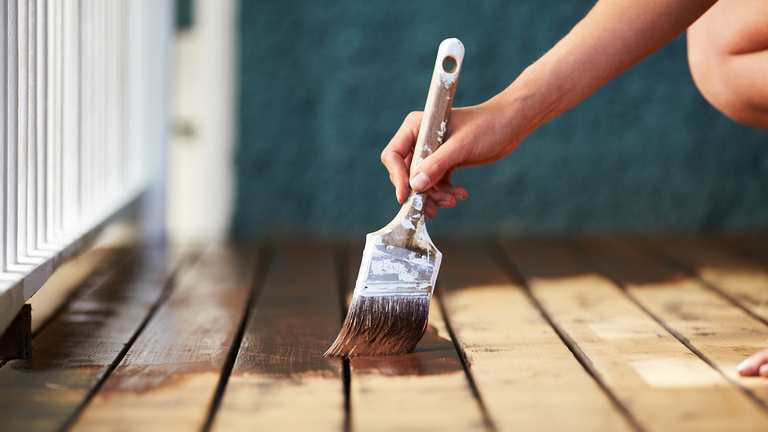
Whether to brush or roll stain on wood depends on the project and your preference. Brushing is ideal for smaller, intricate areas and offers more control over the application, ensuring thorough coverage and penetration into the wood's grain. 

Conversely, rolling is efficient for more extensive, flat surfaces and can save time. However, it is not always the best fit for textured or uneven wood. Some projects may benefit from combining both methods, using a brush for detail work and a roller for broader areas. Ultimately, the choice between brushing and rolling depends on the specific requirements of your staining project.

Exterior paints contain more volatile organic compounds, or VOCs, making them dangerous when used indoors. Without the free ventilation of the great outdoors, it can take longer for the fumes to dissipate than interior paint. While you may notice the smell lessening more quickly, you should be wary of paint fumes inside for 48 to 72 hours after it dries.

The Sullivan City, TX homeowners’ guide to deck staining services

From average costs to expert advice, get all the answers you need to get your job done.