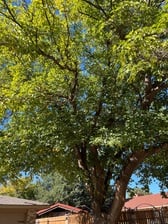
"Dr Bob Whites's service was very quick and very effective. The trees (Golden Oaks} came back this summer with exstensive leafage and groth. He save both Oaks with his excellent service."
"Marc and crew were ver efficient. They were available in less than a week to trim our trees and cut one down. They job was completed in about 3 hours with everything hauled away!! I would definitely recommend them to anyone who wants great service and a very reasonable price!! Thank you Marc!!!!! Joe and Liz Maciel"
Sudden oak death and oak wilt are different diseases. Oak wilt first shows up in tree leaves while sudden oak death affects the branches and trunk. However, as symptoms in both can overlap, it’s best to consult a professional arborist tree expert for a proper diagnosis and development of a treatment plan.
Most trees can be successfully transplanted while they are young, but pines, walnuts, and some oak tree varieties are more difficult to move because their root systems grow deeper than most other trees. Also, trees adapted to sandy soil with wide root systems like beeches, willows, and aspens are harder to dig out because their roots spread much farther out from the trunk. In these cases, unless the trees are very young and small, it’s a good idea to consult a tree planting professional.
Completely topping a plum tree is a risky business. Cut too much, and you’ll kill your tree. That said, you do need to trim the top of your tree to encourage bushy growth, maintain your tree’s vase shape, and limit size.
A plum tree's central leader (or trunk) should never extend more than 3 feet above the highest branch. When you first plant your tree, cut the central leader so it’s 2 to 3 feet tall. As it grows, cut it back 12 to 20 inches until it reaches its desired height. Never prune more than one-third of the new growth.
If you want to take your tree-planting hobby beyond your outdoor space, here are a few great ways to do it:
Encourage your neighbors to participate in the Arbor Day Foundation’s Tree City USA program, which has a four-step framework that helps communities grow and maintain their own tree cover.
Support businesses that plant trees.
Lobby your local government to plant more trees around your community.
Donate to a tree-planting charity.
Any cutting of tree roots can hurt or kill a tree, which is why it's recommended you don’t do it unless the roots are damaging or invasive on a nearby structure like your home. You should never cut more than 15 percent of above-ground tree roots at one time. If you have any questions about cutting tree roots, contact your local arborist.
The Stratford, TX homeowners’ guide to arboricultural services
From average costs to expert advice, get all the answers you need to get your job done.
How much does an arborist cost? This guide explains the cost of different services, ongoing expenses, and other factors to consider when hiring an arborist.
Tree inspections can ensure your trees stay healthy and safe, preventing costly damage. Learn how much tree inspections cost and what can affect the price.
Arborists are specialized tree care experts. This guide will help you hire an arborist with all the qualifications to give your trees the best care possible.