Top-rated leaf removal pros.

Best leaf removal pros near Montgomery, TX

Enter your zip and get matched with up to 5 pros

Need a pro for your leaf removal project in Montgomery, TX?

Select your specific project to find the pro for you.

TRUSTED BY MONTGOMERY, TX HOMEOWNERS

  • Average homeowner rating star icon4.2
    Average homeowner rating
  • Verified reviews icon116
    Verified leaf removal services reviews

Top-Rated Leaf removal pros in Montgomery - Updated Nov 2026

Avatar for Cedar Works & Outdoor Services
Cedar Works & Outdoor Services
4.6(
203
)
Lawn & Yard Waste Clean UpLawn Care - Fall / Spring Clean Up - For Business

Serving Montgomery, TX and surrounding areas

Approved

In business since 2014

Free estimates

Credit card accepted

"Ryan and his crew did a fantastic job which included removing dead plants, planting new plants and grass, and spreading 13 yards of mulch in one day. Very professional and his estimate was spot on. Great job guys!!!"
2 neighbors recently requested a quote
Recommended by81%of homeowners
Avatar for Luis Ipina Installations
Luis Ipina Installations
5.0(
11
)
Lawn & Yard Waste Clean UpLawn Care - Maintain and Mow a Lawn

Serving Montgomery, TX and surrounding areas

Approved

In business since 2025

Free estimates

Offers commercial services

"Luis showed up promptly and evaluated the problem with my sliding glass door. He spent time trying to figure out the problem and we came to a conclusion to try the least invasive repair remedy, which I can handle. I was very pleased with how you handled himself and would definitely call him again for other needs."
3 neighbors recently requested a quote
Recommended by50%of homeowners
Avatar for Satin Stone Landscaping, LLC
Satin Stone Landscaping, LLC
4.6(
20
)
Lawn Care - Fall / Spring Clean Up - For Business

Serving Montgomery, TX and surrounding areas

Approved

Super Service Award Winner

In business since 2013

Free estimates

Warranties offered

"This company, itâ s ownership and management are polite, professional and very competent. They are self motivated and I value the way recognize a problem, come with a solution and I know it will be taken care of properly. I am happy to have found them."
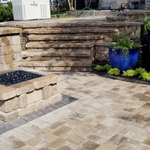
Terrace Patio
Paver Patio
Firepit
Paver Patio
Paver Walkway

+48

Response time12 hrs
4 neighbors recently requested a quote
Recommended by43%of homeowners
...
Showing 1-10 of 584
Leaf Removal FAQs, answered by experts

Lead toxicity comes from inhaling lead or consuming it. Before the 1980s, when the government banned lead from consumer use, it could be found in paint, plumbing, pipes, ceramics, and even gasoline. Lead paint is toxic for the same reason lead itself is toxic, which is why lead poisoning from paint presents the same as lead poisoning from water or food sources, with a slight increase in respiratory symptoms vs. digestive symptoms. Lead paint is most dangerous when it’s old and peeling, cracking, or otherwise disturbed. This increases the concentration in the air and, therefore, in breathable air. 

The best way to remove lead paint is by wet hand sanding and removing all dust and residue with a HEPA vacuum. Professionals may also strip and scrape lead-based paint with a paint scraper. In some cases, you may choose to have a pro encapsulate or enclose your lead-based paint surface by covering it with a sealant or a new material. You may also choose to replace the material altogether.

If the lead paint is in a place that is not easily disturbed and is not flaking or deteriorating, you do not necessarily need to remove it. Lead is toxic when dust particles or flakes from peeling lead paint are ingested. If people are not in the area with the lead paint, it may be safe to leave it in place. You still may want to consider encapsulation with a paint formulated for covering lead-based paint, just for an added layer of protection.

According to the Environmental Protection Agency (EPA), hazardous waste is generally classified into four main categories:

1. Characteristic Wastes: These exhibit at least one of four hazardous traits: ignitability (flammable, like gasoline), corrosivity (can rust or decompose materials, like car batteries), reactivity (unstable and can explode, like aerosol cans), or toxicity (harmful when ingested, like lead-based paint).

2. Listed Wastes: These are specific wastes from manufacturing and industrial processes that the EPA has officially designated as hazardous. They include byproducts from processes that use solvents, pesticides, and other chemicals.

3. Universal Wastes: These are commonly generated hazardous items that are subject to streamlined regulations. Examples include batteries, pesticides, mercury-containing equipment (e.g., bulbs), and some lamps.

4. Mixed Wastes: This category includes waste that contains both hazardous and radioactive components, making it subject to regulation by both the EPA and the Nuclear Regulatory Commission.
Professionals are trained in identifying hazardous materials and utilize industry-approved methods for safe handling and disposal. They adhere to regulatory frameworks to protect health and the environment, ensuring all materials are disposed of safely and responsibly.
The Montgomery, TX homeowners’ guide to leaf removal services

From average costs to expert advice, get all the answers you need to get your job done.