


Get matched with top deck staining pros in Oacoma, SD
Top-rated deck staining pros.

Need a pro for your deck staining project in Oacoma, SD?

Select your specific project to find the pro for you.

Find Deck staining pros in Oacoma

Deck Staining questions, answered by experts

You may be wondering: can you paint cement? Fortunately, the answer is yes.

To change the color of your cinder blocks, you have two options. You can either paint them or stain them. Either way, you'll be able to choose from a wide range of color options. Some popular colors for cinder block painting include off-white shades and gray tones, which add a modern spin to the traditional gray blocks.

Applying a sealer or topcoat after staining wood is highly recommended, though not always strictly required. A sealer protects the wood from moisture, UV rays, and weather-related issues, which is especially important for outdoor surfaces like decks and fences. It also enhances the stain's durability, prevents fading over time, and gives the wood a cleaner, more professional-looking finish. For some indoor applications, a sealer may not be necessary, depending on the type of stain used and the level of protection needed. It's always best to check the stain manufacturer's recommendations and consider the wood's intended use and exposure when deciding whether to apply a sealer.

Limewash and whitewash are two techniques used to give brick a light, matte finish, but they differ in composition, application, and permanence. The best choice depends on your aesthetic goals and the specific surface.

Composition

  • Limewash: A natural and environmentally friendly option made from limestone, water, and sometimes pigments. It is breathable and soaks into porous surfaces like brick.

  • Whitewash: Traditionally made from lime, water, chalk, and binders, but a similar look can be achieved with watered-down white paint. It is paint-based and sits on top of the surface.

Appearance and Finish

  • Limewash: Provides a natural, textured appearance that allows the brick's character to show through. It offers a more traditional finish.

  • Whitewash: Creates a softer, more opaque finish, often used for a rustic or shabby-chic style.

Application and Permanence

  • Limewash: Is semi-permanent and can be removed, making it a good choice if you might want to change the look in the future. It requires more skill to apply and cannot be used on previously painted brick.

  • Whitewash: Is a more permanent solution. It is more forgiving to apply and can be used on painted brick. However, because it sits on the surface, it can trap moisture.

Ultimately, if you want a breathable, natural, and reversible finish for unpainted brick, limewash is a great option. If you need a more permanent, opaque coating that can be applied over painted surfaces, whitewash is the better choice. Whitewashing may also be more economical, costing approximately $1.40 to $4.20 per square foot.

Staining pressure-treated wood is a recommended practice. While inherently resilient, it's not impervious to moisture and UV exposure. Staining treated wood is feasible and recommended for enhanced protection and longevity. Applying stain and sealant safeguards against degradation, prolonging its life span. These measures shield the wood from environmental threats while augmenting its aesthetic appeal, ensuring your investment endures the test of time.

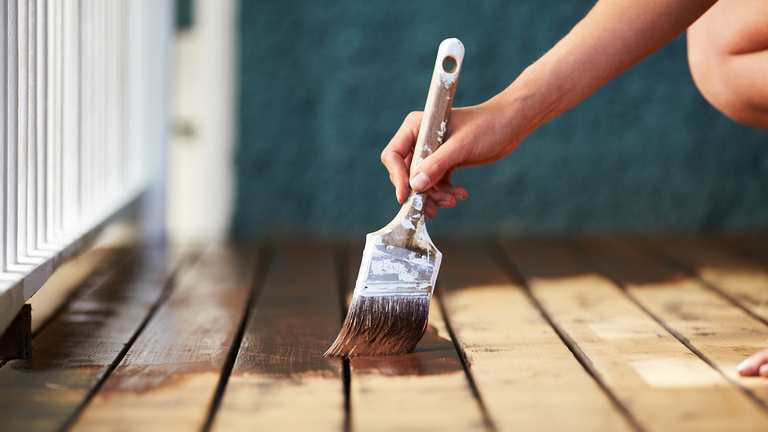
You’ll need to restrain your deck when you notice fading, cracking, peeling, or mold and mildew over a moderate to large area, or when it’s become especially difficult to clean. As for how often to stain a deck, plan to do it every two to three years or whenever you start to notice extended damage.

The Oacoma, SD homeowners’ guide to deck staining services

From average costs to expert advice, get all the answers you need to get your job done.