"Large amount of work was needed, and job is about 80% complete. Hard workers that want to do a great job. Very courteous and professional when discussing details. They were willing to rent special equipment to get the work finished."
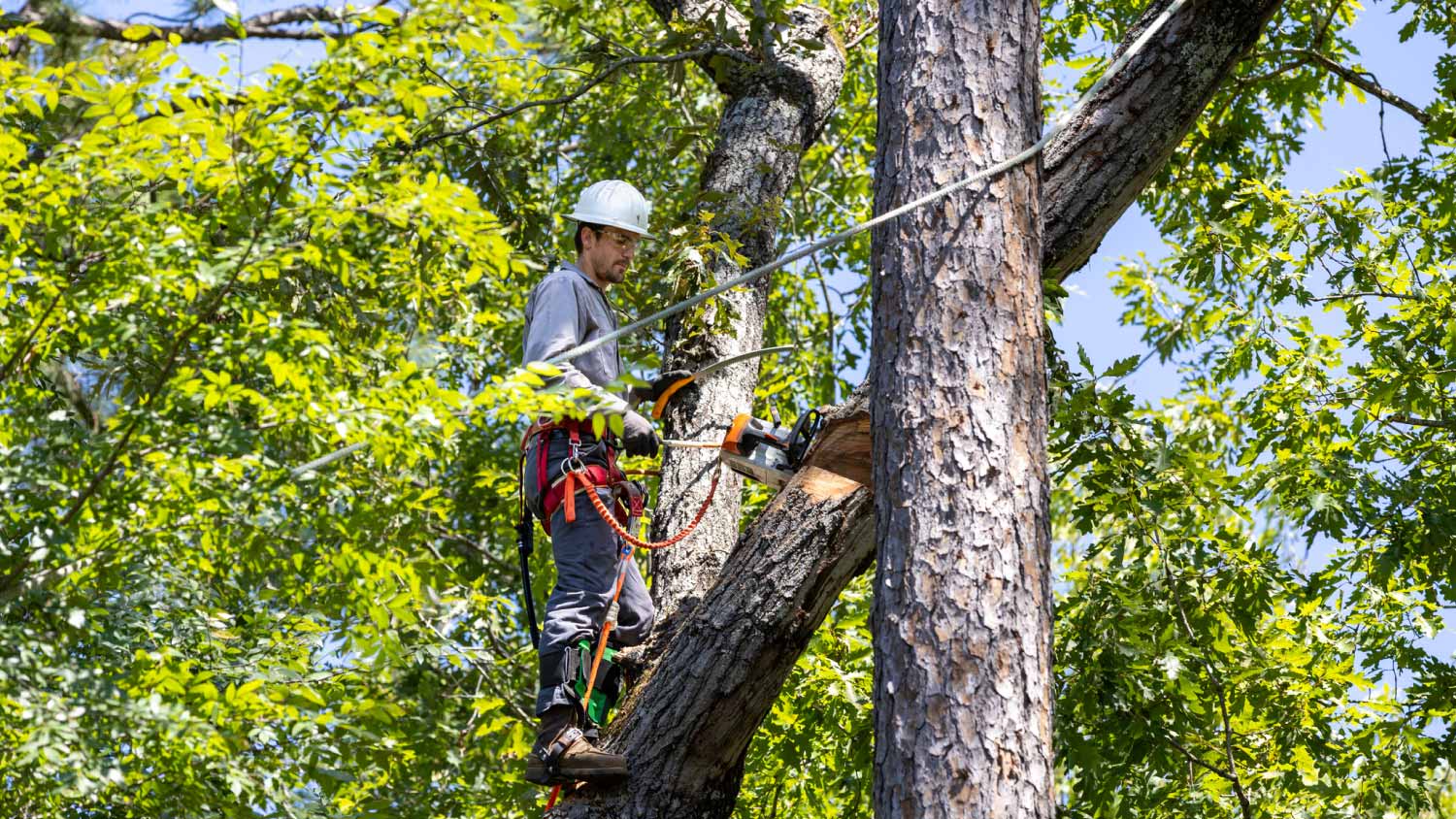
DIY is risky and not recommended for large trees; professional services ensure safe removal and proper disposal.
Some people prefer to leave or even carve a leftover stump, but we recommend removing it if possible. You can often dig out smaller trunks with a shovel once they have died and dried out. You can have stumps professionally removed, or request a service to grind them down to ground level so they can be replaced with other landscaping or objects.
You should avoid cutting off the top of mature cherry trees. This process is called tree topping, and it’s not recommended for cherry trees—or any trees, for that matter. Tree topping removes between one-third to half of the length of the tree trunk, resulting in structurally unsound, fruitless suckers. The only exception is for saplings. Young pie, sour, and tart cherry trees that are over 30 inches tall in the fall or winter before the tree blooms can benefit from heading cuts.
There are many signs that a tree is diseased or dying, and if you suspect that’s the case, you should call an arborist immediately. You might notice rot or fungus on the trunk or that the tree is beginning to lean to one side. Brittle branches or signs of root damage are other indicators that a tree is in trouble. If the tree is dying, it might be time to cut the tree down so it doesn’t fall.
The cost of professional tree trimming averages $460, with a typical range between $200 and $760. However, prices can be as low as $75 or as high as $1,800 depending on several factors. The size and type of the tree are major cost drivers; for example, trimming Crepe Myrtle trees costs an average of $80 to $400, while trimming giant pine trees can range from $200 to $1,800. Other factors that influence the price include the time of year, as services are often more costly in the spring. The tree's accessibility and your location also play a role, as a remote or hard-to-reach tree may increase the cost. Some professionals may offer a discount if you have multiple trees to trim.
The Eagle Butte, SD homeowners’ guide to arboricultural services
From average costs to expert advice, get all the answers you need to get your job done.
How much does an arborist cost? This guide explains the cost of different services, ongoing expenses, and other factors to consider when hiring an arborist.
Tree inspections can ensure your trees stay healthy and safe, preventing costly damage. Learn how much tree inspections cost and what can affect the price.
Arborists are specialized tree care experts. This guide will help you hire an arborist with all the qualifications to give your trees the best care possible.