"Large amount of work was needed, and job is about 80% complete. Hard workers that want to do a great job. Very courteous and professional when discussing details. They were willing to rent special equipment to get the work finished."
make one up It may be necessary to remove a tree from the landscape. If you are uncertain if a tree needs to be removed or not we will help and provide options or remedies for a particular tree if possible.
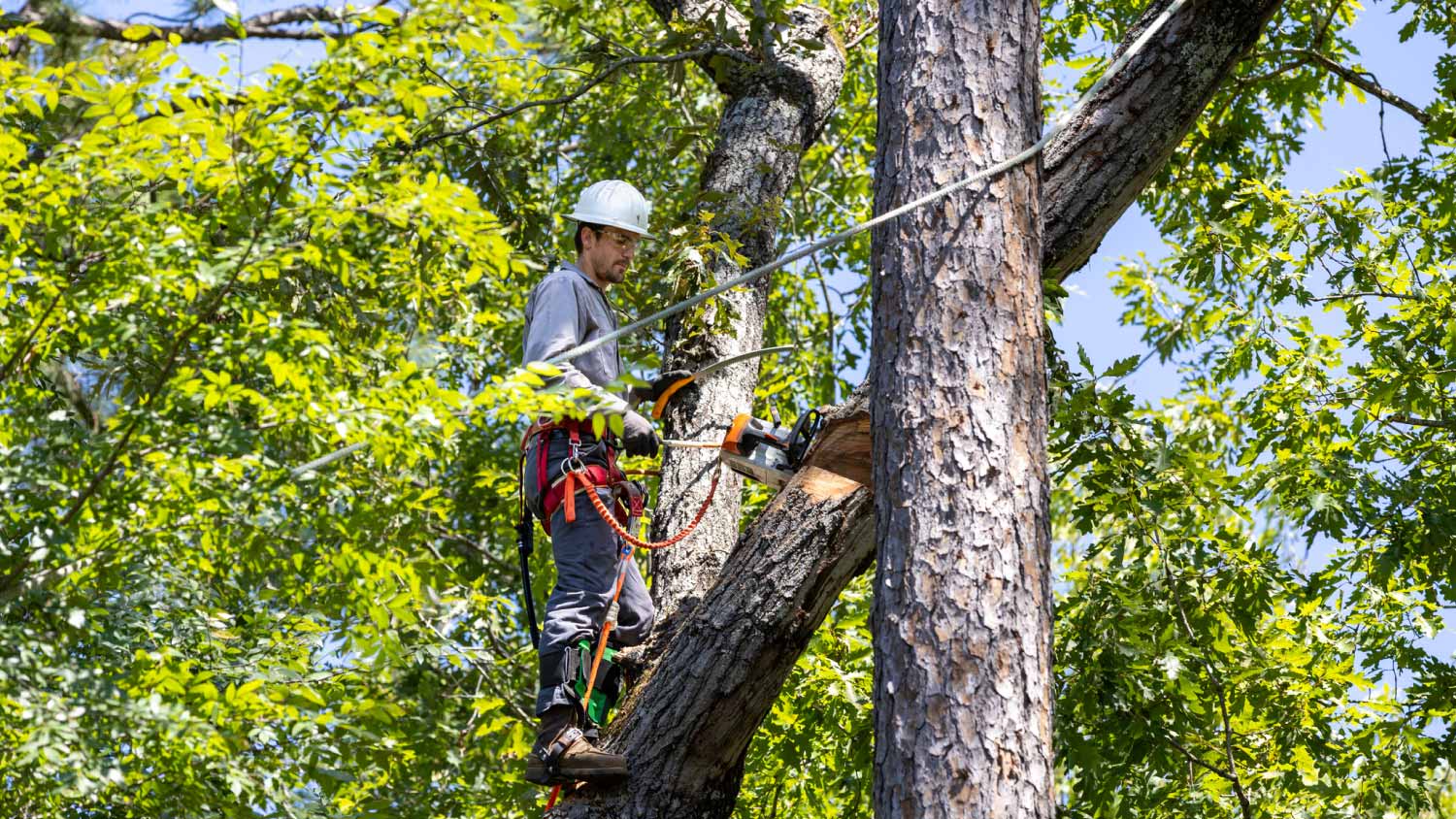
Trees should be pruned every two to five years, depending on its age and type. Young trees should be inspected and pruned every two to three years. Mature trees should be inspected and trimmed every three to five years, and fruit trees should be pruned annually with a careful eye on seasonal growth. Evergreens typically don’t need pruning, unless branches or limbs are damaged, diseased, or harboring pests.
A pro can guide you on the alternatives to tree topping depending on the specific issues within your trees. For example, if you’re dealing with breakage and cracks in your tree, they may suggest canopy reduction, which removes less than 25% of the tree’s limbs. If you’re dealing with lesser damage, some intentional pruning may be all you need. If you’re looking to get a clearer view through your tree, the pro may also try windowing or skirting your tree.
Your neighbor is not in a good position to know if your trees are truly dead or pose any kind of danger. That’s why hiring an arborist or tree service expert can be such an important part of the process. If the trees are still alive and don’t pose any threat, you’re in the clear (but you may want to document and photograph everything in case events turn sour down the road).
But if a tree is visibly dead and near the property line, you should remove it to be safe. If a dead tree falls on a neighbor’s property, they may have grounds to sue for negligence. If any branches on trees have died, it’s a good idea to cut them back for similar reasons.
A tree growing close to a house can pose several risks, but removal isn't always the only or best solution. Potential problems include roots growing into the foundation and causing structural cracks, branches damaging the roof or promoting moss growth, and debris clogging gutters, which can lead to water damage. Trees can also provide access for pests and encourage mold. However, a small, healthy tree may not be a problem, and for larger, established trees, strategic trimming can be a cheaper and more beneficial alternative to removal. It is generally recommended to take action for trees within 10 to 20 feet of your home, especially if they are unhealthy or encroaching. Your best bet is to consult a professional arborist who can assess the specific situation and provide expert advice.
You should prune ornamental trees once every other year after the fruit has matured and begun to drop. You should also prune out dead branches whenever you see them. Pruning too often can stimulate more growth, especially in faster growing varieties like Bradford pears.
The Timber Lake, SD homeowners’ guide to arboricultural services
From average costs to expert advice, get all the answers you need to get your job done.
How much does an arborist cost? This guide explains the cost of different services, ongoing expenses, and other factors to consider when hiring an arborist.
Tree inspections can ensure your trees stay healthy and safe, preventing costly damage. Learn how much tree inspections cost and what can affect the price.
Arborists are specialized tree care experts. This guide will help you hire an arborist with all the qualifications to give your trees the best care possible.