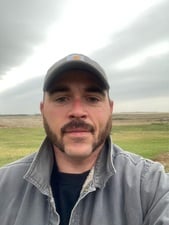
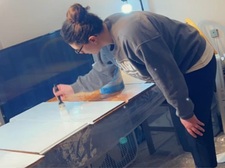
"Sanchez Construction does great work! He is meticulous with all of his work. Iâ ve had him do multiple projects around my home and have not been disappointed. He painted, fixed some dry wall, installed a baby gate, fixed multiple exterior doors/seals. He takes great pride in his work and wants his customers to be happy with the work he does. I would recommend him to anyone needing home repairs!"
Welcome to Stahlman Kustom Karpentry, proudly serving Glenham, South Dakota and all the surrounding areas. Our goal is to complete your project to perfection. We look forward to building long lasting relationships with the customers that we serve. Call us today! You will not be disappointed.
Ahoe Construction is a client focused company serving the greater Aberdeen community. We're dedicated to providing top quality craftsmanship, customer service and professionalism on every project. Call today to see what our expertise can do for the overall value of your home and comfort of living in it.
We are a locally owned and operated company that values honesty and integrity and treats your home as if it were our own. We offer a variety of Handyman/ Improvement services that are customizable to each individual project. You will find us to be competitively priced, paying close attention to the details of each and every project that we are involved with. We look forward to building lasting relationships and guarantee your satisfaction!\n
TH's Paining and Designs is committed to excellence in every aspect of our business. We uphold a standard of integrity bound by fairness, honesty, and personal responsibility. Our distinction is the quality of service we bring to our customers. Accurate knowledge of our trade combined with ability is what makes us true professionals. Above all, we are watchful of our customers' interests, and make their concerns the basis of our business.\n
We pride our company on reliability, great communication, integrity, and quality work. We are experts in our trade and will do our best to keep you as educated as we can on your particular task or project. We look forward to earning your business! Book with us online or feel free to give us a call today!
Fire Pit Installation questions, answered by experts
Yes, a faulty or broken light switch can be a serious fire hazard. Malfunctioning switches often result from loose wiring, exposed connections, or other electrical problems that can cause overheating or sparking. Warning signs include crackling, popping, or hissing sounds when you flip the switch, which indicates live electricity that could ignite nearby flammable materials. If you suspect your light switch is faulty, immediately turn off the power at the circuit breaker and contact a qualified electrician to remedy the issue.
Baseboard heaters are generally safe and efficient, but they can be dangerous if safety precautions are not followed. To ensure safety, do not block the heaters with furniture, drapes, open doors, or other items, and maintain clear space around them for proper heat flow. Regularly check that items have not fallen on or under the units. If you have children or pets, make sure they stay clear of hot heaters to avoid burns. For added safety, consider models with an automatic shut-off feature and have them professionally tested. If a problem occurs with a baseboard heater, always contact a qualified electrician or HVAC professional for repairs.
Wiring a light switch wrong can cause a fire if the incorrect wiring causes arcing, meaning the current jumps uncontrolled from one conductor to another. Loose wires or worn wires that are not repaired or replaced can cause arcing. If you’re not 100% sure you can do the job safely, don’t attempt to wire a light switch on your own.
Electrical fires are unique from other fire types because they have the potential to deliver electric shocks in addition to being on fire. Avoid serious injury from possible electrical emergency situations by avoiding the use of water, foam-based fire extinguishers, wet-chemical fire extinguishers, flour, or baking powder to put out an electrical fire.
First, it is crucial to check your local guidelines or building codes. You should typically have one smoke detector for every floor, bedroom, and kitchen. Another rule of thumb is to install one smoke detector for every 500 feet in a home. Reviewing manufacturing recommendations, especially for interconnected devices, is also a good idea to ensure proper connection and monitoring.
The Bowdle, SD homeowners’ guide to fire pit installation services
From average costs to expert advice, get all the answers you need to get your job done.
A fire pit installation costs $850 on average but can vary by size, fuel type, materials, and more. See how much you need to budget for a new fire pit.
Discover fire door cost data, including installation, materials, and tips to save. Learn what impacts fire door pricing and how to budget for your project.
Discover home fire sprinkler system costs, including installation, maintenance, and key cost factors. Learn how to budget and save on your home fire protection.
A fire pit adds attractive entertainment space to your backyard. Learn about standard fire pit dimensions and what factors contribute to fire pit size.