


Top-rated deck repair pros.

Get matched with top deck repair pros in Barnwell, SC

Enter your zip and get matched with up to 5 pros

Need a pro for your deck repair project in Barnwell, SC?

Select your specific project to find the pro for you.

Find Deck repair pros in Barnwell

Avatar for His And Hers Handyman Maintenance
His And Hers Handyman Maintenance
5.0(
8
)
Deck or Porch - Repair - For Business

Serving Barnwell, SC and surrounding areas

In business since 2022

Emergency services offered

Warranties offered

"They did a great job. They are reliable , prompt and very flexible with my work schedule. They did a professional job with plumbing services and electrical work with repairing my breaker box. I highly recommend there services. They were very affordable."
Mailbox
Mailbox
Mailbox
Mailbox
Flooring

+66

Showing 1-10 of 31
Deck Repair questions, answered by experts

Some elevated decks require stairs that lead to the ground level per the local fire codes in some municipalities. In other regions, a staircase is an optional feature that can increase accessibility and convenience for homeowners who want ground-level access to their deck. Additionally, a staircase is necessary if your home doesn't have an existing door leading to the deck.
No. In most cases, it’s not colder or freezing temperatures that affect decking materials but the amount of moisture that seeps into the materials as a result. For example, wood decking material is more likely to suffer from rot or decay when exposed to excess moisture from snow or ice. An extreme change in temperature can cause wood to expand or contract, but only if it’s not properly treated beforehand.

Wood decks need to be replaced every 10 to 15 years on average. Natural wood is highly vulnerable to infiltration and damage from moisture, which can occur rapidly due to exposure to outdoor elements. You can protect your deck and maximize its lifespan by sealing it every year or two.

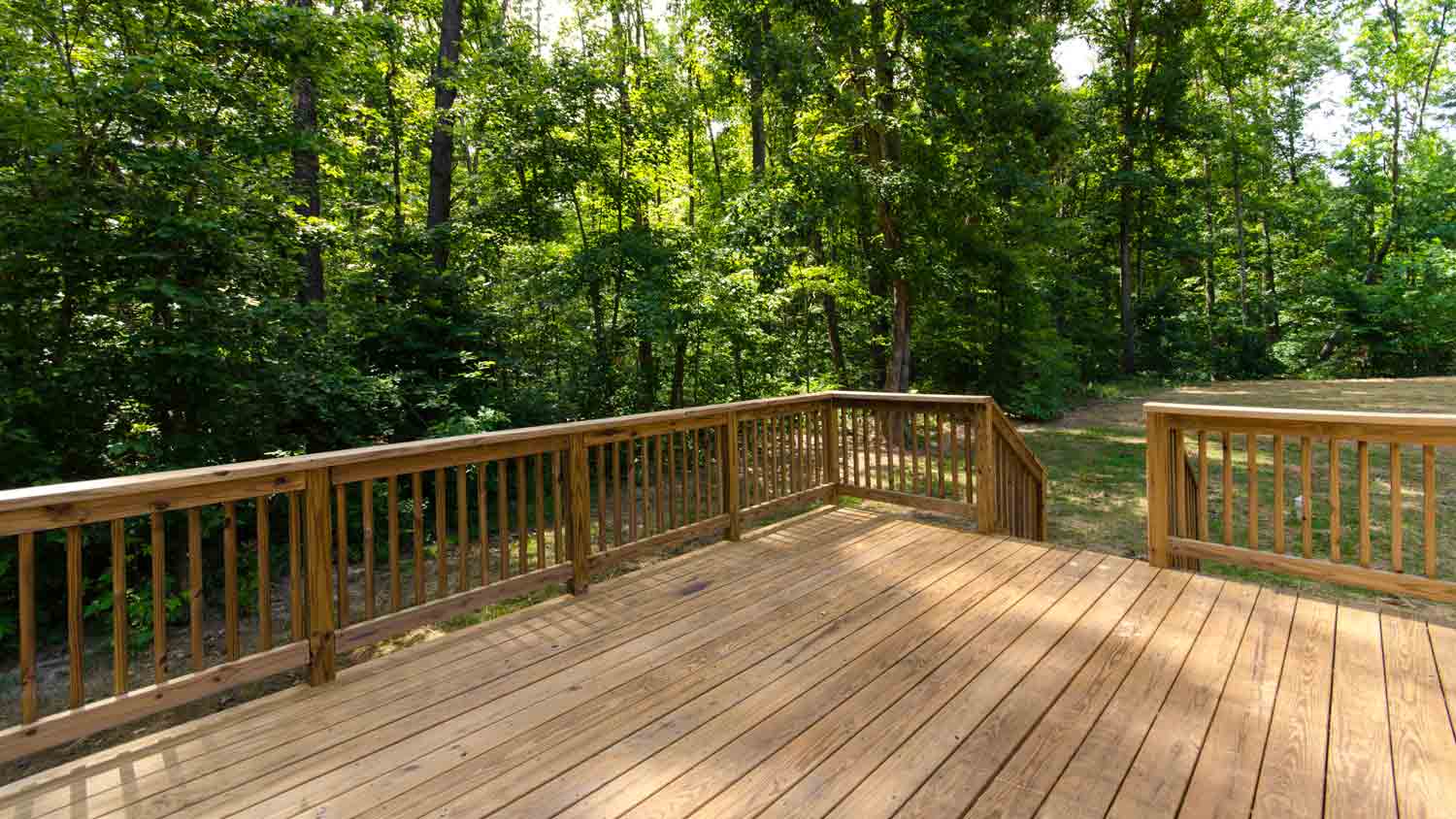
Most building codes require that spindles or balusters on deck and stair railings be spaced no more than four inches apart. This safety standard, often called the '4-inch sphere rule,' is designed to prevent small children or pets from slipping through the railing. A good way to visualize this is that a 4-inch sphere should not be able to pass between two spindles. For the same safety reason, the space between the bottom rail and the deck floor should also be no more than four inches. As a general guideline, professionals often install three balusters per foot of railing. However, since specific requirements can vary by location, it is crucial to check your local building codes to ensure compliance before starting your project.

Ideally, a gate should be able to swing both in and out. However, if it can only open in one direction, it is generally best for it to swing inward. This is often the safest option, especially for deck gates near steps, as you'll want the gate to swing away from the stairs. An inward swing also prevents the gate from opening into a public space, like a sidewalk, and can be more convenient when carrying heavy items like a wheelbarrow into a garden.

There are exceptions, however. The layout of your property may require a different approach. For example, if your property is on a slope, the gate may not be able to swing inward. You should also ensure the gate can open fully without colliding with any objects or blocking access to other areas. For a backyard garden gate where public access isn't a concern, the direction it swings is largely a matter of personal preference. Finally, always check your local building codes, as they may have specific requirements for which way a gate must swing.

The Barnwell, SC homeowners’ guide to deck repair services

From average costs to expert advice, get all the answers you need to get your job done.