






Top-rated excavation pros.

Get matched with top excavation pros in Millville, PA

Enter your zip and get matched with up to 5 pros

Need a pro for your excavation project in Millville, PA?

Select your specific project to find the pro for you.

Find Excavation pros in Millville

Avatar for Greg Grant Enterprises LLC
Greg Grant Enterprises LLC
5.0(
7
)
Building Site - Preparation and ClearingBuilding Site - Preparation and Clearing - For Business

Serving Millville, PA and surrounding areas

Approved

In business since 2009

Free estimates

Emergency services offered

"From pricing to performance and completion Greg was a pleasure working with the entire project. I would highly recommend them. My project with Greg was not only complicated but also a very tight schedule to accommodate a back yard party . Greg was certainly up for the challenge and got us complete on time!"
Excavation
5 neighbors recently requested a quote
Recommended by14%of homeowners
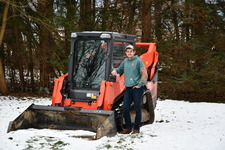
Avatar for Lawn lovers landscaping
Lawn lovers landscaping
New to Angi
Building Site - Preparation and ClearingBuilding Site - Preparation and Clearing - For BusinessExcavation - Major Grading or Resloping - For Business

Serving Millville, PA and surrounding areas

Approved

I'm Darren I have 10 years of construction experience I'm OSHA certified I offer many services including lawn and property maintenance, tree service, junk removal, excavating and more. I service Scranton Pa, wilkesbarre Pa, Tunkhannock PA, and surrounding areas and also Binghamton NY vestal NY, and owego NY, \n

DMS Excavation and Retaining Wall
5.0(
3
)
Building Site - Preparation and ClearingBuilding Site - Preparation and Clearing - For Business

Serving Millville, PA and surrounding areas

In business since 2018

Free estimates

Emergency services offered

"We hired Dave to remove some ballast and dirt from a staged testing area we had set up to test switch machines here at Amtrak. They arrived on time and completed the job ahead of schedule despite some unforeseen obstacles. Highly recommend."
Response time3 days
Recommended by100%of homeowners

Avatar for Northeastern Roof Restoration
Northeastern Roof Restoration
4.4(
23
)
Building Site - Preparation and ClearingBuilding Site - Preparation and Clearing - For BusinessExcavation - Major Grading or Resloping+2 more

Serving Millville, PA and surrounding areas

Free estimates

Credit card accepted

"Jeremy was fantastic. He gave me a fair price and told me it should be about 1 month to complete since material is back ordered. He was able to get the material and completed work ahead of schedule. His workers were contentious, diligent, organized and cleaned up the everyday, so not to leave a mess. Very respectful. I would definitely recommend and absolutely use them again."
Additional Photos
Additional Photos
Additional Photos
Additional Photos
Additional Photos

+138

Recommended by86%of homeowners

...
Showing 1-10 of 60
Excavating questions, answered by experts

The best type of soil to build on is a mixture of sand and clay, known as loam soil. Loam soil has the best combination of these soil types to build a foundation on. The clay particles help with water retention, so it won’t erode like sandy soil might, and the sandy particles help with drainage, so you won’t see unsafe soil expansion or have an increased risk of leaks from water sitting against your foundation.

Sewer lines can be buried anywhere from 18 inches to 8 feet deep, with a common average depth between 18 and 30 inches. The exact depth depends on local factors like climate and soil type. In colder regions, pipes must be buried deeper (below the frost line) to prevent freezing, sometimes as deep as 8 feet. The digging depth can also impact the cost of sewer line replacement. To find the specific depth for your property, you can check the building plans for your system, which should be on file with your city or local sanitation department since permits are required for installation.

Most residential basements are 8 to 10 feet deep. You can dig deeper depending on building codes, but it does become more difficult. You’ll likely need to install stronger foundation walls and additional supports to handle the increased load. Depending on the water table, you may also need a water management system. Clay soil can support a deeper foundation than sandy soil. A structural engineer will be able to tell you the maximum, feasible depth.

There is no standard depth for burying a septic tank; they are typically buried anywhere from 4 inches to 4 feet underground. The final depth depends on several factors, including the depth of your main sewer line, the height of the bedrock, soil type, local regulations, and the property's landscape. If you plan to grow grass or plants over the tank, a depth of at least 4 to 6 inches is recommended. Deeper tanks can be more difficult to locate, but a septic professional can help find it for you.

How deep your septic system needs to be into the ground depends on several factors. In extremely cold environments, the tank needs to rest below the maximum frost line, which can be up to six or eight feet deep. The standard burying depth for most systems is between a few inches and four feet below ground level. Depth can also depend on the slope of the landscaping and other property variables. 

The Millville, PA homeowners’ guide to excavation services

From average costs to expert advice, get all the answers you need to get your job done.