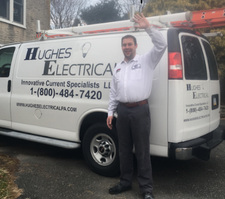
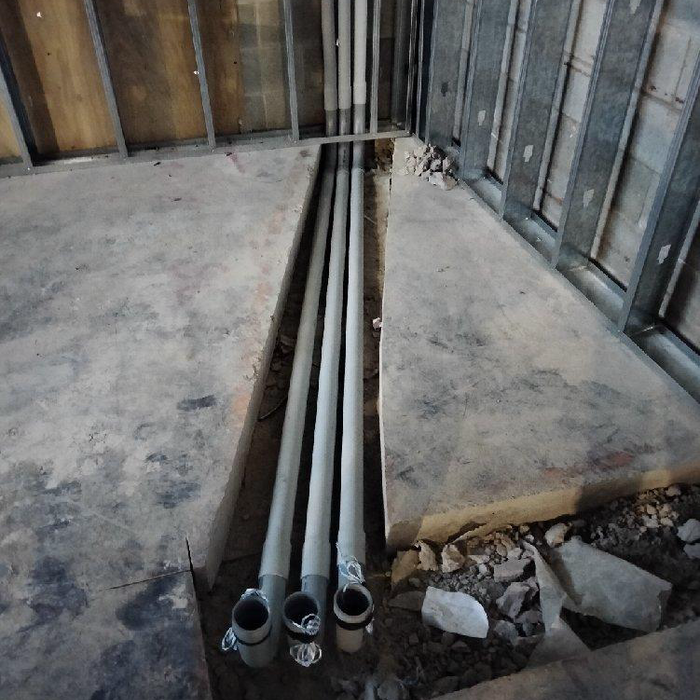
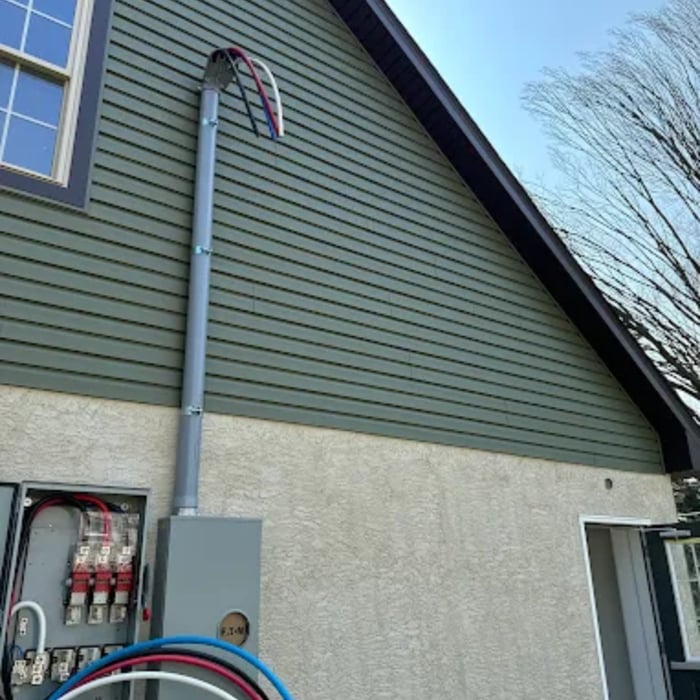
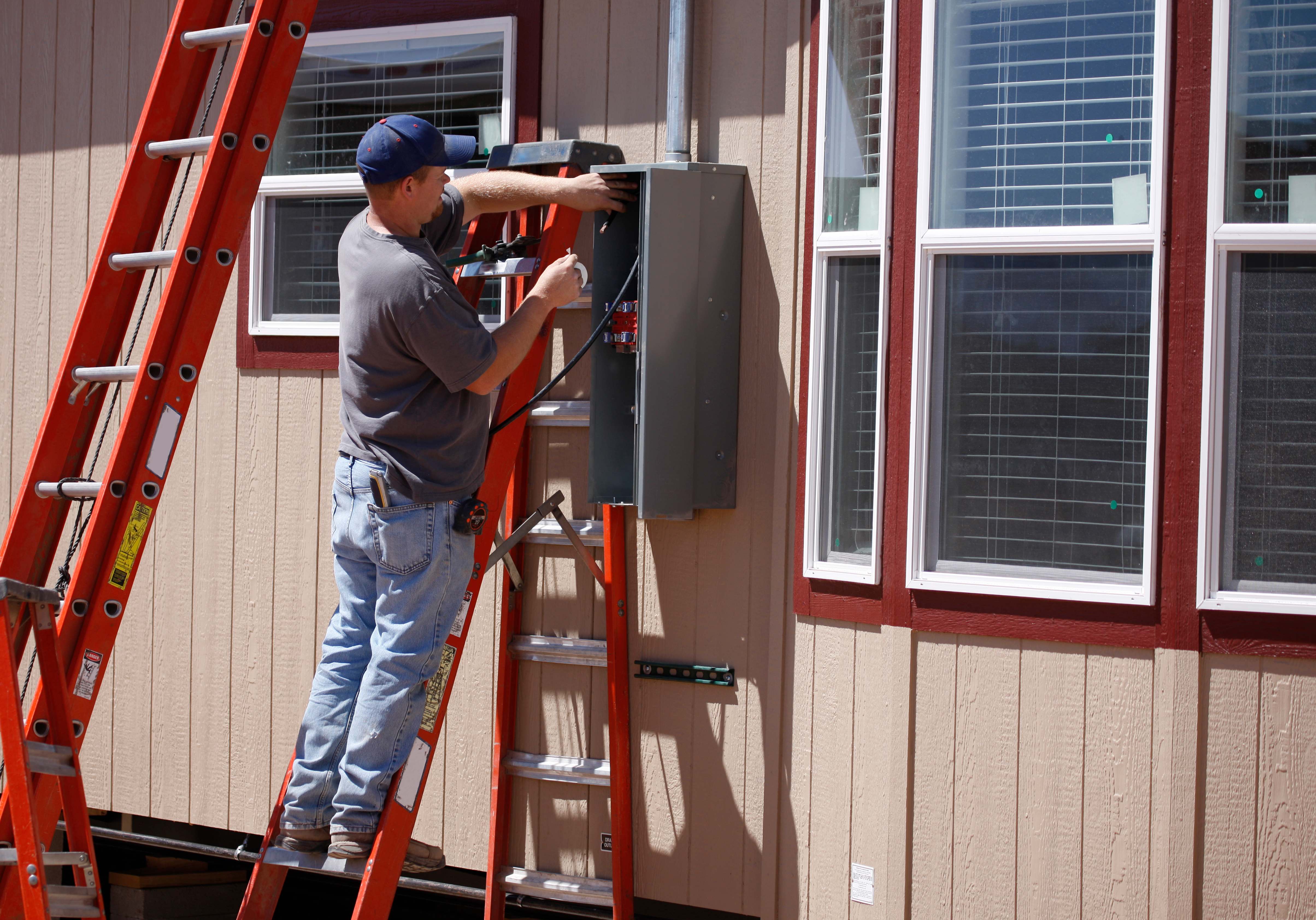
"I hired Hughes Electrical to install my electric vehicle charging station in my garage, and they did a wonderful job! William and his apprentice ran a new 50 amp electrical line from my electric box to my charging station, going through the basement and up the side wall. Afterwards, they gave me a free inspection and an estimate for new outlets outside. I am very pleased to have worked with them and will be recommending them to all my neighbors!"
"I needed 4 separate lines put in and Brandon Electric came to our home with a professional team of electricians and completed the job without shutting off the electric. I will recommend Brandon Electric to anyone."
With 25 years of experience, JCS Low Voltage LLC is here to help! We offer a variety of low voltage services. We are based out of the Shillington, PA area. Give our team a call today. We're looking forward to working with you!\n
I have over 30 years of electrical experience. Residential, Commerical, and Industrial construction and maintenance. Communications, Television, single phase, three phase, 120/240, 120/208, 277/480, 347/600, 480 Delta, and some high voltage 13.2 kv and 36 kv. Solar panels installation, wind mill installations, and many equipment installations.
"The gentlemen who performed the service were courteous and professional. They left the area as clean as when they started. I highly recommend AMF Electric!"
A&M Electric LLC is a veteran-owned, Christian-based electrical contractor proudly serving Lancaster County and surrounding Central Pennsylvania communities with reliable residential, commercial, agricultural, and industrial electrical services. We specialize in electrical panel upgrades, 200 amp service upgrades, EV charger installation, generator installation, electrical troubleshooting, lighting installation, rewiring, new construction wiring, remodels, emergency electrical repairs, and commercial electrical services. Our licensed electricians provide safe, code-compliant, and high-quality electrical work for homeowners, businesses, farms, warehouses, offices, retail spaces, and construction projects throughout Lancaster County and Central Pennsylvania from our base in Ephrata, PA. Also serves Reading, Lancaster, York, the greater Harrisburg and Philadelphia areas, Mohnton, Coatesville, Landale, Montgomery County, Hatfield, King of Prussia, and Bryn Mawr.
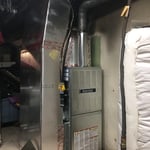
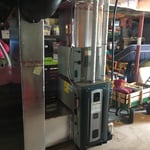
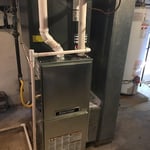
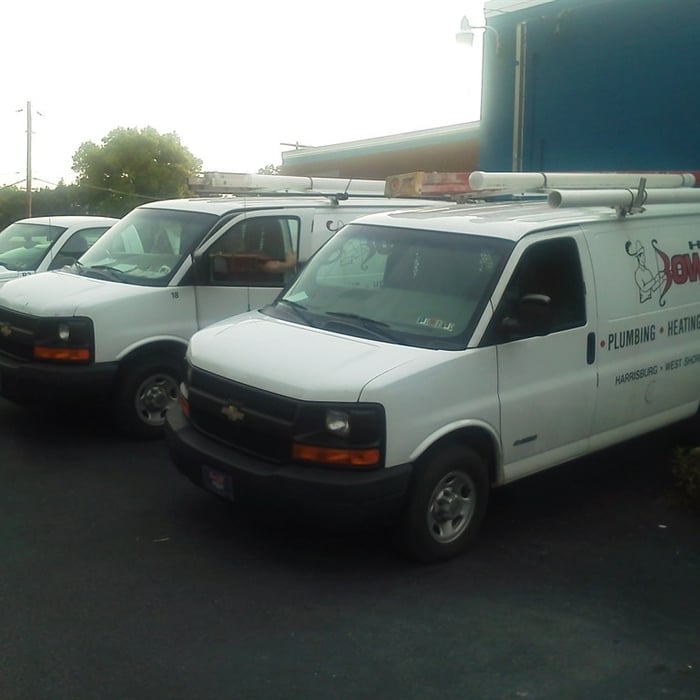
"After waking up to the smell of burning dust and a noise that could not mean anything good, my husband and I realized that our 18 year old gas furnace was trying to die on us. Not a good feeling to say the least. I had used HL Bowman last summer for some plumbing work and was VERY pleased. I called them fairly early this morning, and to be honest I assumed that I would get an answering service or answering machine. Instead, the phone was answered on the 2nd ring and in less than 3 minutes I had a service call scheduled. Responsive? You bet! I was told a technician would arrive late morning and a technician arrived by 10:30. Punctual? Absolutely! The technician (I hate that I forgot his name) diagnosed our problem almost immediately and had us up and running by 12:00. (And that includes the time it took him to go pick up the part we needed). Quality, Integrity and Professionalism beyond compare! Thank you H.L. Bowman for being an honest and professional company. I will tell all of my neighbors and friends about you! My only regret is that you don't also do electrical work. :)
"Ivan has done multiple jobs for me. He upgraded our electric at my print shop when we bought new equipment and also ran new electric for me at multiple investment properties !"
Smart meters send the readings over a wireless wide area network (WAN) to the power company. This network allows sending small amounts of data slowly over long distances, which is perfect for smart meter readings that occur monthly. If you would prefer a smart meter, contact your power company and consider springing for the cost of replacing your electric meter.
Replacing the panel itself takes four to eight hours of work by a professional. However, if associated wiring and related components also require replacement, the labor time increases to 20 to 30 hours. Your electrician can speed up the process by bringing in a team of pros to handle ancillary tasks.
Yes, if something sparks when you plug it in or turn it on, it's important to unplug it immediately. A spark from an electrical appliance or device could indicate a short circuit, damaged wiring, or other electrical problems that could cause electrical fires or electrical shock. By unplugging the appliance, you can reduce the risk of electrical hazards and prevent damage to the device itself. It's important to avoid using the appliance until it has been inspected and repaired by a licensed professional to ensure that it’s safe to use.
Yes, splicing wires can cause a fire if the splicing is done incorrectly. This is why splicing wires is a task best handled by electricians. One of the most common mistakes made when splicing wires is not using a wire connector. Without a wire connector, electricity flows unsheathed and can result in a home electrical fire.
The standard voltage for United States power outlets isn’t shared around the world, and neither is the shape of the power connector. This is why you need travel adapters when spending time abroad. Where the United States typically uses 110/120V outlets, outlets in Europe typically use 220/240V. Power outlets can vary in other ways around the world, too. Not everyone uses the 60Hz frequency, for example, and not everyone even uses AC power in outlets. Always do your research when traveling to see what you need.
The Glenmoore, PA homeowners’ guide to electrical services
From average costs to expert advice, get all the answers you need to get your job done.
If your outside electrical meter box has sustained wear and tear, it might be time for a replacement. How much it costs to replace an electrical meter box in Philadelphia, PA depends on labor, model, and box type.
The cost to install a 240-volt outlet in Philadelphia, PA varies depending on the amperage and the home’s current wiring conditions. Use this guide to budget for your next project.
Is it time to upgrade your electrical panel? For the sake of safety, find out sooner than later by exploring our top signs that it’s time for an upgrade.