


Get matched with top welders in Derry, PA
Top-rated welders.

Need a pro for your welding project in Derry, PA?

Select your specific project to find the pro for you.

Find Welders in Derry

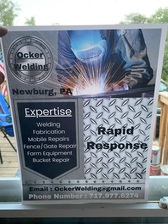
Avatar for Ocker Welding
Ocker Welding
New to Angi

Serving Derry, PA and surrounding areas

In business since 2021

Free estimates

Emergency services offered

We offer Mobile Welding Services or In house services. We have very reasonable rates and offer free estimates within so many miles from our primary location. We eagerly look forward to working with you and accomplishing your welding needs! Give us a call, text or email today!

Response time4 hrs
Showing 1-10 of 39
Welding questions, answered by experts

Your typical household tools will not cut a metal pipe. To cut a metal pipe, you’d need more specialized tools like a pipe cutter or circular saw. Do not attempt to use these tools without taking proper safety precautions and wearing safety gear. It’s usually safer to let a pro cut a metal pipe, especially if you’re not confident in your skills with a heavy-duty saw.

The average cost for a welding project is about $300, with typical costs ranging from $125 to $490. However, prices can be as low as $125 for very small jobs or exceed $1,200 for large or complex projects. Welders typically charge an hourly rate between $65 and $150, depending on their experience, and many charge a minimum fee to cover overhead and travel expenses. The total cost is influenced by several factors, including labor, the cost of materials like metal rods and shielding gas, the type of metal being welded, the project's size and complexity, and your geographic location. For a precise quote, it's best to ask a local welder for an estimate based on your specific project.

To maintain custom or fabricated metal structures and extend their lifespan and appearance, perform regular cleaning, apply rust prevention treatments, and use protective coatings.

Cutting round ductwork requires precision and the right tools. A duct cutter, specifically designed for circular ducts, is ideal. First, mark the cutting line on the duct using a measuring tape and pencil. Then, position the duct cutter's blade on the marked line. Apply steady pressure, rotating the cutter around the duct. The sharp blade creates a clean, precise cut. Alternatively, a reciprocating saw with a metal-cutting blade can be used for larger round ducts. Ensure the duct is securely held in place while making the cut to prevent slips and maintain accuracy.

Cutting rectangular ductwork requires careful measurements and the right technique. Use a measuring tape and pencil to mark the cutting lines accurately. Tin snips are excellent for straight cuts on smaller ducts. For more extensive or thicker rectangular ducts, a reciprocating saw with a metal-cutting blade is effective. 

Ensure the duct is well-supported and secure while cutting to prevent wobbling and maintain precision. After cutting, use a metal file to smooth any sharp edges, ensuring safety during installation. 

The Derry, PA homeowners’ guide to welding services

From average costs to expert advice, get all the answers you need to get your job done.