
Top-rated welders.

Get matched with top welders in Latrobe, PA

Enter your zip and get matched with up to 5 pros

Need a pro for your welding project in Latrobe, PA?

Select your specific project to find the pro for you.

Find Welders in Latrobe

Franks Welding
5.0(
1
)
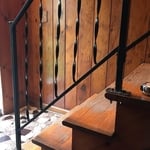
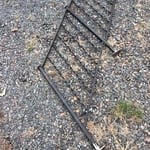
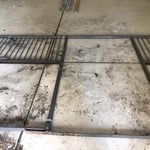
Metal Stairs and Railings - RepairSheet Metal and Ornamental Metal - Fabricate

Serving Latrobe, PA and surrounding areas

In business since 2020

Free estimates

Offers commercial services

We at Franks Welding, pride our company on reliability, great communication, integrity, and quality work. We are experts in our trade and will do our best to keep you as educated as we can on your particular task or project. We look forward to earning your business!

Recommended by100%of homeowners
Showing 1-10 of 41
Welding questions, answered by experts

Costs depend on unit complexity, labor, wall mounting needs, and additional accessories like floating shelves.

The average cost for a welding project is about $300, with typical costs ranging from $125 to $490. However, prices can be as low as $125 for very small jobs or exceed $1,200 for large or complex projects. Welders typically charge an hourly rate between $65 and $150, depending on their experience, and many charge a minimum fee to cover overhead and travel expenses. The total cost is influenced by several factors, including labor, the cost of materials like metal rods and shielding gas, the type of metal being welded, the project's size and complexity, and your geographic location. For a precise quote, it's best to ask a local welder for an estimate based on your specific project.

Welding is the process of using extreme heat—and, sometimes, pressure—to attach two pieces of metal. In contrast, metal fabrication is a more involved process that can include welding, sheet metal work, bending, and other forms of metal manipulation. Metal fabrication is a large-scale project that may or may not involve welding, while welding is more often a step in larger fabrication projects.

Cutting rectangular ductwork requires careful measurements and the right technique. Use a measuring tape and pencil to mark the cutting lines accurately. Tin snips are excellent for straight cuts on smaller ducts. For more extensive or thicker rectangular ducts, a reciprocating saw with a metal-cutting blade is effective. 

Ensure the duct is well-supported and secure while cutting to prevent wobbling and maintain precision. After cutting, use a metal file to smooth any sharp edges, ensuring safety during installation. 

Yes, you can use a saw to cut metal pipes. The best saw to use is a reciprocating saw, but even a fine-tooth hacksaw can get the job done. No matter which saw you use to cut metal pipes, wear protective gear, like work gloves, safety goggles, and ear plugs. Apply a firm, steady pressure to the tool, and always ensure the pipes are secured so they don't move while you make the cuts.

The Latrobe, PA homeowners’ guide to welding services

From average costs to expert advice, get all the answers you need to get your job done.