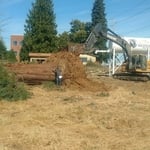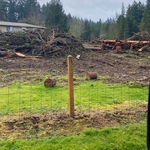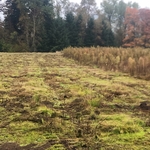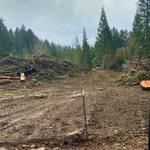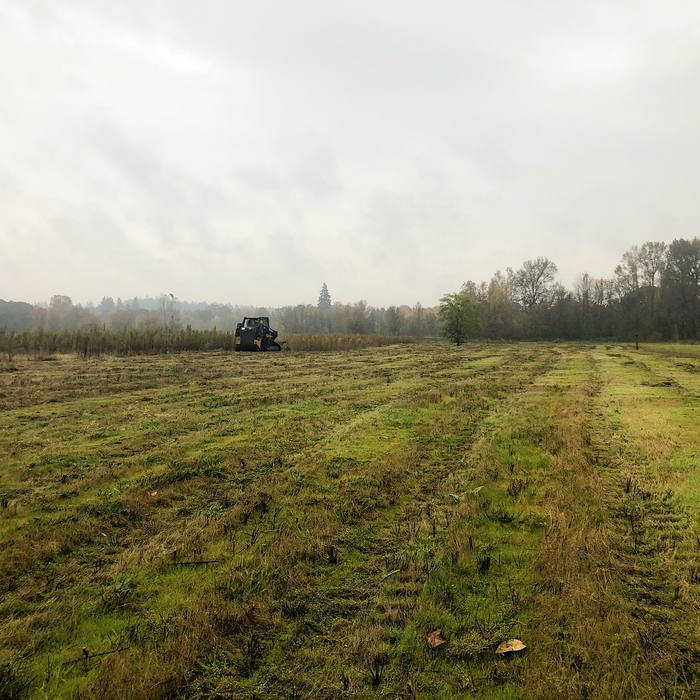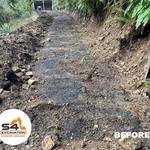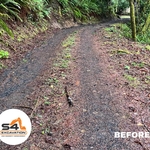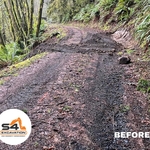





"We recently had James come out to help clear an absolute mountain of overgrown blackberries in our yard, and we couldn't be happier with the results! From start to finish, he was so kind, approachable, and an absolute pleasure to work with. His pricing was incredibly fair and transparent, and he didn't just meet our expectations—he went completely above and beyond with the quality of his work, turning a massive headache of a project into a clean, manageable space. We feel so lucky to have found him. We will definitely be reaching back out to him for future projects and are already recommending him to all our friends and family. If you need excavation or yard work done, James is your guy!!"
"Daniel was awesome to work with. He came out and provided a solid estimate in a timely fashion. We had an unexpected sprinkler line that was in the middle of our excavation area and he took care of that. He also provided the materials for a retaining wall that we hadn't initially planned for, and he added that to the project scope without issue. I will definitely reach out to Daniel if we have another project like this one."
Wickwire Civil provides professional excavation and civil site services focused on precision, safety, and performance. We support residential and commercial development with reliable earthwork and site preparation solutions.
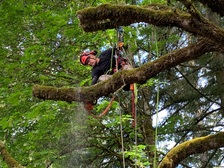
"Boulder Ridge have done an excellent and timely job. My project required 27 mature douglas fir trees to be removed and preped for hauling, major excavation work for a log deck and truck turn around."
"I wish more contractors ran their business like Jerid. Shows up on time to give bid and do the work as well as perform the job as requested. Professional work by someone who understands how his business works. Thank you!"
Family Owned and Locally Operated. We are small and we take great care of our customers. Customer satisfaction is what determines our success, which is why we take a hands-on approach. When interacting with RUSSELL'S EXCAVATION & SEPTIC PROS LLC, you'll notice that we're particularly focused on the principles of quality work, new equipment, timely completion, communicative, affordable pricing and integrity in all our business dealings. We combine knowledge and research with our extensive practical experience to ensure a specialized approach for your project needs. Contact us today for a fair and accurate estimate of your project. We look forward to adding you to our long and growing list of happy customers.
Sewer lines can be buried anywhere from 18 inches to 8 feet deep, with a common average depth between 18 and 30 inches. The exact depth depends on local factors like climate and soil type. In colder regions, pipes must be buried deeper (below the frost line) to prevent freezing, sometimes as deep as 8 feet. The digging depth can also impact the cost of sewer line replacement. To find the specific depth for your property, you can check the building plans for your system, which should be on file with your city or local sanitation department since permits are required for installation.
If you’re planning to dig on your property, you’ll need to check for underground utility lines. Call the national call-before-you-dig 811 number. Once connected to an operator, you can schedule a site visit to mark underground lines. This way, you won’t accidentally dig into pipes and can cause major (read: costly) issues.
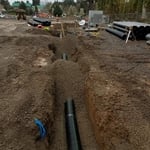
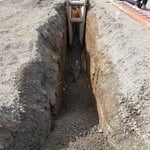
Depth is not a qualifying component of evacuation. Any human-made cut, cavity, or depression in the earth’s surface is considered excavation. The hole from excavation can be any size, shape, or depth. Excavation is used to create foundations, reservoirs, drainage ditches, and roads. Long, narrow excavations are called trenches and are often used for underground utilities.
Water lines are buried at various depths, depending on the type of line. For example, most sprinkler lines are buried between four and 12 inches underground. On the other hand, water mains usually sit between one and 3 feet below ground. However, they can go even deeper in cold climates to prevent freezing.
A trench that is less than 5 feet deep often doesn't require a protective system. Most residential trenches will not go this deep (the typical residential drainage trench is just 18 inches deep). In the event that an excavator needs to dig more than 5 feet beneath the surface, a protective system is required unless the excavation is in entirely stable rock.
The Siletz, OR homeowners’ guide to excavation services
From average costs to expert advice, get all the answers you need to get your job done.
Excavation costs $1,500 to $6,300 for most residential projects—but it depends on factors like the size of the area. This guide will help you plan a budget.
You can't have an in-ground pool without digging into the ground. How much does pool excavation cost, and can you take it on yourself? Our guide explains.
Picking the right pro can make or break your project. Learn how to hire an excavation pro with the qualifications and skillset to do the job efficiently.