"The tech was very knowledgeable and went above and beyond to satisfy us. Our faucet was broken would not attach to the sink as the copper seal broke to the water lines."
"One oven doesn't work at all ( my choice, see above), the "working" oven was never calibrated properly so using it is hit or miss. It's time to call American Home Shield to see about replacing the entire unit. I'm waiting to finish other home projects before calling them. I don't know if I'll request Greenway again."
Install Above Ground Pools questions, answered by experts
Yes, zero-entry pools are also referred to as beach-entry pools because the gentle slope leading to the water mimics the natural slope of a sandy shore leading to a lake or ocean. You can bring in sand or pebbles to truly capture the beach-like feel of a zero-entry pool.
The type of sand you need for your sand filter depends on the manufacturer’s instructions, but you’ll need to use sand specifically for pool filters. Silica sand is a wallet-friendly, common choice that’s relatively easy to replace. You’ll choose between various grades of sand and different-sized sand grains.
Detecting a leak in your pool costs about $300 on average. The price ranges widely from low $100 up to $1,000.
Here are the costs involved in leak detection services for your pool:
Pool inspection: $125–$250
Above ground pool leak detection: $100–$700
Inground pool leak detection: $400–1,000
Vinyl liner repair: $350–$3,600
Fiberglass lining repair: $300–$400
Concrete liner repair: $75 per linear foot
Pressure test pool lines: $200–$500
Skimmer repair: $100–$250
Main drain repair: $400–$700
Pump repair: $50–$300
Tile repair: $20-$30 per linear foot
Yes, you should keep your pool pump running when adding salt, and leave it running for 24 to 48 hours. This will help circulate the salt to ensure even distribution. You will want to turn off your pool’s salt chlorine generator before adding salt and leave it off until it fully dissolves. Check your manufacturer’s instructions for steps specific to your saltwater pool maintenance.
You do not need to excavate or lay a foundation for a stock tank pool. You should, however, level the area where you plan to put the stock tank. Also, stock tanks full of water and people can get heavy, so do not place them on a deck or other raised structure that could collapse from the weight.
The Fossil, OR homeowners’ guide to above ground pool installation services
From average costs to expert advice, get all the answers you need to get your job done.
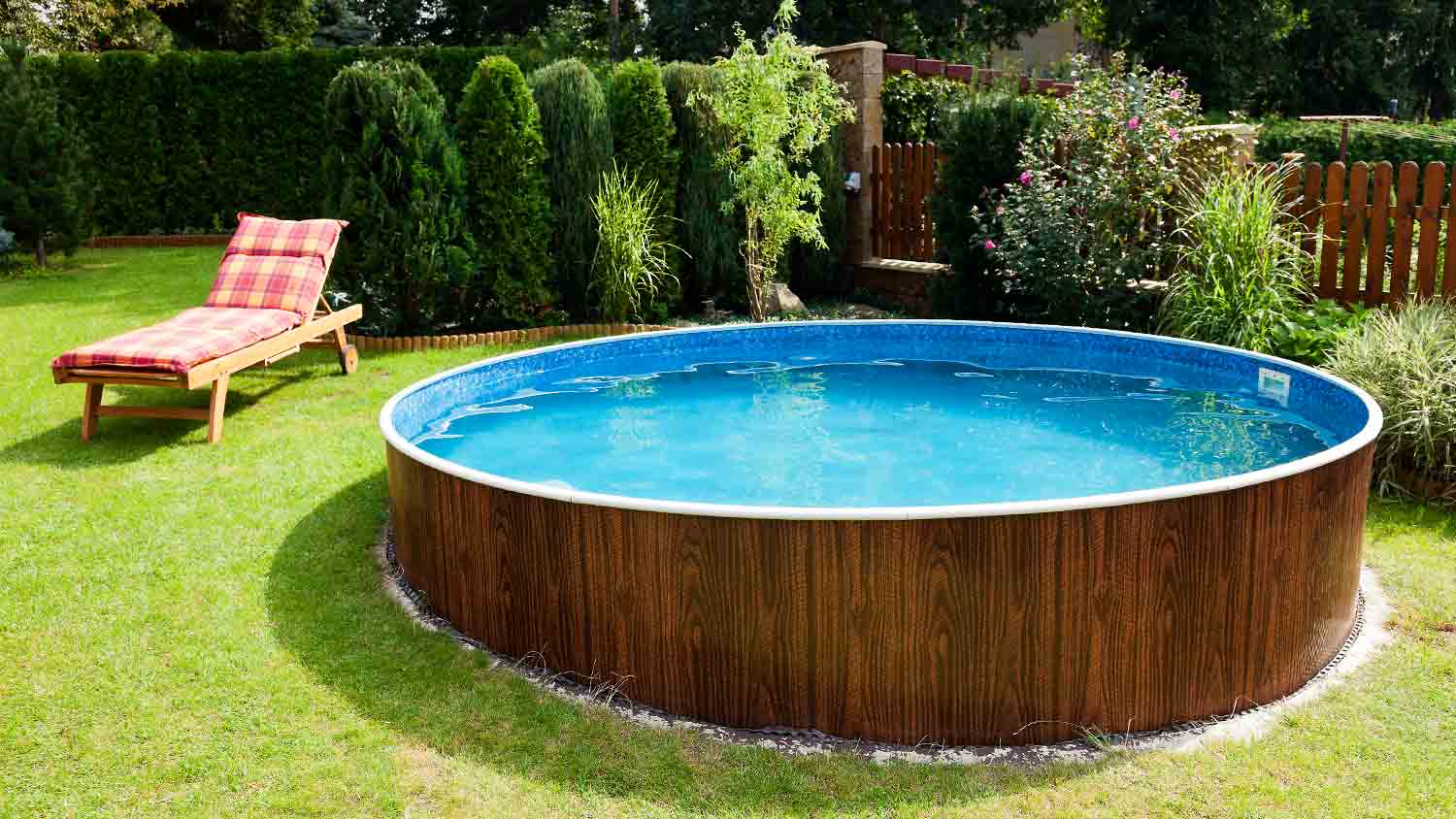
Above ground pools are more affordable than inground pools, so can you put an above ground pool in the ground to save money? Learn when it’s safe to do so.