





Top-rated electricians.

Get matched with top electricians in Medford, OK

Enter your zip and get matched with up to 5 pros

Need a pro for your electrical service project in Medford, OK?

Select your specific project to find the pro for you.

Find Electricians in Medford

Avatar for Corrigan, LLC
Corrigan, LLC
4.8(
25
)
Lightning Protection - Install or Repair

Serving Medford, OK and surrounding areas

Approved

In business since 1954

Free estimates

Emergency services offered

"John Corrigan and his sons are outstanding! They did outstanding work installing our lighting rods at a reasonable price. They were prompt, very professional and honest. I would call them again and recommend them to anyone."
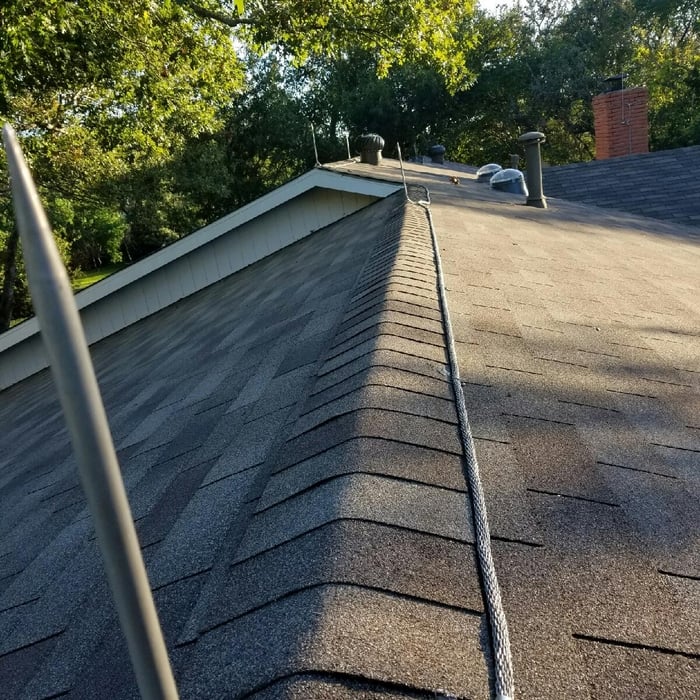
Shingle roof air terminal
Residential 1
Residential Spanish tile
Horse stable
Residential 2

+23

Response time2 hrs
17 neighbors recently requested a quote
Recommended by100%of homeowners

Showing 1-10 of 38
Electrical questions, answered by experts

The key difference between a circuit breaker versus a surge protector is that circuit breakers shield your entire electrical system from overcurrents and faults, while surge protectors defend your electronic devices against voltage surges and spikes. A circuit breaker interrupts the flow of electricity in a circuit when it detects an overload or short circuit, protecting the wiring from damage and preventing fires. In contrast, a surge protector shields electronic devices from voltage spikes, such as those caused by lightning strikes or power surges, preventing damage to the device’s inner mechanics.



For more complex electrical projects, it’s often most efficient and cost-effective to hire an electrician rather than trying to figure it out yourself (and risking electrical problems). Electricians know exactly what a project requires, and can often find supplies or parts for cheaper than the average homeowner. That can save money compared to going it alone.

It might seem tempting to use 14-gauge wires for your outlets, as they can run a little cheaper. But, when it comes to electrical work, it’s best not to cut costs less you overload your circuit. A 12-gauge wire will ensure that you’re protecting the outlet (and your circuit breaker) from any potential overloads that might incur, as it can handle a little more amplitude than a 14-gauge wire.

Choosing between 12- or 14-gauge wire for your house depends on the electrical requirements of the circuit. A 12-gauge wire is thicker and can handle more power, making it better suited for devices such as kitchen appliances, air conditioning units, or electric heaters.

A 14-gauge wire is thinner and can handle less electrical current than a 12-gauge wire. It's ideal for circuits with lower power requirements, such as lighting or general-purpose outlets in bedrooms or living rooms.

Window ACs use 500 to 1,400 watts per hour of electricity, while mini-splits use 500 to 700 watts per hour. However, if you need to cool multiple zones in your house, your mini-split can use as much as 2,000 watts per hour. How often you run your system will impact how much electricity you use (and how much you pay per month).

The Medford, OK homeowners’ guide to electrical services

From average costs to expert advice, get all the answers you need to get your job done.