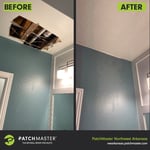






Top-rated drywall pros.

Get matched with top drywall pros in Colcord, OK

Enter your zip and get matched with up to 5 pros

Need a pro for your drywall service project in Colcord, OK?

Select your specific project to find the pro for you.

TRUSTED BY COLCORD, OK HOMEOWNERS

  • Average homeowner rating star icon4.5
    Average homeowner rating
  • Verified reviews icon16
    Verified drywall services reviews

Find Drywall pros in Colcord

Total Drywall
4.9(
44
)
Drywall - RepairDrywall - Repair - For Business

Serving Colcord, OK and surrounding areas

In business since 2015

Free estimates

Small jobs welcome

"Rick does excellent work and is very responsive and professional. His rates are fair, and he is very conscientious about his work and respectful of the homeowner's space. I love to support small, family-owned businesses—Total Drywall and Rick are my first call for all drywall work."
Response time20 mins
Recommended by85%of homeowners
Invisible joint drywall LLC
5.0(
2
)
Drywall - RepairDrywall - Repair - For Business

Serving Colcord, OK and surrounding areas

In business since 2020

Free estimates

Credit card accepted

"Juan and his team did a fantastic job on my hall, dining room, entry way and living room. They were very nice and courteous and respected my home and items and cleaned up after themselves. I honestly couldn't be happier with the quality of work and customer service."
Response time2 days
Recommended by100%of homeowners
...
Showing 1-10 of 96
Drywall questions, answered by experts

While not always necessary, you can glue a drywall ceiling in addition to using screws or nails. Drywall is typically secured to ceiling joists with fasteners, which is often sufficient. However, adding construction adhesive can offer benefits like preventing sagging, bridging gaps, and reducing air leaks for better energy efficiency. It may also be used for specific acoustic or insulation needs. On the other hand, many professionals advise against it because properly placed screws make the drywall structural, glue doesn't add strength, and it makes future repairs or replacements significantly more difficult. Ultimately, it's best to follow local building codes and project-specific requirements to decide if adhesive is right for your ceiling.

The easiest way to remove texture from walls is the soak-and-scrape method. You’ll need to spray a section of the wall with water and let the water soak in and soften the texture. Then, you need to scrape the texture off using a drywall taping knife. This method works best with unpainted walls since paint prevents water from saturating the textured joint compound.

Although they have similar applications, spackle and joint compound are not the same. Their primary differences lie in their composition, consistency, and ideal use cases.

Spackle is composed of gypsum and binding agents, making it thicker than joint compound. It dries quickly and is easy to sand, which makes it ideal for small wall repair projects like filling nail holes or patching minor damage.

Joint compound, also known as drywall mud, consists of limestone and gypsum. It is primarily used for large-scale projects, such as taping and finishing the seams on newly installed drywall. It tends to shrink more than spackle and can be more difficult to spread.

While both products can be used to fill small depressions and cracks, spackle cannot replace joint compound for taping and mudding new drywall. Conversely, you can often use joint compound for small patching jobs typically done with spackle.

All plaster walls will crack over time due to normal house settling and expansion and contraction from temperature and moisture changes. Small, thin hairline cracks are generally not serious and are mostly a cosmetic issue. However, larger or more significant cracks can indicate structural problems.

Here's how to tell the difference:

  • Cosmetic Cracks: Cracks that are 0.5 cm (0.2 inches) or thinner are typically cosmetic.

  • Structural Cracks: Cracks wider than 0.5 cm, excessive or deep cracks, multiple cracks in the same area, or cracks that span around corners can signify a structural or foundation issue. Cracks along the joints where walls meet the ceiling also warrant attention.

For cracks wider than 0.5 cm, structural repair is needed. If a crack is 2.5 cm (1 inch) or wider, or if you notice any signs of a structural problem, it is best to contact a plaster repair professional to assess the damage.

If your home was built before the 1940s and was not remodeled in the past 50 or so years, you probably have plaster walls. Aside from assuming, there are some practical ways to tell if you have plaster walls, including the following: If you knock on the wall and it feels solid, not hollow, if you can’t insert a thumbtack easily, if there are cracks that look like spiderwebs, or if your home has curved, arched, or swirled walls, doorways, or window openings.

If you have an unfinished basement or attic, you could examine the backs of any finished walls to check, too.

The Colcord, OK homeowners’ guide to drywall services

From average costs to expert advice, get all the answers you need to get your job done.