




Top-rated bird control service pros.

Best bird control service pros near Newport, OH

Enter your zip and get matched with up to 5 pros

Need a pro for your bird control service project in Newport, OH?

Select your specific project to find the pro for you.

Top-Rated Bird control service pros in Newport - Updated Nov 2026

Avatar for The Fireplace Doctor
The Fireplace Doctor
3.9(
1,190
)
Pest Control - Birds and BatsPest Control - Birds and Bats - For Business

Serving Newport, OH and surrounding areas

In business since 1993

Emergency services offered

Credit card accepted

"They did a great job. They solved all the problems I had with the chimney and it’s been working perfectly ever since. They also fixed a problem on the roof around the chimney; they replaced the wood around the chimney with a material that would never rot, so they fixed it even better than it was before. It took them a couple of days to do the work. They took care of all the cleanup as well. We've been real happy with them."
Recommended by78%of homeowners
Bird Control FAQs, answered by experts

The brown recluse has numerous predators in the wild (or close to your home). They are a valuable part of the ecosystem, too. Their predators often include birds, praying mantis, crickets, chickens, spider wasps, and more. However, the brown recluse spider is a master at hiding, making it much more difficult for predators to hunt them.

No, mothballs do not keep bats away. Not only are mothballs completely ineffective when repelling or removing bats, but using them could be illegal, depending on where you live. Remember, bats are federally protected, and it's illegal to use chemicals during the removal process, and mothballs tend to fall into this category.

Birds eat grass seed for one simple reason—it’s delicious! The seeds are rich in nutrients such as carbohydrates, proteins, and fats. Seeds are also high in energy, so humans eat trail mix loaded with seeds and nuts for long-distance activities. Grass seed, when unprotected, is also exceptionally easy to access.

Identifying the specific animal running on your roof at night can be challenging without direct observation. Common nocturnal roof visitors include raccoons, squirrels, opossums, and rats. Raccoons are bigger and can create heavy thumping sounds. Squirrels are agile and may produce rapid scurrying noises. Opossums tend to move stealthily with less noise. Rats can make scratching or gnawing sounds. To determine the culprit, look for signs like footprints, droppings, or damaged areas near the roof. For accurate identification, consult a pest control professional or set up wildlife cameras near potential entry points.

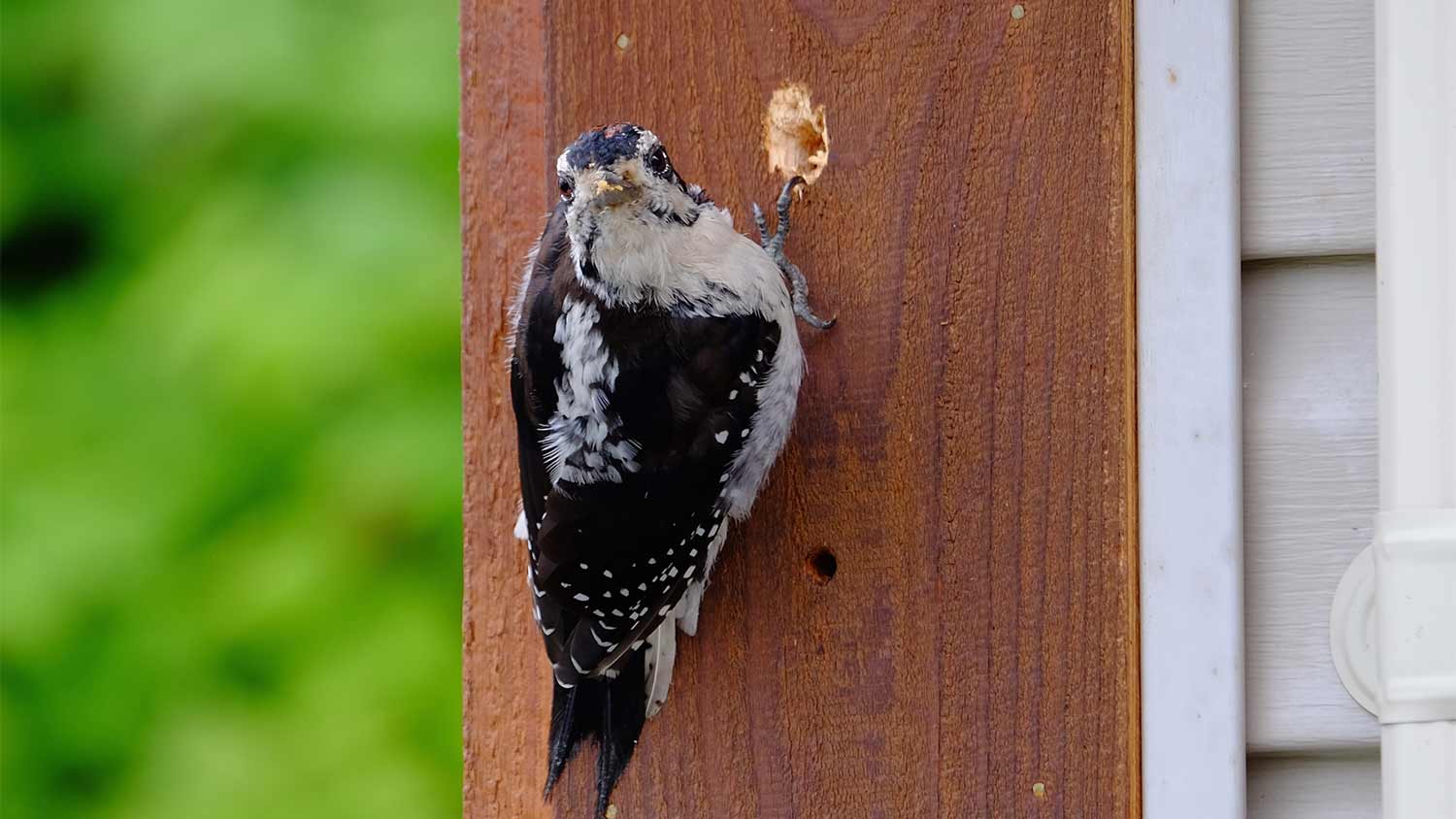
When woodpeckers start banging on your walls or roof, they are probably looking for insects to eat, storing nuts for winter, drilling a hole to make a nest, or communicating with other birds to establish territory or find a mate.

The size of the hole can help determine the reason for the pecking. Small irregular holes are a result of insect hunts. Acorn holes are more consistently sized and often fitted with a nut in the middle. Nest holes are large and have rounded edges. If the bird is pecking to mark its territory or attract a mate, it may leave dents rather than holes, and the noise will stop when the mating season starts in spring.

The Newport, OH homeowners’ guide to bird control services

From average costs to expert advice, get all the answers you need to get your job done.