Pride Custom Construction, is committed to excellence in every aspect of our business. We uphold a standard of integrity bound by fairness, honesty, and personal responsibility. Our distinction is the quality of service we bring to our customers. Accurate knowledge of our trade combined with ability is what makes us true professionals. Above all, we are watchful of our customers' interests, and make their concerns the basis of our business.
We are a veteran owned business that connects Ohio homeowners with local water filtration specialist to get them the solution they need for their water. We also provide plumbing solutions.
"This company is true to their word and genuinely cares about the customer experience. They are responsive to questions and very reliable. I would recommend them to anyone with a septic system!! Thanks for all the help, Simply Septic!"
"He was able to quickly diagnose that the water leak from the water heater was a result of a ruptured tank, resulting in the need to replace the entire water heater."
"I just pay $75 you never know who's going to come out. They do everything electrical. Just about everything is covered except the septic tank. I had an air conditioner replaced. It went great, all I had to do was pay for the freon. He didn't charge e more than what was needed."
We have the experience and we are committed to providing quality workmanship and superior customer service on all our applications. Wittler Excavating, LLC strives to maintain our reputation as a high quality, very service oriented company with our main focus being on customer satisfaction.
With over 30 years of experience, Elsasser Contracting is your solution for all your excavation and septic needs. We take great pride in our extreme professionalism, timeliness and superior customer service on every job. We make sure to develop a lasting relationship so that the next time service is needed there will be no question on who to call. Satisfaction guaranteed!
Customer satisfaction is what determines our success, which is why we take a hands-on approach. When interacting with SAUBER Farm Drainage, you'll notice that we're particularly focused on the principles of quality workmanship, timely completion, competitive pricing and integrity in all our business dealings. We combine knowledge and research with our extensive practical experience to ensure a specialized approach for your project needs. Contact us today for a fair and accurate estimate of your project. We look forward to adding you to our long and growing list of happy customers.\n
Brandon Gigandet has a single mission: Complete Customer Satisfaction! We strongly believe in giving our customers the most for their money. We work with only the highest quality materials and experienced professionals. We have consistently focused on the needs of our customers, providing personalized attention and a stress-free experience. This approach has set us apart and made us one of the leading Excavation companies in Greenville.
Yes, a septic tank can get full. If this happens, you might run into issues flushing your toilets or draining your sinks. You may also notice your pipes making gurgling noises or the smell of sewage floating around your house. Other signs of a backed-up septic tank include water pooling or fresh, healthy grass growing above your drain field.
Septic drain fields should be at least 10 feet from the property line, though exact requirements vary by location. Some areas may require further distances, such as 25 feet or more, depending on soil conditions and local health regulations. This extension ensures proper wastewater absorption and prevents contamination of neighboring homes.
If your leach field becomes clogged or saturated, it can cause several problems with your home's septic system. The clog can cause sewage to back up into your home, leading to unpleasant odors and mess. A backed-up septic system can be a health hazard, particularly if the sewage starts to leach into the ground surrounding the leach field.
There are several ways to fix a saturated drain field, including cleaning out your septic tank, adding enzymes and additives to your drain system, and installing a larger septic system.
The average cost to replace a septic tank or install a new system is typically around $7,350, with a broader average range of $5,000 to $12,000. However, total project costs can vary widely, from $5,000 to as much as $22,500. Key factors influencing the price include the size and type of the septic system, the tank material, and the size of your house.
It's important to distinguish between the cost of the tank itself and the cost of the entire system installation, which is significantly more. For the tank alone, costs vary by size:
A tank for a one-bedroom house typically costs $500 to $900.
A 1,000-gallon tank, suitable for most one- to three-bedroom homes, costs between $900 and $1,500.
A tank for a five- or six-bedroom home generally costs $1,200 to $1,600.
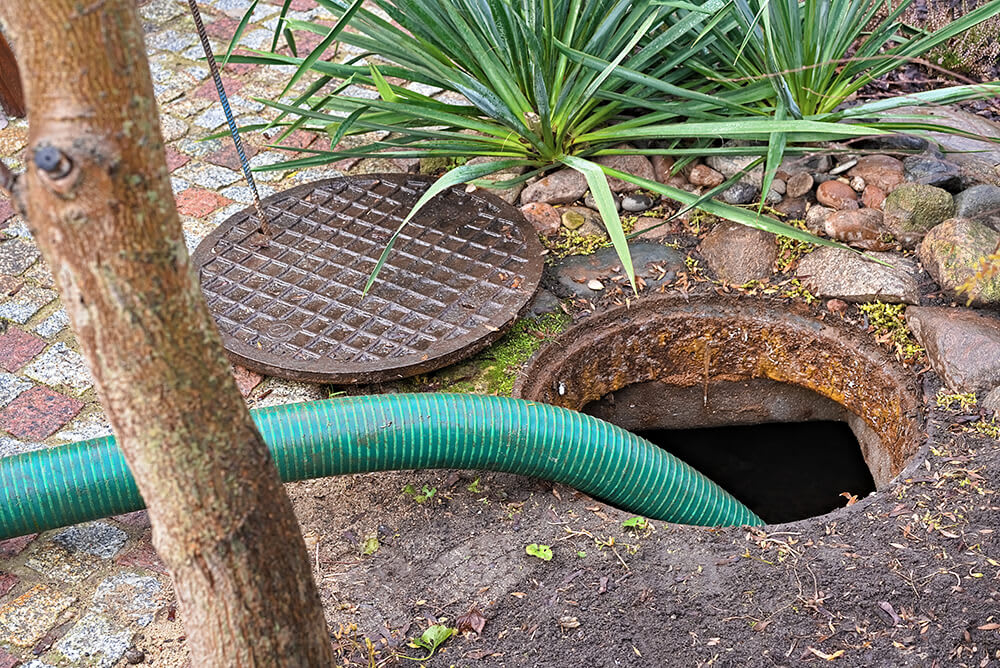
While abandoning a tank without treating it and following strict rules is illegal, there are several other ways to dispose of an old septic tank. One standard method is to pump out and crush the tank where it rests and bury it in the soil. Another is to remove it and transport it to a landfill. Finally, if abandonment is the best option, your contractor must pump out the tank and fill it with inert material, such as sand or concrete, depending on local regulations.
The Bluffton, OH homeowners’ guide to septic tank services
From average costs to expert advice, get all the answers you need to get your job done.
Caring for your septic system is crucial to ensuring its long life. But how much does it cost to pump a septic tank? We explore the different cost factors.
A damaged septic system can leak odors and sewage, so repairs are urgent. Find out how much septic tank repair costs based on repair type, tank size, and more.
Septic tank risers make it easy to access your septic tank when it’s time for routine inspection, maintenance, and pumping, saving you precious time and labor costs.
Septic tank sizes vary depending on the size of your home, how many people live there, how much water you use, and more. Read on to learn how to determine the right size for you.