





Top-rated asphalt driveway pros.

Get matched with top asphalt driveway pros in Richland, NY

Enter your zip and get matched with up to 5 pros

Need a pro for your asphalt driveway service project in Richland, NY?

Select your specific project to find the pro for you.

Find Asphalt driveway pros in Richland

Avatar for One Stop Construction & GC
One Stop Construction & GC
New to Angi
Brick and Stone Driveways & Floors - InstallConcrete Driveways & Floors - Install- For BusinessConcrete Driveways - Install+1 more

Serving Richland, NY and surrounding areas

Approved

Free estimates

Credit card accepted

Offers commercial services

We take great pride in our experience, expertise, quality and customer service that we provide to meet every consumer's needs. It is our mission to provide excellent customer service from start to completion of a project. To understand the needs and expectations of our customers, we take great care to work and communicate with every customer in a personal and professional manner. Our reputation is based on service, safety and quality, regardless of how large or small the job.\n

1
2
1
2
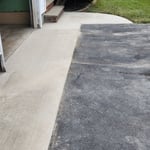
Before

+4

1 neighbors recently requested a quote
...
Showing 1-10 of 72
Asphalt Driveways questions, answered by experts

Think of the street as a way to capture all the elements on either side of the road, including the road—a street encompasses the homes or other buildings, the trees, and the road of a given area as defined by the beginning and end of the street on a map. A roadway, however, is the component of the street where cars travel.

Driveways should be sloped with a minimum 2% slope—anything lower will cause precipitation and runoff to collect. A 2% slope is the equivalent of a 2-foot rise over 100 feet. One quick way to check the integrity of your driveway’s slope: no more than four inches of water should collect on the surface longer than 15 minutes after rain.

Asphalt and tarmac are not the same thing. Traditional tarmac, short for tarmacadam, uses tar as a binder to hold crushed stone together. Asphalt uses bitumen—a byproduct of crude oil—to bind aggregate. Though tarmac was once a go-to for roads, asphalt has become the modern standard. And these days, most surfaces referred to as “tarmac” are actually asphalt. So, while the names may overlap, the key distinction lies in the binder—tar for tarmac and bitumen for asphalt.

Even with regular maintenance, most driveways don’t last much longer than 30 years. Alligator cracking is a clear warning sign that your driveway’s foundation is failing, and cracks that are deep and wide can let water in, causing more damage. Standing water is another red flag. If your driveway doesn’t drain properly, it’s going to degrade slowly. Finally, if you’re seeing dips or uneven patches, that’s a sign the base layer or soil is shifting. If these issues pop up, it’s time to replace your driveway.

New asphalt goes through two stages: drying and curing. Drying typically takes 24 to 72 hours, after which the surface is solid enough for light use like walking or careful driving. While you may be able to park on it after 72 hours, the surface is still soft and should be treated gently. Full curing is a much longer process, taking anywhere from 30 days to a full year for the asphalt to reach maximum strength. During this extended curing period, the asphalt is susceptible to damage from heavy vehicles, sharp objects, and high temperatures. Factors like weather, the specific asphalt mix, and application thickness all influence drying and curing times. For the most accurate timeline and to ensure the longevity of your new asphalt, it is always best to consult with your installation contractor for their specific recommendations.

The Richland, NY homeowners’ guide to asphalt driveway services

From average costs to expert advice, get all the answers you need to get your job done.