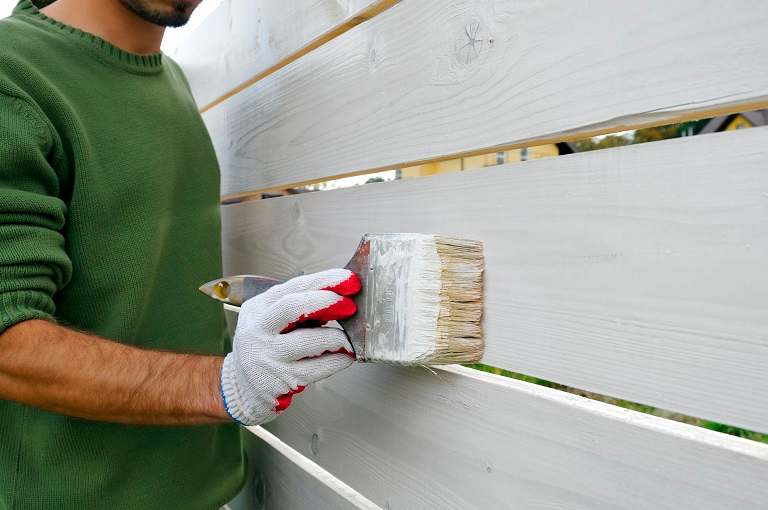
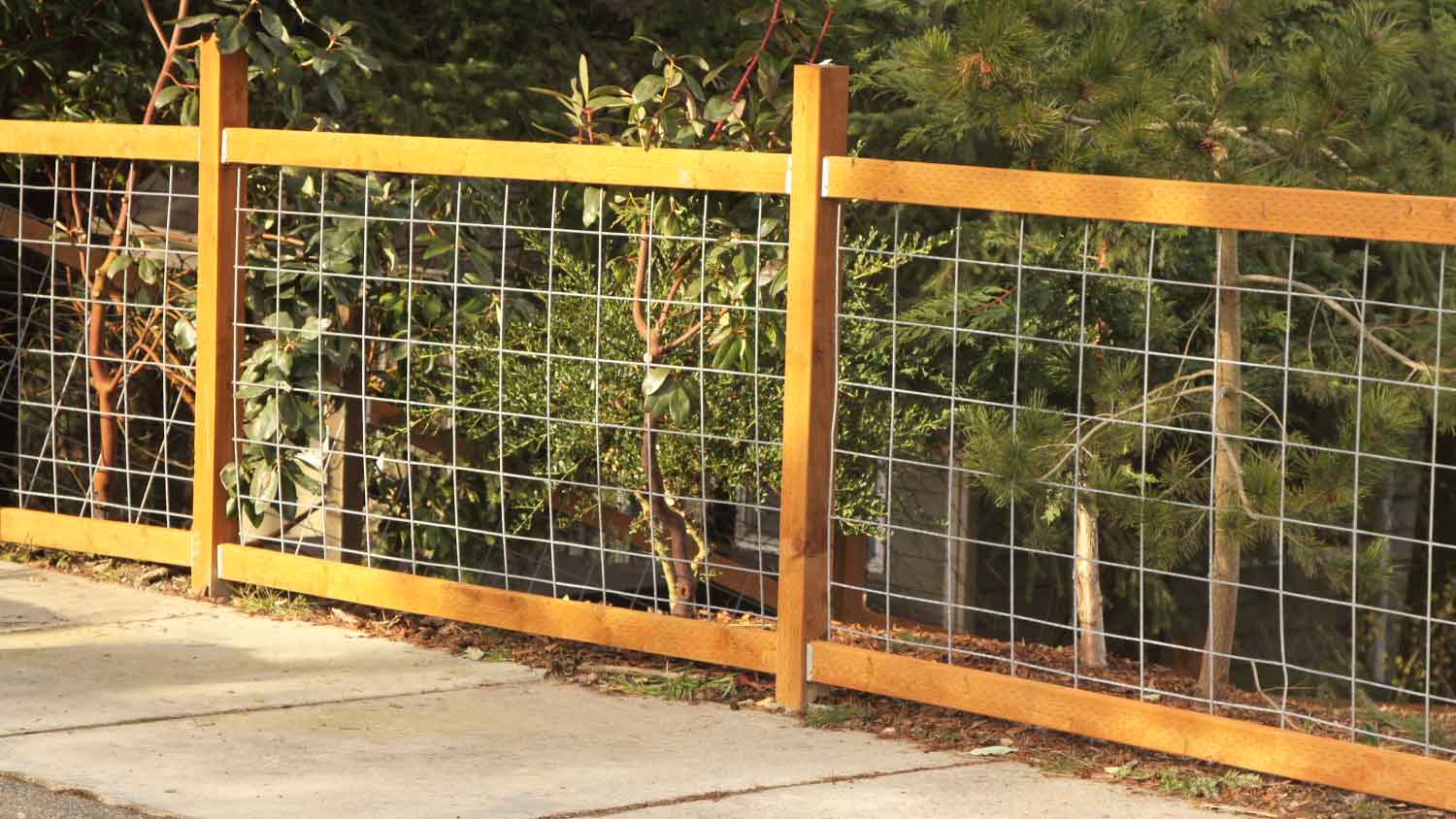
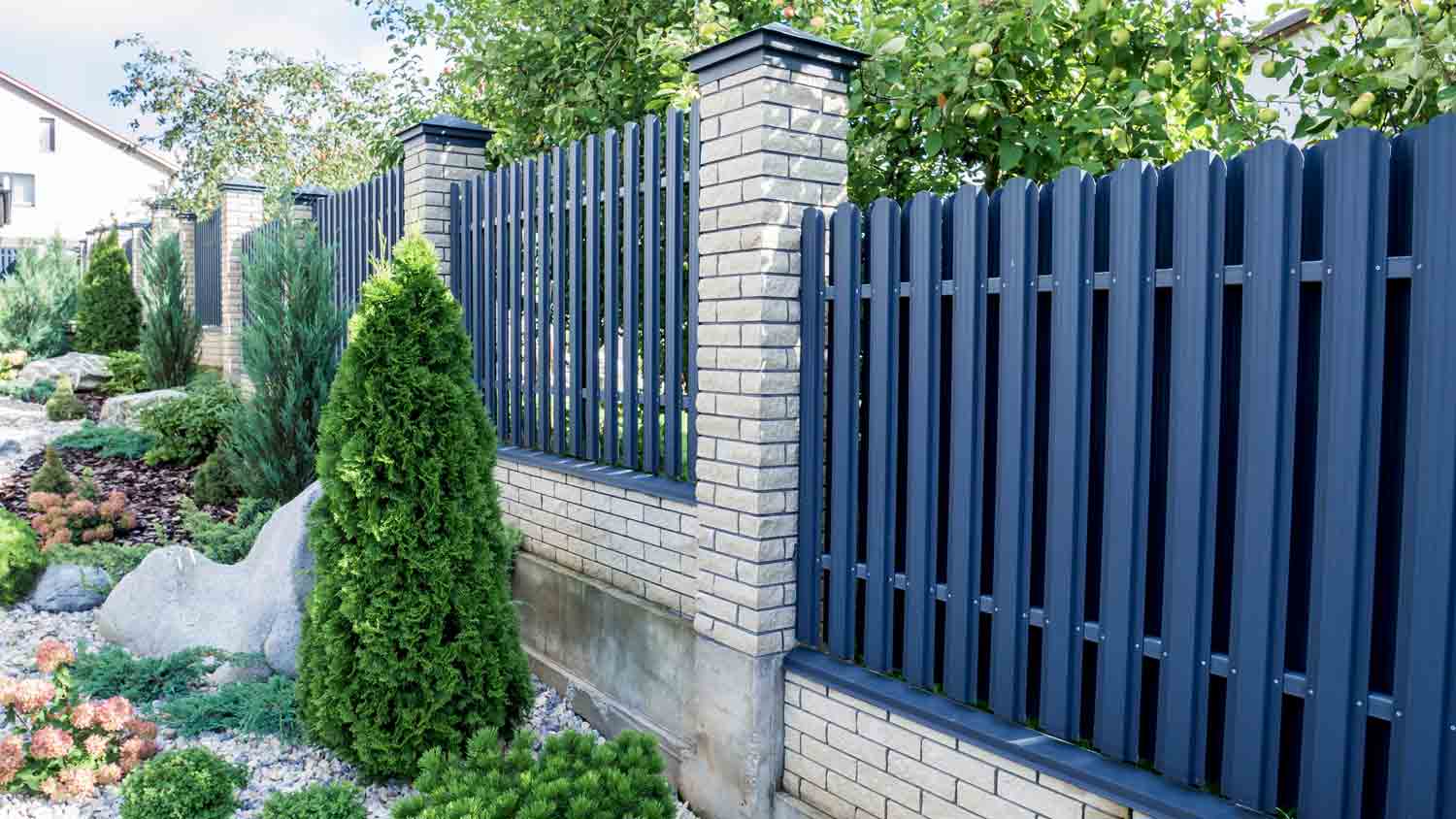
If you don’t treat a cedar fence, it will turn from reddish brown to gray over time. You can keep the cedar from graying and retain its attractive, deep red color by sealing your cedar fence with a stain that keeps the wood’s oils in and serves as a barrier against the sun’s UV rays.
Staining a fence is less expensive than painting a fence due to the cost of materials and the longevity of the finish. Stain not only lasts longer than paint without chipping or peeling, but you also won’t have to put in the extra time and cost to prime the surface first.
While power washing isn't a requirement before you stain a fence, it can make the job much easier and faster while reducing manual labor requirements. The stain will not work if the wood is full of dirt and dust, so power washing, sometimes called pressure washing, is a fast and effective way to prepare the wood for staining. Remember that you need to stain or repaint relatively soon after the wood has dried so that there isn’t time for dust and dirt to build up again.
Typically, a fence requires one to two coats of stain. The exact number can vary depending on the porosity of the wood. For specific guidance, it's best to check the manufacturer's instructions. After applying the first coat and letting it dry completely, you can assess the finish. If it appears patchy, uneven, or you want a more saturated color, a second coat is recommended. An extra coat can also help cover lap marks.
Yes, staining or sealing a cedar deck or fence is highly recommended to extend its lifespan, typically by five to 10 years. While cedar is naturally resistant to mold and mildew, it can still fall victim to moisture, sun exposure, and rot over time. Applying a treatment creates a protective shield that helps prevent splintering, fading, and decay, preserving the wood's strength and appearance. A combination stain and sealer often provides the best protection, as it soaks into the wood grain rather than just sitting on top. This offers superior defense against UV damage and rot and lasts longer than a sealer alone. To maintain the wood's natural look, consider using a near-translucent stain. You should plan to reapply the stain or sealer every two to three years.
The Vaughn, NM homeowners’ guide to fence painting services
From average costs to expert advice, get all the answers you need to get your job done.
Thinking about fence painting and staining? Learn about material options, costs to expect, and how to hire the right local exterior painter for the job.
Deciding on the best fence paint color is difficult. This guide will help you choose a shade that creates the right vibe alongside your house color and landscaping.