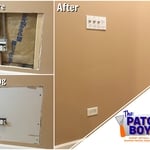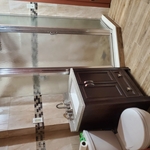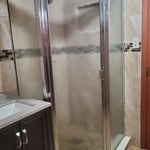


Top-rated drywall pros.

Get matched with top drywall pros in Old Tappan, NJ

Enter your zip and get matched with up to 5 pros

Need a pro for your drywall service project in Old Tappan, NJ?

Select your specific project to find the pro for you.

TRUSTED BY OLD TAPPAN, NJ HOMEOWNERS

  • Average homeowner rating star icon4.8
    Average homeowner rating
  • Verified reviews icon187
    Verified drywall services reviews

Find Drywall pros in Old Tappan

Avatar for Rite-Way Home Improvements
Rite-Way Home Improvements
5.0(
49
)
Drywall - Repair

Serving Old Tappan, NJ and surrounding areas

Approved

In business since 2020

Free estimates

Emergency services offered

"Very impressed with the care taken and quality of their work. They repaired water damage to my kitchen ceiling and now it looks brand new. Very courteous and professional. Would definitely hire them again."
Response time3 hrs
Response rate100%
225 neighbors recently requested a quote
Avatar for NJ Pro Home Improvements
NJ Pro Home Improvements
4.9(
17
)
Drywall - InstallDrywall - Repair

Serving Old Tappan, NJ and surrounding areas

Approved

In business since 2001

Free estimates

Emergency services offered

"Juan and his team did an amazing job repairing the drywall in our basement. They were knowledgeable, precise in their work, and very professional. It was a pleasure doing business with Juan and his team."
Front Paint Completed
Finish Product
Orange Top Color Finished
Bathroom Remodel
Epoxy Completed

+56

Response time12 hrs
Response rate89%
Recommended by87%of homeowners
...
Showing 1-10 of 564
Drywall questions, answered by experts

There shouldn’t be any gaps between your walls and ceiling. These can be fixed with joint compound but that is only a fix, and it’s much better if your drywall fits correctly in the first place. Sometimes gaps can appear if your foundation shifts significantly but if this is the case, you have a much bigger problem than patching drywall.

Although they have similar applications, spackle and joint compound are not the same. Their primary differences lie in their composition, consistency, and ideal use cases.

Spackle is composed of gypsum and binding agents, making it thicker than joint compound. It dries quickly and is easy to sand, which makes it ideal for small wall repair projects like filling nail holes or patching minor damage.

Joint compound, also known as drywall mud, consists of limestone and gypsum. It is primarily used for large-scale projects, such as taping and finishing the seams on newly installed drywall. It tends to shrink more than spackle and can be more difficult to spread.

While both products can be used to fill small depressions and cracks, spackle cannot replace joint compound for taping and mudding new drywall. Conversely, you can often use joint compound for small patching jobs typically done with spackle.

The two most common drywall thicknesses for ceilings are 1/2-inch and 5/8-inch. For most standard residential applications, 1/2-inch drywall is sufficient and widely used. It provides adequate support and is lighter and easier to handle during installation compared to thicker sheets. However, 5/8-inch drywall is often used for specific cases where additional benefits are needed. It is heavier but provides superior sound dampening and fire resistance. You should consider using 5/8-inch drywall for ceilings in commercial buildings, between a garage and a living space, or above a finished basement to meet building codes or for enhanced soundproofing.
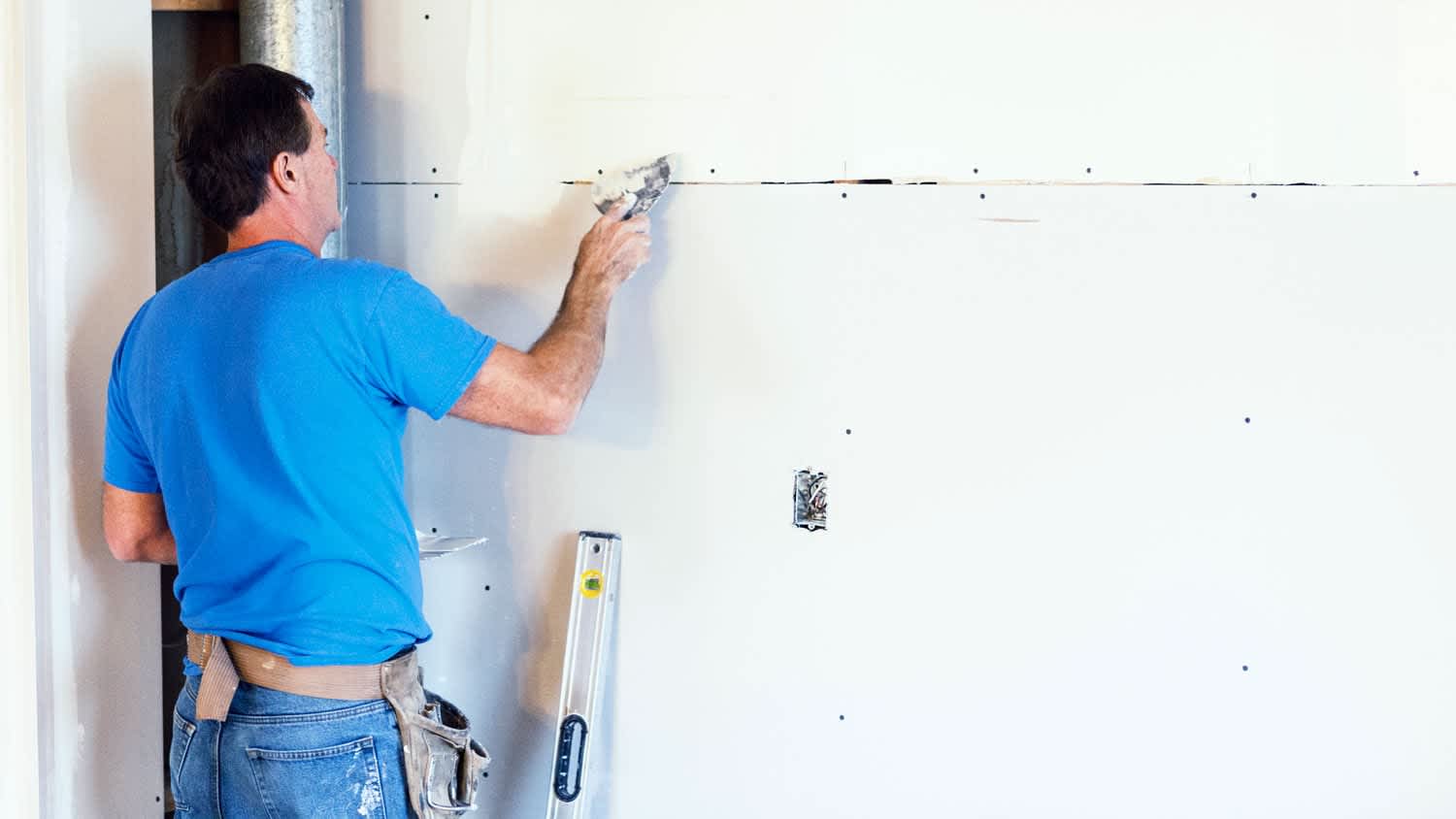
Plastering and skimming are two different techniques for finishing walls. Plastering involves applying a thick layer of a plaster mixture—typically containing gypsum, lime, cement, sand, and water—to create a new surface. This process often requires multiple coats and is used for repairing significant damage or creating decorative textures. Skimming, on the other hand, is a technique that involves applying a thin layer of drywall compound or joint compound over an existing surface to smooth it out, covering minor imperfections, small cracks, or uneven textures for a polished look. Plastering is generally more costly and labor-intensive than skimming. Although some people use the terms interchangeably, they refer to different processes and materials.

All plaster walls will crack over time due to normal house settling and expansion and contraction from temperature and moisture changes. Small, thin hairline cracks are generally not serious and are mostly a cosmetic issue. However, larger or more significant cracks can indicate structural problems.

Here's how to tell the difference:

  • Cosmetic Cracks: Cracks that are 0.5 cm (0.2 inches) or thinner are typically cosmetic.

  • Structural Cracks: Cracks wider than 0.5 cm, excessive or deep cracks, multiple cracks in the same area, or cracks that span around corners can signify a structural or foundation issue. Cracks along the joints where walls meet the ceiling also warrant attention.

For cracks wider than 0.5 cm, structural repair is needed. If a crack is 2.5 cm (1 inch) or wider, or if you notice any signs of a structural problem, it is best to contact a plaster repair professional to assess the damage.

The Old Tappan, NJ homeowners’ guide to drywall services

From average costs to expert advice, get all the answers you need to get your job done.