



Top-rated electricians.

Get matched with top electricians in Winchester, NH

Enter your zip and get matched with up to 5 pros

Need a pro for your electrical service project in Winchester, NH?

Select your specific project to find the pro for you.

TRUSTED BY WINCHESTER, NH HOMEOWNERS

  • Average homeowner rating star icon4.7
    Average homeowner rating
  • Verified reviews icon68
    Verified electrical services reviews

Find Electricians in Winchester

Avatar for Noyes Electric
Noyes Electric
5.0(
30
)
Electrical Switches, Outlets & Fixtures - Install or RepairElectrical Wiring or Panel UpgradeElectrical for Home Addition or Remodel - Install+14 more

Serving Winchester, NH and surrounding areas

Approved

Super Service Award Winner

In business since 2022

Free estimates

Offers commercial services

"I had an excellent experience working with John at Noyes Electrical. He and his team were extremely professional and arrived exactly when they said they would. They went above and beyond what they were originally hired to do, and I am completely satisfied with the quality of the work they completed. John handled all the arrangements on my behalf, including coordinating with the electric provider and preparing the city permit application, which made the entire process seamless and stress-free. I plan to use Noyes Electrical again for upcoming projects and highly recommend their services."
Response time1 day
Response rate85%
31 neighbors recently requested a quote
Avatar for W B Lightning Rods
W B Lightning Rods
4.6(
367
)
Lightning Protection - Install or Repair

Serving Winchester, NH and surrounding areas

Approved

In business since 2001

Free estimates

Warranties offered

"WB Lightning Rods did an excellent job installing lightening rods on our home. The owner stayed onsite the entire time to supervise the work. He took extra care to plan the rod and cable placement to ensure the proper protection and retain the aesthetics of our home. His crew were knowledgeable, polite, neat and efficient. We could not be more pleased with the results."
lightning protection
 Residential LPS
lightning protection
 Residential LPS
lightning protection

+79

Response time1 day
127 neighbors recently requested a quote
Recommended by98%of homeowners
Richard Hebert Master Electrician
5.0(
1
)
Ceiling Fan - InstallElectric Vehicle Charging Station Installation - For Business - Materials Not ProvidedElectric Vehicle Charging Station Installation - For Business - Materials Provided by Consumer+11 more

Serving Winchester, NH and surrounding areas

Approved

In business since 2020

Credit card accepted

Offers commercial services

We can take on a wide range of residential and commercial electrical projects to include full installation for additions and remodels as well as wiring/panel upgrades, and a variety of other projects. We take pride in the quality of our work and our commitment to outstanding results. We look forward to building strong, long-term relationships with our clients and guarantee your satisfaction.

...
Showing 1-10 of 81
Electrical questions, answered by experts

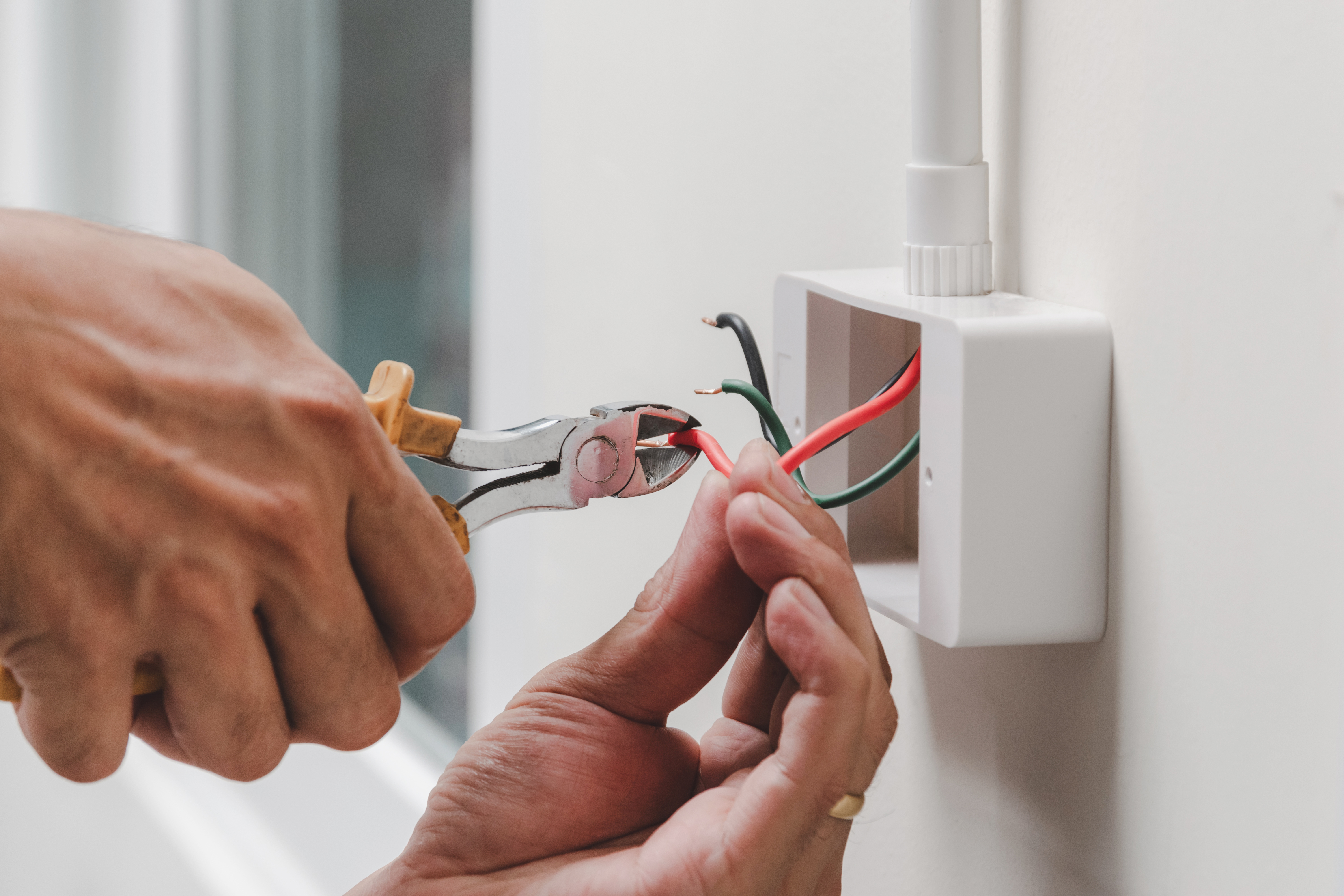
With AC wiring, which is the kind most likely you’ll find at home, the black wire is “hot,” and the white is “neutral.” The bare or green wire is considered the safety ground wire. If you encounter DC wiring, it’s relatively easy to tell positive or negative wires apart. red wires are used to indicate positive voltage and black wires indicate negative voltage.

The hot wire is typically black, but it's essential to use a non-contact voltage tester to confirm the electrical wire color code before working on it. Neutral wires are typically white. It’s vital to determine which wire is carrying electrical current before proceeding with any electrical work.

It might seem tempting to use 14-gauge wires for your outlets, as they can run a little cheaper. But, when it comes to electrical work, it’s best not to cut costs less you overload your circuit. A 12-gauge wire will ensure that you’re protecting the outlet (and your circuit breaker) from any potential overloads that might incur, as it can handle a little more amplitude than a 14-gauge wire.

While washers and dryers do not require a GFCI (ground fault circuit interrupter) outlet to function properly, electrical codes often mandate their use for safety. The National Electrical Code (NEC) requires GFCI protection for all outlets within six feet of a water source. This means a washer and dryer must be plugged into a GFCI outlet if they are installed in locations like a laundry room, utility room, garage, or basement. In other areas without a nearby water source, there is no specific requirement, but using a GFCI outlet is still recommended for extra peace of mind. It is always best to consult your local codes and regulations to ensure compliance and safety.

There are a few reasons your lights may be on, but the rest of your electrical outlets and appliances are not working. The first is that while one circuit blew out, the lights may be on another circuit than your other electrical fixtures. Alternatively, your powerless appliances may be plugged into a GFCI outlet that was tripped and needs to be reset. If these issues aren’t responsible for the problem, you may have dead outlets or a wiring issue. Either way, you should contact an electrician to identify and fix the issue.

The Winchester, NH homeowners’ guide to electrical services

From average costs to expert advice, get all the answers you need to get your job done.