






Top-rated radon detection and reduction specialists.

Get matched with top radon detection and reduction specialists in Glen, NH

Enter your zip and get matched with up to 5 pros

Need a pro for your radon detection and reduction project in Glen, NH?

Select your specific project to find the pro for you.

Find Radon detection and reduction specialists in Glen

Avatar for True North Home Inspections, LLC
True North Home Inspections, LLC
4.9(
26
)

Serving Glen, NH and surrounding areas

Approved

In business since 2020

Free estimates

Emergency services offered

"I called John on a Thursday night looking for a 9AM, next day inspection of a property on auction that I needed inspected before I put my bid in. He answered my call, texted me, planned everything and was there at 9am ready to work. He gave us his immediate thoughts so that we could make an offer with good info and then sent us a super detailed report. I couldn't recommend him more. He gave us great peace of mind."
Response time3 hrs
Response rate88%
8 neighbors recently requested a quote

Avatar for SWAT Environmental, Inc.
SWAT Environmental, Inc.
4.7(
12
)

Serving Glen, NH and surrounding areas

In business since 1988

Free estimates

Credit card accepted

"The company was very easy to schedule with, and the technician was extremely friendly and efficient! I would definitely recommend them for radon mitigation systems!"
Response time6 hrs
Recommended by90%of homeowners
Avatar for Rhino Radon Services
Rhino Radon Services
4.2(
9
)

Serving Glen, NH and surrounding areas

In business since 2014

Free estimates

Emergency services offered

"He was on time, arrived at 9am as quoted and began to install the system. The system required two suction points and a sump pit cover. The sump pit originally had a pedestal pump in place and none of the other radon companies would change the pedestal pump to a submersible pump as required for the mitigation system to function properly. Rhino Radon not only changed the pump but installed a back flow check valve to ensure proper functioning of the system. All of the other companies said we would have to employ a plumber or a handy man to get this done. Had we gone that route the closing would not have happened. Rhino Radon gladly did all the work required and didn't even break for lunch!!! He was more concerned with getting us out of the vacant house seeing we are already down the cape. The system that involved a crawl space and being vented through the garage roof was completed immaculately and the test results came back at 0.5 pCil/L. This pleased the lender and buyer and exceeded our expectations. We highly recommend Rhino Radon Services.
"
Recommended by100%of homeowners
Radon Detection and Reduction questions, answered by experts

No level of radon is technically safe, but since it is naturally present everywhere, it is impossible to avoid entirely. The average radon level in homes across the United States is 1.3 picocuries per liter (pCi/L). The Environmental Protection Agency (EPA) recommends taking action to reduce radon levels if your home's test results are between 2 and 4 pCi/L or higher.

There are steps you can take as a homeowner to remediate radon yourself. While a radon reduction professional can make the biggest impact in your home, you can make efforts to improve radon levels on your own by sealing cracks, increasing ventilation, and testing for radon regularly.

Radon enters your home when warm air begins to rise and exits through the roof, creating a vacuum that pulls cooler air from under the foundation. Part of that air is radon, which is an invisible, odorless gas that develops naturally when radioactive particles are deep within the ground. Those particles usually come from decaying matter in soil and rocks.

Keeping radon from getting into your home is much better than having to get rid of it once it's already indoors. While there may not be a way to fully prevent radon from getting into your home, there are things you can do to reduce the gas's ability to enter. 

Sealing foundation cracks and openings can help keep the gas from seeping inside. Improving air flow, such as by opening windows, can also be helpful. If you're building your home from scratch, talk to your contractor about using radon-resistant construction to keep the gas out.

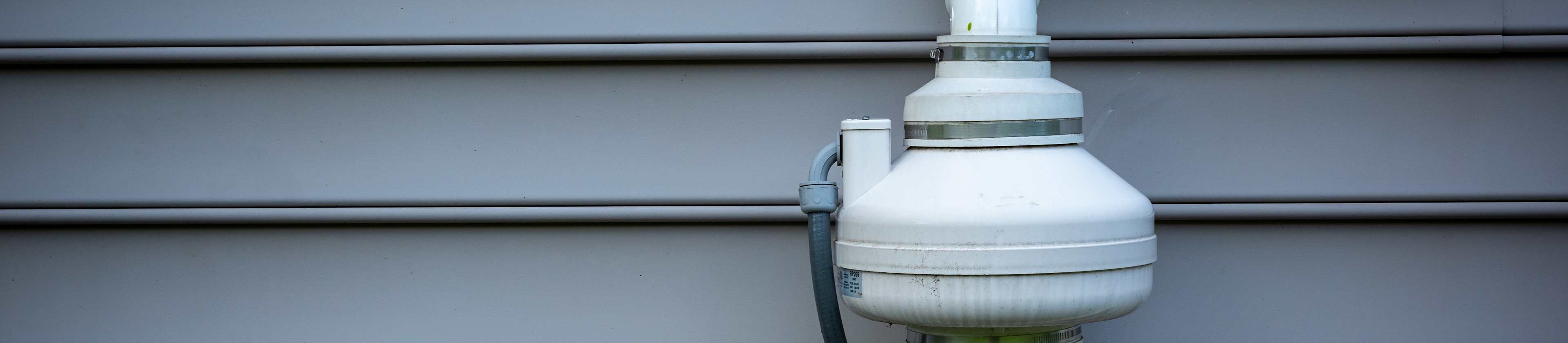
Your radon mitigation system may be loud because it’s time to replace it. Any sounds are usually from the inline fan that helps create the vacuum and resulting airflow. If you hear a new, loud mechanical or humming noise from your radon fan, it might be time to replace it. Most fans used in radon mitigation systems last up to 10 years, but may need to be replaced sooner.

The Glen, NH homeowners’ guide to radon detection and reduction services

From average costs to expert advice, get all the answers you need to get your job done.