Top-rated tree service pros.

Get matched with top tree service pros in Andover, NH

Enter your zip and get matched with up to 5 pros

Need a pro for your tree service project in Andover, NH?

Select your specific project to find the pro for you.

TRUSTED BY ANDOVER, NH HOMEOWNERS

  • Average homeowner rating star icon4.8
    Average homeowner rating
  • Verified reviews icon40
    Verified tree services reviews

Find Tree service pros in Andover

Avatar for Tomahawk Excavation
Tomahawk Excavation
4.5(
2
)
Tree Stump - Remove

Serving Andover, NH and surrounding areas

Approved

Free estimates

Emergency services offered

Small jobs welcome

"The owner is a first responder like myself, I couldnâ t find anyone to clear my land but with his busy schedule he was able to fit me in very fast, very affordable pricing, and extremely professional. I plan on using him for my future lots as well."
Underground utilities
1 neighbors recently requested a quote
Recommended by100%of homeowners
Yager Transportation & Excavation
New to Angi
Tree Stump - Remove

Serving Andover, NH and surrounding areas

Approved

In business since 1997

Free estimates

Offers commercial services

We are dedicated to providing our clients with the very best in excavation and building site services. We specialize in residential and commercial services and take pride in the attention to detail put into each of the projects we're involved with. We're known for our quality work and the integrity of our business. We look forward to building long-term relationships with our clients, and guarantee your satisfaction.

...
Showing 1-10 of 73
Tree Service questions, answered by experts

Yes, it’s okay to trim low branches on a tree, also known as limbing up or raising the crown. Essentially, you’ll trim the lower third of the tree (trunk) and leave the upper two-thirds of the tree (crown). Arborists recommend trimming 20% of a tree’s leaves per season for two to three seasons. Trimming low branches allows light to flow through the tree, increasing circulation and making the tree stronger and healthier.

Grinding down a tree helps reduce the risk of foundation damage and pests and even helps your home’s curb appeal. Stumps can also be a safety hazard. If grass grows above the stump and someone else mows your yard, they may be in for a rude awakening when they accidentally hit it.

Generally, homeowners do not need permission to cut down a tree on their own private property, but there are several exceptions where a permit may be required. You might need a permit if the tree is particularly large, old, or a protected species, such as a heritage tree. Trees located near public property or power lines can also be subject to special rules. Additionally, many local governments and homeowners associations (HOAs) have regulations controlling which trees can be removed to manage an area's appearance or prevent the spread of invasive species. To avoid hefty fines, it is crucial to check with your local government and HOA to determine if a permit is needed before you begin.

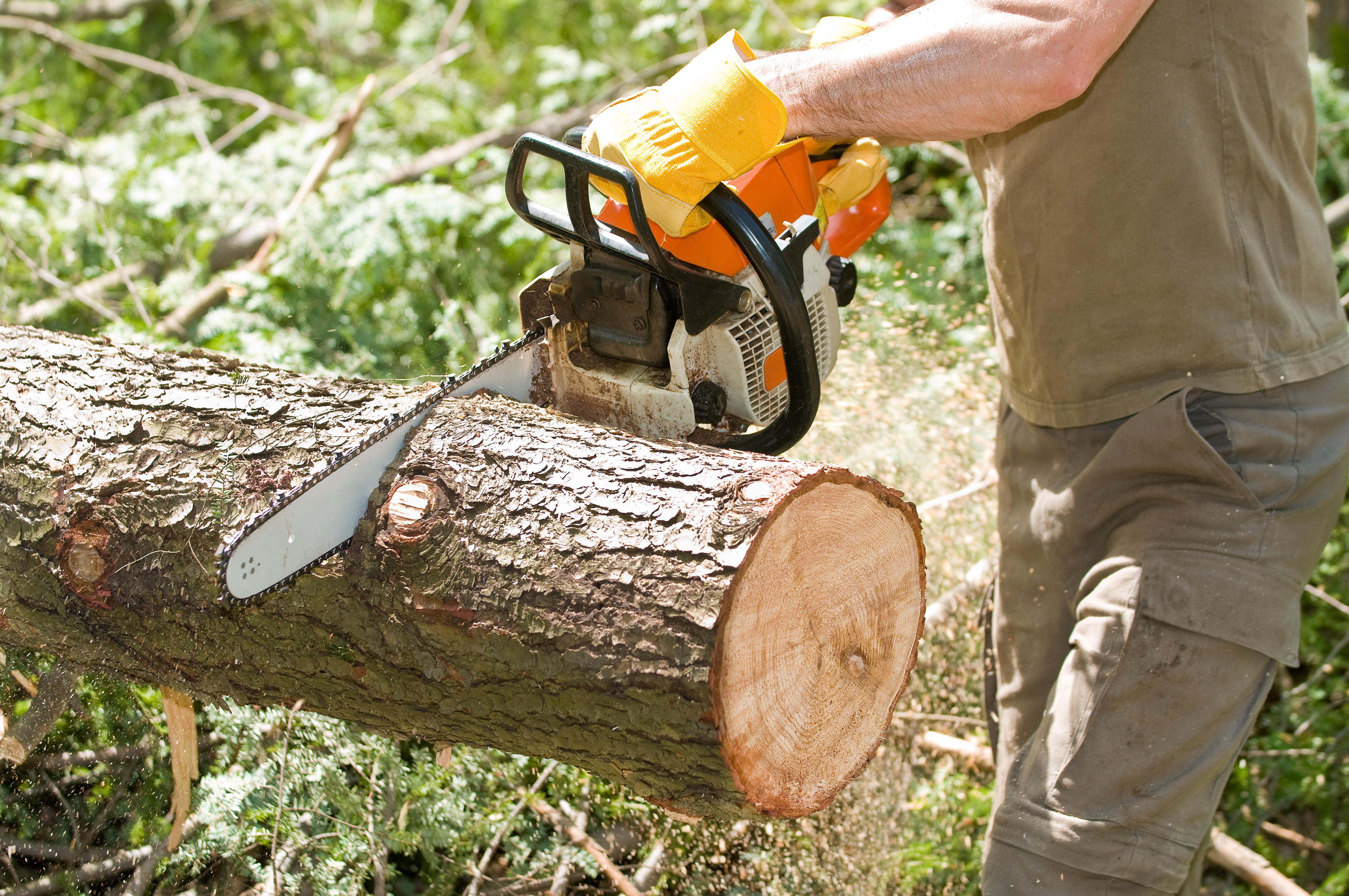
You can use a chainsaw, but it won’t remove the entire stump or root ball and is not a recommended method. It takes quite a bit of physical work to achieve and will likely dull or ruin your chainsaw. Instead, consider using salt, herbicide, light deprivation, boiling water, stump grinding, or burning to kill a tree stump. These methods allow you to kill a stump using minimal machinery and physical exertion.

It will take you anywhere from 15 minutes to two hours per tree stump to grind and remove the stump from the ground. The larger the size, the longer it will take to remove the stump. Also, keep in mind that rocky soil may require local excavation services to loosen up large boulders before you can begin to remove the tree stump.

The Andover, NH homeowners’ guide to tree services

From average costs to expert advice, get all the answers you need to get your job done.