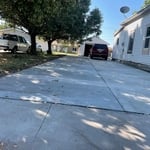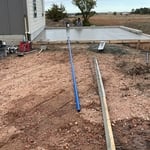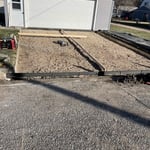






Top-rated asphalt driveway pros.

Get matched with top asphalt driveway pros in North Platte, NE

Enter your zip and get matched with up to 5 pros

Need a pro for your asphalt driveway service project in North Platte, NE?

Select your specific project to find the pro for you.

Find Asphalt driveway pros in North Platte

Troutman Contracting, LLC
5.0(
1
)
Gravel or Loose Fill Paving - Install, Spread or ScrapeGravel or Loose Fill Paving - Install, Spread or Scrape - For Business

Serving North Platte, NE and surrounding areas

In business since 2018

Free estimates

Credit card accepted

"Troutman Contracting took out old chain link fencing and installed new wood privacy fencing. They also took out old flooring and installed new vinyl wood flooring throughout my home. I couldnâ t be happier with the work done!"
New siding
Vinyl siding hail damage
Remove damaged siding
Countertops/Backsplash

+14

Response time2 days
Recommended by100%of homeowners
Meadows Masonry, LLC
New to Angi
Brick and Stone Driveways & Floors - Install

Serving North Platte, NE and surrounding areas

In business since 2021

Credit card accepted

MEADOWS MASONRY, LLC is committed to excellence in every aspect of our business. We uphold a standard of integrity bound by fairness, honesty, and personal responsibility. Our distinction is the quality of service we bring to our customers. Accurate knowledge of our trade combined with ability is what makes us true professionals. Above all, we are watchful of our customers' interests, and make their concerns the basis of our business.

Asphalt Driveways questions, answered by experts

The dimensions of a driveway apron vary based on local building codes, the width of your driveway, and the distance between the driveway and the road. On average, aprons range from 12 to 24 feet wide and 8 to 18 feet long. Typically, the end of the apron connected to the driveway matches its width—such as 10 to 12 feet for a single-car driveway—while the end at the street flares out to allow cars to turn in and out more easily. In some areas, you may not be responsible for the portion of the apron that extends beyond the sidewalk, but this depends on local laws.

Driveways should be sloped with a minimum 2% slope—anything lower will cause precipitation and runoff to collect. A 2% slope is the equivalent of a 2-foot rise over 100 feet. One quick way to check the integrity of your driveway’s slope: no more than four inches of water should collect on the surface longer than 15 minutes after rain.

The decision to repair or replace your driveway depends on the extent of the damage. If your driveway has a few small cracks, a simple repair will do the trick. If you see larger cracks and potholes, it may be time to consider resurfacing or replacement. Resurfacing is a great option if more than 25% of the surface is damaged, but if the damage is extensive—deep cracks or significant sinking—it’s best to replace the driveway entirely. A new driveway, with proper care, can last decades while patching or resurfacing might only hold up for a few years before needing more attention.

There’s no single best asphalt grade—it all comes down to where and how it’s used. Highways and heavy-traffic roads need something tough, like polymer-modified asphalt (PMA) or Stone Matrix Asphalt (SMA). Local roads and parking lots rely on the Performance Graded (PG) system, chosen based on climate. A PG 64-28 mix, for example, handles a broad temperature range while simpler, more cost-effective mixes are typically enough for residential driveways. The best grade of asphalt depends on traffic, weather, and your budget, which is why a professional’s input is always a smart move before making a decision.

The choice between asphalt and concrete depends on your priorities, budget, and climate.

Concrete is generally more durable, lasting up to 50 years with minimal upkeep, and offers more customization options like staining and stamping, which can add more to a home's value. However, it is more expensive upfront and can be prone to cracking in cold climates where water can freeze and expand.

Asphalt is typically cheaper and quicker to install and is easier to repair. It performs better in colder climates. However, it requires more maintenance, including regular resealing, has a shorter lifespan, and can get hot and sticky in intense sunlight.

Ultimately, if durability and long-term value are key, concrete is often the better choice. If upfront cost and performance in cold weather are more important, asphalt may be preferable.

The North Platte, NE homeowners’ guide to asphalt driveway services

From average costs to expert advice, get all the answers you need to get your job done.