







Top-rated paving pros.

Get matched with top paving pros in Cambridge, NE

Enter your zip and get matched with up to 5 pros

Need a pro for your paving service project in Cambridge, NE?

Select your specific project to find the pro for you.

Find Paving pros in Cambridge

Spike Masonry
New to Angi
Interlocking Pavers for Patios, Walks & Steps - Install

Serving Cambridge, NE and surrounding areas

In business since 1990

Free estimates

Spike Masonry has the experience and knowledge necessary to make sure that your project is completed on time with quality service and workmanship. Your satisfaction is important to us. Let us show you the difference true professionalism can mean to you. We are a family owned business and we want everything to be done 110%. It�s all about the customer and what YOU want, plain and simple. Positive attitudes, responsible, reliable, fast and perfect! If you want professional work, positive attitudes, strive for perfection, clean work places, fast work and caring contractors, then you want Spike Masonry to do your work! Thank you for considering Spike Masonry and we look forward to impressing you!

Paving Services questions, answered by experts

Yes, you can put thin pavers over a concrete driveway. However, it's always best to talk to a driveway installer before starting. You'll need to ensure that the concrete below is in good enough shape to hold the pavers and that the driveway will still meet local building codes.

The best ways to increase the lifespan of your driveway are to carry out proper maintenance and get repairs done quickly. First, reseal your driveway every one to three years to protect it from the elements. If you start to notice significant cracks, hire a professional to diagnose the problem before it gets more serious. You can also use sand instead of salt when de-icing your driveway (since salt is corrosive) and clean your driveway annually using a pressure washer to keep it in tip-top shape.

A driveway's lifespan varies by material. Asphalt driveways typically last 15 to 30 years, while concrete driveways last longer, between 20 and 50 years. The longevity of any driveway is affected by factors like extreme temperatures, heavy traffic, and the quality of maintenance. Regular upkeep, such as filling cracks, resealing the surface, and ensuring proper drainage, can help extend its life. For gravel driveways, regrading to fill in uneven areas every year or two is recommended.

Asphalt and tarmac are not the same thing. Traditional tarmac, short for tarmacadam, uses tar as a binder to hold crushed stone together. Asphalt uses bitumen—a byproduct of crude oil—to bind aggregate. Though tarmac was once a go-to for roads, asphalt has become the modern standard. And these days, most surfaces referred to as “tarmac” are actually asphalt. So, while the names may overlap, the key distinction lies in the binder—tar for tarmac and bitumen for asphalt.

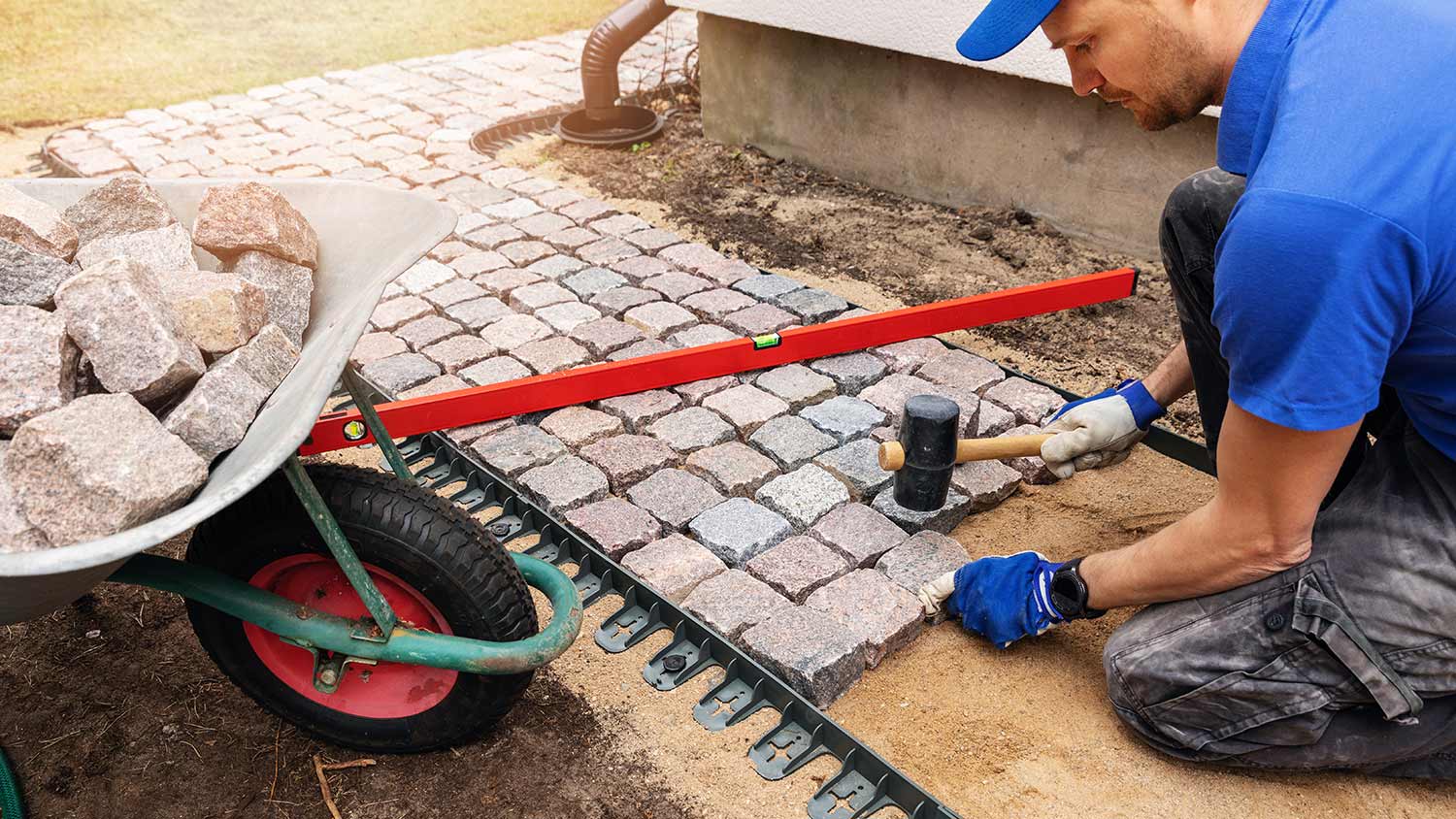
You’ll first need to install a base underneath your pavers for extra stability and drainage. Otherwise, the pavers can sink into the ground, and you’ll have to reinstall them. Use a base gravel layer of 4 to 6 inches for walkways and 10 to 12 inches for driveways. Compact your gravel layer every 2 to 4 inches so it’s nice and solid. After you install your gravel base, apply a 1-inch layer of sand on top.

The Cambridge, NE homeowners’ guide to paving services

From average costs to expert advice, get all the answers you need to get your job done.