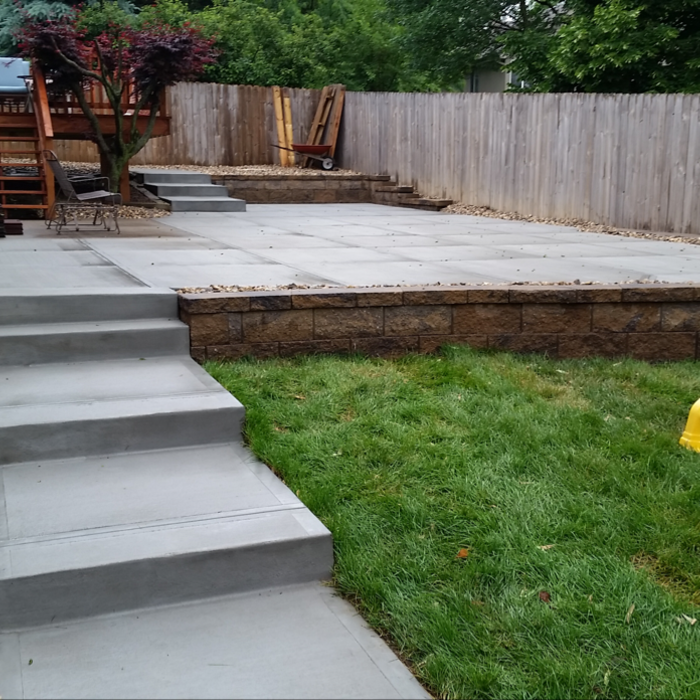







Top-rated excavation pros.

Get matched with top excavation pros in Ashland, NE

Enter your zip and get matched with up to 5 pros

Need a pro for your excavation project in Ashland, NE?

Select your specific project to find the pro for you.

Find Excavation pros in Ashland

McLean Earthworx LLC
5.0(
3
)
Building Site - Preparation and ClearingExcavation - Major Grading or Resloping

Serving Ashland, NE and surrounding areas

Approved

My name is Terron McLean. I am the owner of McLean Earthworx LLC.\n\nI'm a new business owner stepping into the heavy equipment industry with 10 years of heavy equipment hands-on experience.\n\n8 of those years I additionally served, and continue to serve, in the US Air Force as a heavy equipment operator.\n\nWhile I know I still have a lot to learn and don’t have all the answers, I'm passionate about my work and committed to providing the best service possible. I truly value the support and understanding of my clients, as it helps me grow both personally and professionally.\n\nI'm open to taking on new challenges and trying out fresh ideas to meet your needs. Together, we can navigate the way forward, and I'm excited to build lasting relationships while delivering quality results.

Avatar for Fieldcrest Outdoor Solutions
Fieldcrest Outdoor Solutions
New to Angi
Landscape - Minor Grading or Resloping

Serving Ashland, NE and surrounding areas

Approved

Emergency services offered

Warranties offered

Small jobs welcome

Fieldcrest Outdoor Solutions provides professional irrigation, lawn installation, and outdoor improvement services built on precision, reliability, and clean workmanship. We design and install high‑quality sprinkler systems, drainage solutions, landscape borders, and rock beds that are engineered to perform and made to last. Every project is planned with accuracy, from trenching and head layout to backflow integration and system testing, ensuring homeowners get efficient coverage, dependable water flow, and a yard that looks intentional and well‑finished.We focus on doing the job right the first time with clear communication, honest expectations, and contractor‑level quality. \n\nWhether it’s a full irrigation system, new lawn installation, or detailed landscape work, Fieldcrest delivers durable results and a clean, professional finish every time.

Backflow Preventer
Grade Correction
Grade Corrections
Irrigation Planning
Trench Work

+1

Showing 1-10 of 20
Excavating questions, answered by experts

To locate an underground downspout, you should start by identifying where the above ground gutter drains. Look for an entry point, such as a pipe or elbow leading into the ground. Follow the surface path for signs like depressions, landscaping disruptions, or wet areas after rain. You can use a metal detector or plumber’s snake to trace the pipe underground. For deeper pipes, a professional locator tool or camera inspection may be necessary. Visual markers or utility maps can also guide the search.


Depth is not a qualifying component of evacuation. Any human-made cut, cavity, or depression in the earth’s surface is considered excavation. The hole from excavation can be any size, shape, or depth. Excavation is used to create foundations, reservoirs, drainage ditches, and roads. Long, narrow excavations are called trenches and are often used for underground utilities.

Trenches are typically 12 to 24 inches deep and 8 inches wide. However, the required depth depends on the specific project and local ordinances. For example, a French drain may need to be 18 inches deep, while a water pipe might require a depth of 24 inches and a drainage pipe 36 inches. Your city or county may have specific regulations, so it's wise to consult with an excavation professional to determine the correct depth for your project.

Digging a bush up by the roots is the most natural DIY method for removing a bush stump. Start by identifying the shrub type and revealing its roots. Cut the shrub to its base and loosen the soil, ensuring no utility lines are nearby. Optionally, treat the base with herbicide, then dig around the roots and cut a circle around the shrub using various tools. Dig a trench, cut the base of the root ball, and finally fill the hole to prevent regrowth. This thorough process ensures complete removal without damaging surrounding areas.

A trench that is less than 5 feet deep often doesn't require a protective system. Most residential trenches will not go this deep (the typical residential drainage trench is just 18 inches deep). In the event that an excavator needs to dig more than 5 feet beneath the surface, a protective system is required unless the excavation is in entirely stable rock.

The Ashland, NE homeowners’ guide to excavation services

From average costs to expert advice, get all the answers you need to get your job done.