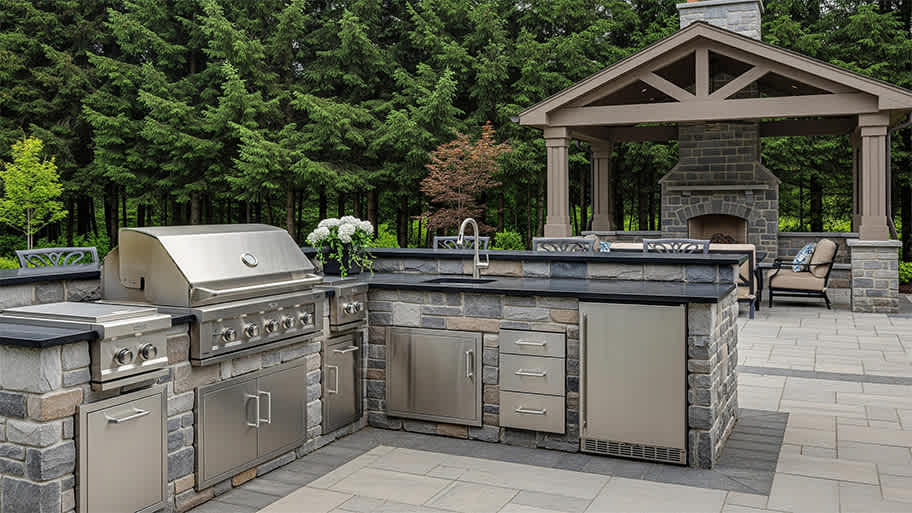
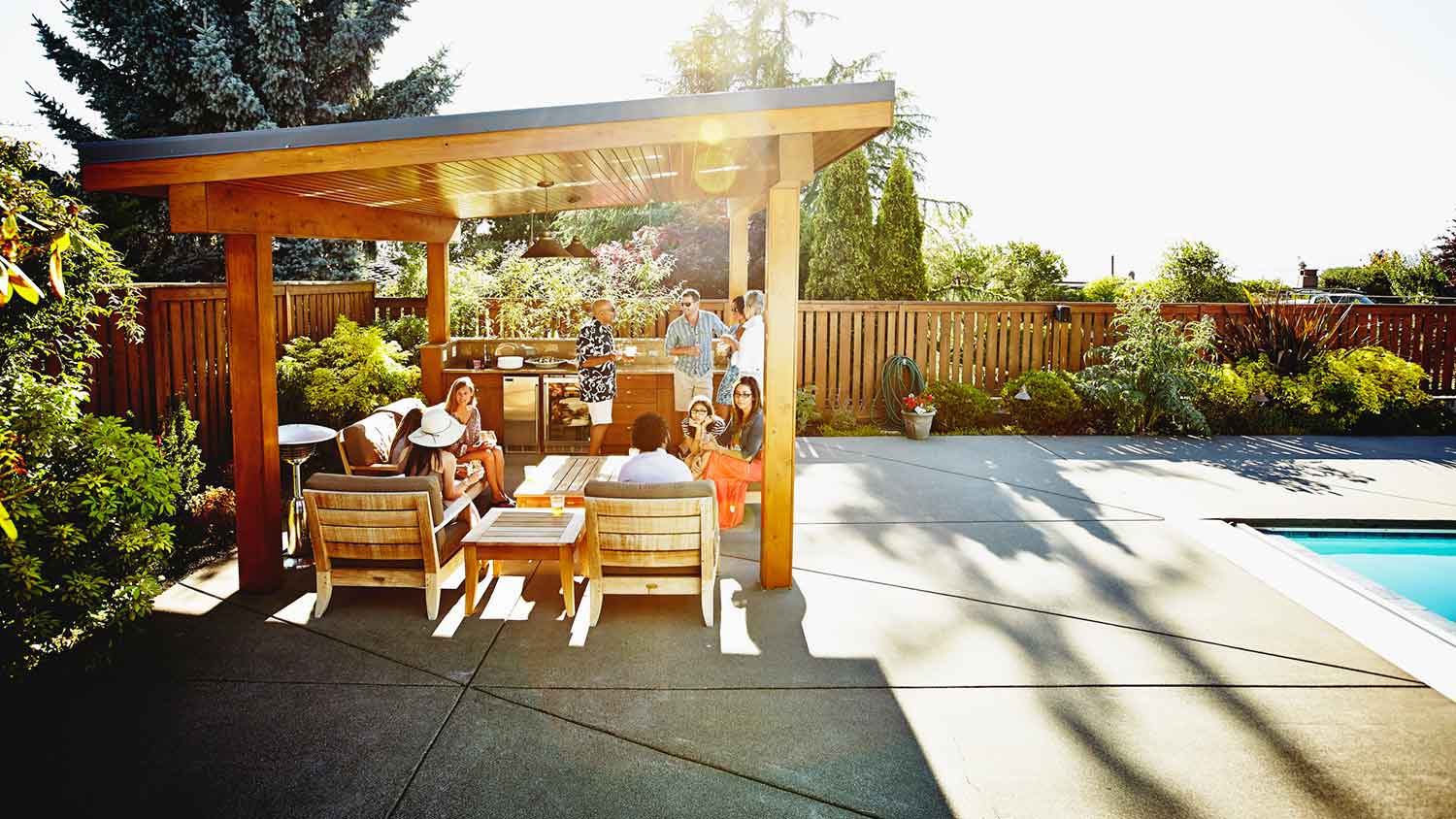
In most cases, yes, an outdoor living space adds value to your home. The trick to your best return on investment is to choose high-quality building materials that will look nice and durable without crossing the line into total luxury that becomes cost-ineffective. For example, there’s no need to install marble tiles around your pool, but a durable and aesthetically pleasing deck will go a long way.
You can choose a few different options for outdoor kitchen sink drainage. You can install a dry well about 10 feet away from your home or patio or install a French drain closer by. You can also drain into your home’s plumbing system, but it is more costly versus using a dry well.
Summer kitchens can cost anywhere from $1,000 to $50,000 to build. The average price is on the lower end of that range, however, at $15,500. The typical homeowner is more likely to pay between $6,000 and $25,000 than approach the $50,000 mark. Materials for framework, flooring, and countertops are the most expensive type of expenditure, with appliances coming in second. There are a few additional costs that may not immediately come to mind when planning an outdoor kitchen, some of which include: permits, routine maintenance, pest control, and winterization.
The cost to build an outdoor kitchen averages around $15,500, but prices can range widely from $5,000 to over $52,000 depending on the project's complexity and features. Many projects fall within the $5,000 to $30,000 range. Since outdoor kitchens are highly customizable, several key factors influence the total cost, including the size and layout of the area, the quality of materials for countertops and cabinets, the number and type of appliances, the need for site preparation like land leveling or a foundation, and whether new utility lines are required.
Use fire bricks for a brick pizza oven. These bricks are typically used for fireplaces and chimneys as they can withstand high temperatures from heat sources. If you attempt to use any other kind of bricks, it’s likely that this material will crack from such high heat exposure in the best case—and potentially explode and cause serious harm in the worst case.
The Walhalla, ND homeowners’ guide to outdoor kitchen services
From average costs to expert advice, get all the answers you need to get your job done.
Discover the cost to build an outdoor kitchen, including average prices, cost factors, and tips to help you plan your project and maximize your investment.
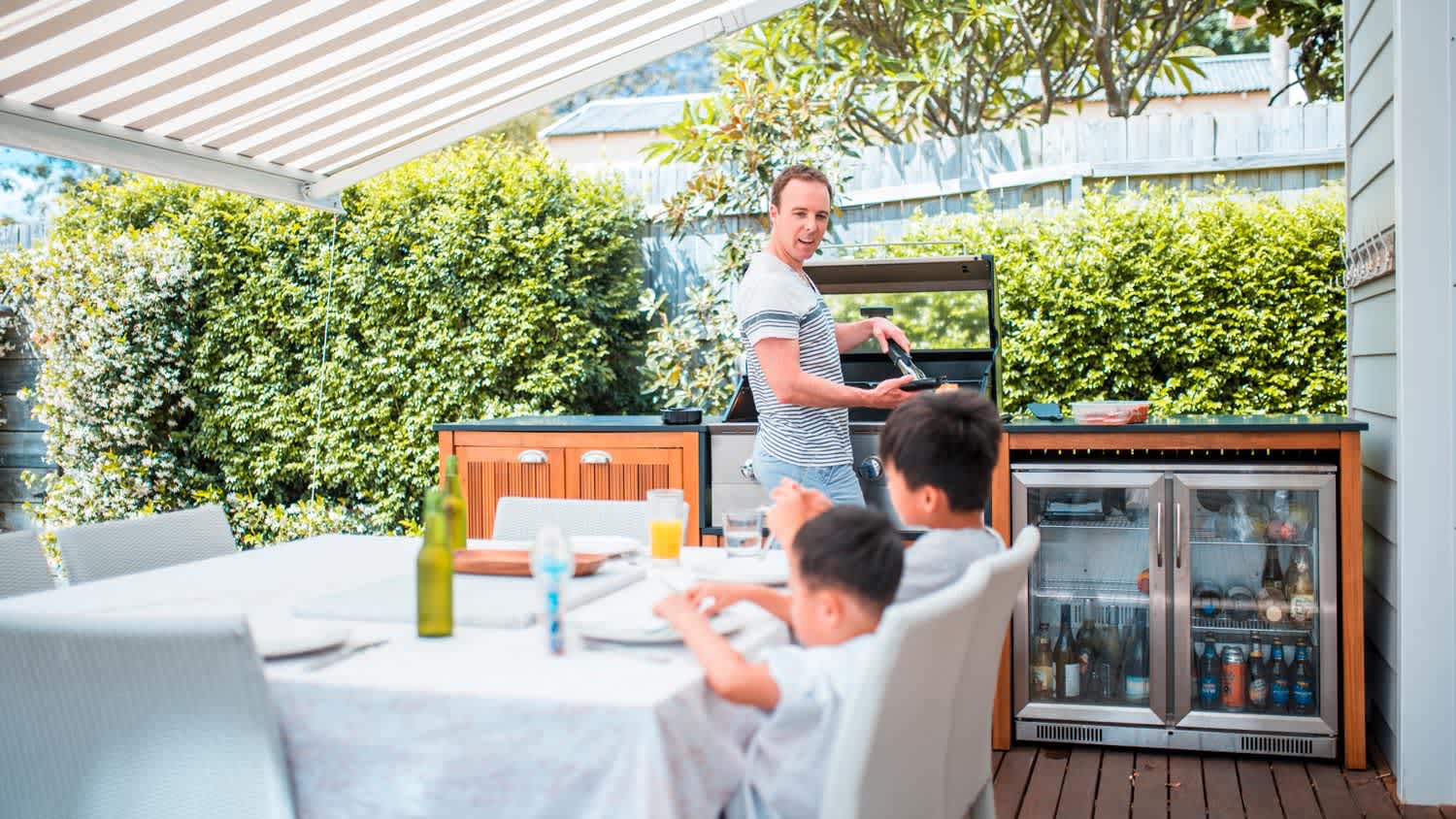
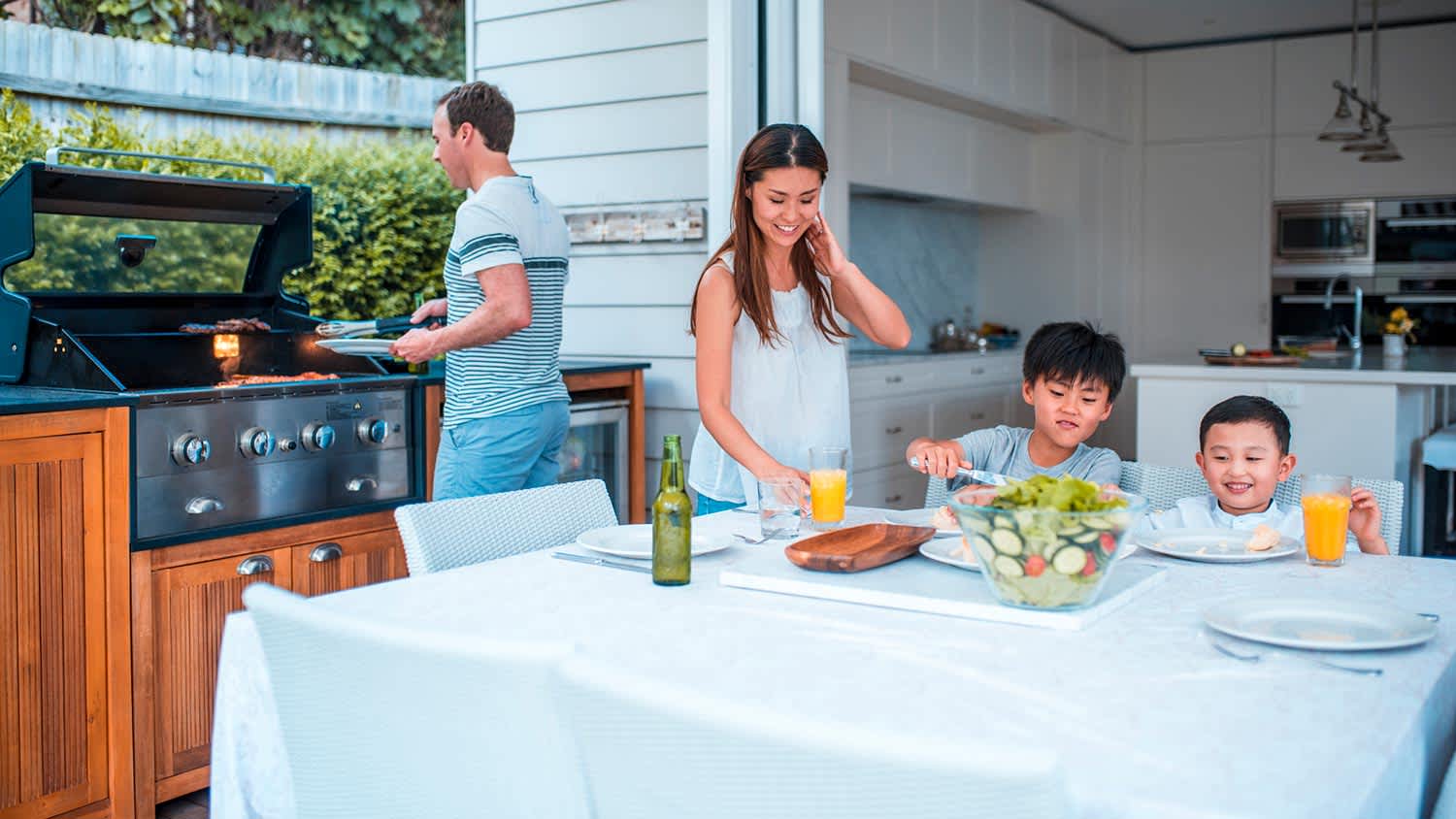
Considering an outdoor kitchen? If you enjoy entertaining loved ones or prefer your meals alfresco, here's how to evaluate if an outdoor kitchen may add value to your home.
The best outdoor kitchen design ideas are ones that suit your needs. Check out these layouts and design concepts to help you assemble your perfect outdoor kitchen.
Dreaming of an outdoor kitchen? Get layout ideas for everything from a simple, low-budget DIY outdoor kitchen to a state-of-the-art, chef-worthy space.
A covered space is ideal for grilling comfortably without worrying about rain or heat. Use our list of outdoor kitchen gazebo ideas to inspire your next project.